
In 1965, Walt Disney used shell companies with names like M.T. Lott to secretly buy 27,000 acres of Florida swampland for about $182 an acre. Once a local reporter exposed who was buying, a single nearby acre sold for $80,000
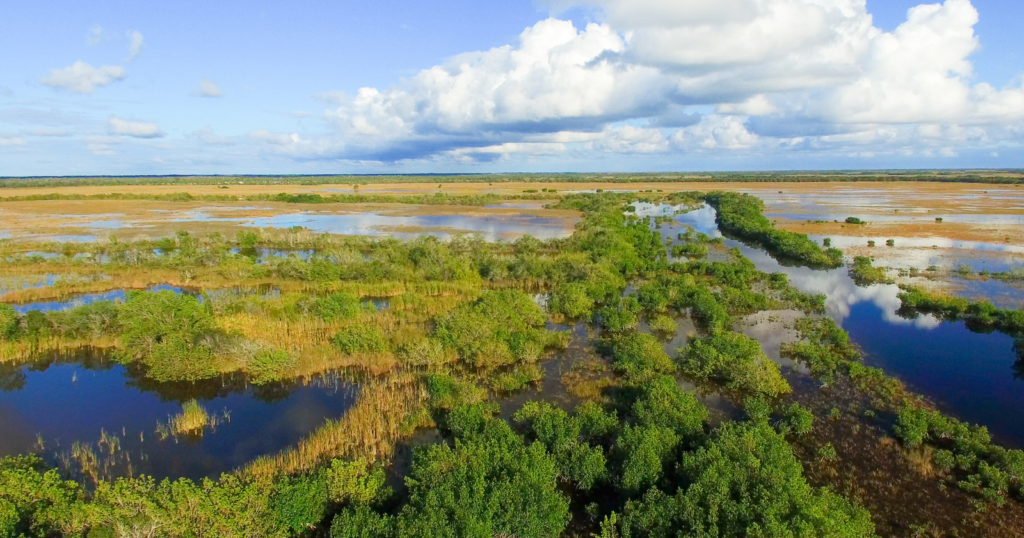
In the mid-1960s, landowners around Orlando, Florida, started getting unusual offers. Strangers wanted to buy swampy pasture, orange groves and scrubland that most people considered nearly worthless. The buyers paid in cash, asked few questions and never explained who they were.
The paperwork carried odd company names. One was M.T. Lott, a joke that only made sense if you said it out loud: empty lot. Behind these companies was one of the most famous men in America, and he was working hard to keep his name out of it.
Why Disney wanted so much land
Disneyland opened in Anaheim, California, in 1955. It was a huge success, but Walt Disney was frustrated by what happened around it. Motels, souvenir shops and fast-food stands crowded right up to the park’s edges, cashing in on his crowds without any of his control.
For his next project, he wanted space, enough land to build not just a theme park but hotels, roads and possibly an entire planned community. He also wanted a buffer so outside businesses couldn’t press against the gates again.
Central Florida had what he needed. Land was cheap, the climate allowed year-round visitors, and new highways, including the planned Interstate 4, would make it easy to reach.
The secret buying campaign
Disney knew that if sellers learned who the buyer was, prices would soar overnight. So his team set up a series of shell companies to buy the land quietly. Alongside M.T. Lott, there were names like the Reedy Creek Ranch Corporation, the Latin-American Development and Managers Corporation, and Ayefour Corporation, a nod to I-4.
A Miami lawyer, Paul Helliwell, acted as the go-between with sellers. Agents handled the deals, and many of the people involved were not told who they were really working for. Disney himself denied any interest in Florida when asked.
The strategy worked. Most of the purchases were made through 1964 and 1965, and by the time the secret came out, Disney controlled about 27,000 acres. That’s roughly twice the size of Manhattan. The average price was around $180 to $200 an acre, well below what the company had budgeted.
The rumors spread
Buying that much land can’t stay invisible for long. As deeds changed hands, people in Orlando began guessing who was behind it. Theories included Ford, Howard Hughes, aerospace companies and NASA, which was expanding at Cape Canaveral, not far away.
At one point, a TV station even announced that Ford was the buyer, only to take it back the following day. Disney stayed on the list of suspects, but he kept denying it.
The reporter who cracked it
The secret finally broke because of Emily Bavar, a journalist at the Orlando Sentinel. In October 1965, she was in California with a group of reporters for Disneyland’s 10th anniversary. She asked Walt Disney directly whether he was the mystery buyer in Florida.
His reaction gave him away. According to most accounts, he looked surprised and then spoke about Central Florida in so much detail that Bavar became convinced he was the buyer. He didn’t confirm it, but he didn’t deny it either.
Her story ran on October 21, 1965. A few days later, the Sentinel declared outright that the mystery buyer was Disney. Florida’s governor soon confirmed it, and on November 15, 1965, Walt Disney, his brother Roy and the governor held a press conference in Orlando to announce the project.
What happened to land prices
Once the secret was out, everything changed. Landowners knew the company needed their parcels and set their prices accordingly. Popular accounts say some land near the Disney site later sold for as much as $80,000 an acre, compared with the few hundred dollars Disney had been paying.
Fortunately for Disney, most of the land it needed was already secured. The company had locked in a huge area at bargain prices, while neighboring landowners and investors benefited from the boom that followed.
The legacy of a clever plan
Walt Disney never saw the result. He died in December 1966, before construction began. His brother Roy took over the project, and Walt Disney World opened on October 1, 1971.
The land deal shaped the region for decades. In 1967, Florida approved the Reedy Creek Improvement District, giving Disney unusual control over its own roads, building rules and services. Orlando grew from a quiet citrus town into one of the busiest tourist destinations on Earth.
Disney also kept a playful reminder of how it all started. On Main Street, U.S.A., in the Magic Kingdom, several upper-floor windows display the names of the original shell companies, including M.T. Lott. Millions of visitors walk past them every year, mostly unaware they are looking at clues to one of the most successful secret land deals in history.