
Japan’s first gift of 2,000 cherry trees to Washington arrived diseased in 1910 and had to be destroyed. Tokyo sent 3,020 more in 1912, and after World War II, cuttings from those Washington trees were sent back to help replant Tokyo’s own bombed collection
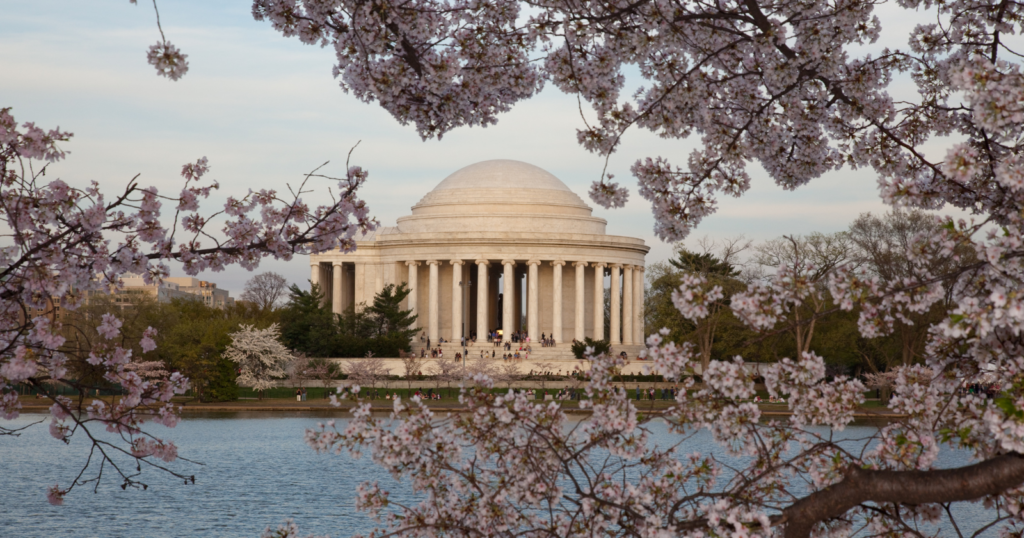
In January 1910, a shipment of 2,000 young cherry trees arrived in Washington, D.C. They had travelled from Tokyo by ship and train as a gift of friendship from Japan to the United States.
The city had been waiting for them. But when government scientists inspected the trees, they found a problem serious enough to end the gift before a single tree was planted.
An idea that took decades
The plan to plant Japanese cherry trees in Washington had been around for years. Eliza Scidmore, an American writer and photographer who had travelled widely in Japan, first suggested it in the 1880s. For a long time, officials showed little interest.
That changed in 1909. Scidmore wrote to the new first lady, Helen Taft, who had lived in Japan and loved its flowering cherries. Mrs. Taft replied within days, and plans moved quickly.
Jokichi Takamine, a Japanese chemist living in New York, offered to donate trees. Japanese officials then arranged for the city of Tokyo to send 2,000 trees as an official gift, under Tokyo’s mayor, Yukio Ozaki.
The trees that had to be burned
The first trees arrived in Washington on January 6, 1910. Inspectors from the U.S. Department of Agriculture examined them and found they were infested with insects, including scale and boring insects, and roundworms called nematodes. Some were also affected by disease.
Officials feared the pests could spread to American orchards and crops. To protect U.S. agriculture, President William Taft approved the trees’ destruction, and most were burned in late January 1910.
It was an awkward moment between two countries trying to build goodwill. American officials sent a careful letter of regret to Japan, and Mayor Ozaki responded graciously. Instead of letting the idea die, Japan decided to try again.
A second, healthier gift
This time, Japanese scientists took extra care. Cuttings were taken from a famous grove of cherry trees along the Arakawa River in Adachi, a district of Tokyo. They were grafted onto healthy rootstock grown in Hyogo Prefecture, carefully raised and checked for pests before shipping.
In 1912, 3,020 trees from 12 varieties arrived in Washington. This shipment passed inspection.
On March 27, 1912, Helen Taft and Viscountess Chinda, the wife of the Japanese ambassador, planted the first two trees on the northern bank of the Tidal Basin, near the Potomac River. Those two trees still stand near the Jefferson Memorial, at the end of 17th Street.
Surviving the war years
Over the following decades, the cherry trees became one of Washington’s best-loved sights. In 1927, schoolchildren reenacted the original planting, an event that later grew into the National Cherry Blossom Festival.
World War II put the trees in an uncomfortable position. After the attack on Pearl Harbor in December 1941, four of the trees were cut down, probably in retaliation. To avoid further trouble, some people began calling them “Oriental” cherry trees during the war.
The trees themselves survived. And in an unexpected turn, they would soon help the place they came from.
Sending the trees back home
During and after the war, the Arakawa River grove that produced Washington’s trees had fallen badly into decline. Tokyo was heavily bombed, many trees were cut down for firewood, and river works and pollution damaged others further. By the end of the war, much of the famous grove had disappeared.
In 1952, Japan asked for help restoring it. The U.S. National Park Service responded by sending budwood, cuttings used for grafting, from the Washington trees back to Tokyo. Trees descended from the original Arakawa grove returned to the same riverbank where their ancestors had grown.
The exchange happened again in 1981. Japanese horticulturists came to Washington to take cuttings from varieties that had been lost along the Arakawa River. Today, a long stretch of cherry trees blooms along the river in Adachi, partly thanks to trees that had spent decades in America.
A friendship that keeps growing
The gifts have continued in both directions. In 1915, the United States sent flowering dogwood trees to Japan as a thank-you. In 1965, Japan gave another 3,800 cherry trees to Washington, which were accepted by first lady Lady Bird Johnson.
In 1996, the Potomac and Arakawa rivers were formally linked through a “sister river” agreement. Cuttings from the original trees have also been used to keep the Washington collection genetically connected to the 1912 gift as older trees die.
Every spring, more than a million visitors come to see the blossoms in Washington. Few realize that the trees nearly never came, or that some of their descendants travelled back across the Pacific to help Tokyo regrow what it had lost.