
In 1965, Queen Elizabeth II gave the United States one acre of English ground at Runnymede, a short walk from where Magna Carta was sealed in 1215. Visitors still climb 50 stone steps, one for each state, to reach the JFK memorial on land the US owns
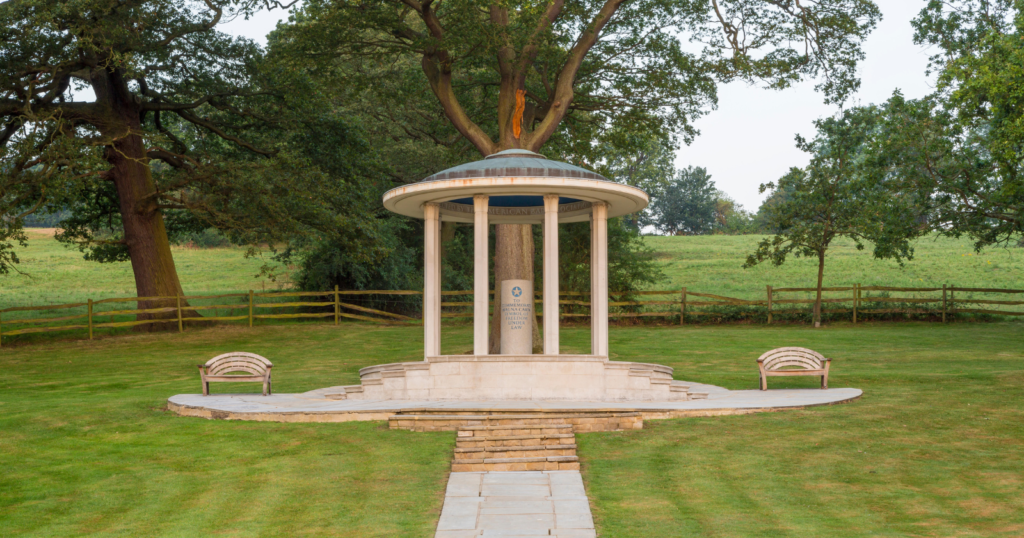
Runnymede is a stretch of quiet meadow beside the River Thames, about 20 miles west of central London. In June 1215, King John met rebel barons here and agreed to Magna Carta, the charter that limited a monarch’s power and became a foundation of modern ideas about rights and the rule of law.
Climb the wooded hillside above those meadows, and you’ll come to something unexpected: a memorial to an American president, standing on an acre of land that Britain gave to the United States.
A nation’s response to grief
President John F. Kennedy was assassinated in Dallas on November 22, 1963. The news shocked people far beyond America, including in Britain, where Kennedy had family ties and many admirers.
The British government decided to create a lasting national memorial. It had two parts. One was a fund for scholarships allowing British students to study at American universities such as Harvard and MIT. The other was a gift of land.
In 1964, Parliament passed the John F. Kennedy Memorial Act, which set aside a piece of Crown land at Runnymede “to be preserved in perpetuity” in Kennedy’s memory. The location was chosen deliberately, because of its link to Magna Carta and the shared history of liberty between the two countries.
The day the Queen dedicated it
On May 14, 1965, Queen Elizabeth II dedicated the memorial. Kennedy’s widow, Jacqueline, attended with their two young children, Caroline and John Jr., along with the president’s brother Robert.
In her speech, the Queen described the acre as being given in perpetuity to the American people. She spoke of the affection British people had felt for Kennedy in life and the grief they shared at his death.
Fifty steps, each one different
The memorial landscape was designed by Sir Geoffrey Jellicoe, one of Britain’s leading landscape architects. He based it on John Bunyan’s 17th-century book The Pilgrim’s Progress, so visiting it would feel like a short pilgrimage.
The journey begins at a gate leading into woodland. From there, a path climbs the hill in 50 irregular steps, one for each American state. The steps are made from tens of thousands of hand-cut granite setts, so no two are alike. Jellicoe meant them to represent the variety of individual people.
At the top stands a seven-ton block of pale Portland stone, carved by sculptor Alan Collins. It records the gift of the land and carries a line from Kennedy’s 1961 inaugural address, promising that America would pay any price and bear any burden to defend liberty.
Beyond the stone, the path leads to a pair of stone seats looking out over the meadows. Jellicoe intended the walk to move from life, to death, to quiet reflection.
Is it really American soil?
The memorial is often described as a piece of America in England, and in one sense it is. The land was gifted to the United States, and the inscription says so.
But the reality is more nuanced. The acre remains under British sovereignty and British law. It isn’t an embassy, and the United States has no special legal powers there. Historic England notes that the land is held by the Kennedy Memorial Trust, which looks after the memorial and also runs the scholarship program. The National Trust, which owns the surrounding land, helps maintain it.
So it’s best thought of as land given to the American people as a symbol, rather than a true piece of US territory.
Visiting today
The memorial is free to visit and open year-round. It’s reached by a short walk from the National Trust car park at Runnymede, across the meadows and up through the trees. The granite steps can be uneven and slippery in wet weather, so sturdy shoes help.
Several other memorials stand nearby, including the Magna Carta Memorial, built by the American Bar Association in 1957, and the Air Forces Memorial on the hill at Cooper’s Hill. Together, they make Runnymede one of the most meaningful small landscapes in England.
A meeting point of two histories
In 2020, the Kennedy memorial landscape was added to England’s register of historic parks and gardens. The listing recognizes both its design and its place in the relationship between Britain and the United States.
Standing at the top of those 50 steps, visitors can look down toward the meadow where Magna Carta was agreed more than 800 years ago. It’s a fitting place to remember a president whose most famous words were about liberty.