
In 1894, John Barbour began supplying oilskins in South Shields to sailors facing the North Sea. 132 years later, his family still leads the company, which holds a royal warrant from the King
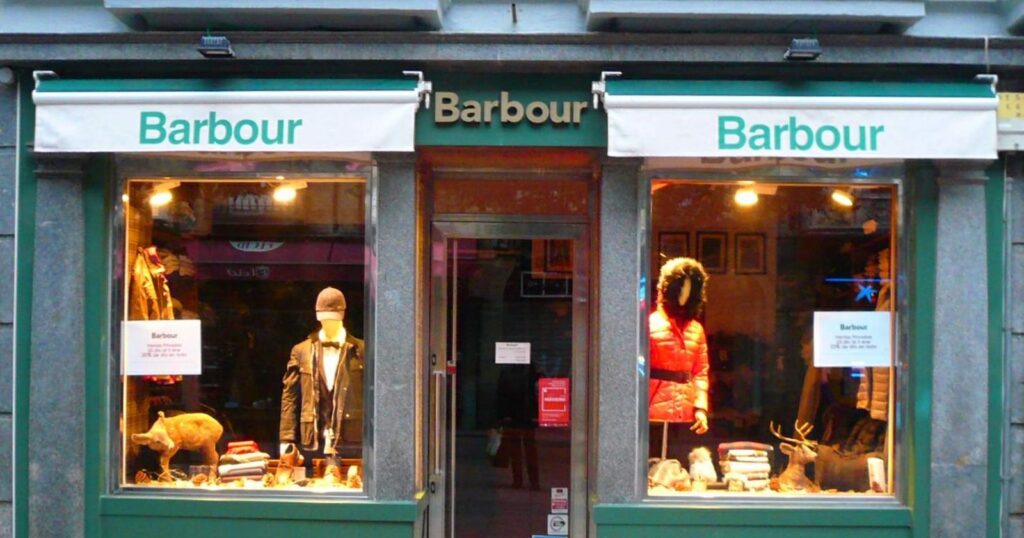
South Shields sits where the River Tyne meets the North Sea, and in the 1890s it was a busy port full of people who worked on the water. In 1894, a Scotsman named John Barbour set up shop in the town’s Market Place and started selling them something they badly needed: clothing that kept out the rain and spray.
That shop became J. Barbour & Sons. More than 130 years later, the company is still owned and chaired by the Barbour family, still makes its best-known jackets in South Shields, and holds a royal warrant from King Charles III.
A draper and his oilskins
Barbour came from Scotland. The Drum describes him as a travelling draper before he opened his first shop. According to the company’s own history page, he supplied “oilskins and other garments” to the town’s sailors, fishermen and mariners. Oilskins were cloth treated with oil to make it waterproof, the standard protection for people working at sea.
The business grew quickly. In a 2014 anniversary release, Barbour said the shop soon became the leading supplier of oilskins in the North East.
The next step took it far beyond the port. In 1908, John’s son Malcolm produced the first Barbour mail order catalogue. The company says that by 1917 the catalogue made up almost 75 percent of its business, with orders arriving from Chile, South Africa, Hong Kong and the Falkland Islands.
From the sea to motorcycles and submarines
John Barbour died in 1918, and his sons Jack and Malcolm took over.
The third generation, Malcolm’s son Duncan, was a keen motorcyclist. In 1936 he introduced a one-piece waxed suit for the International Six Day Trials, a long-distance motorcycle event. Barbour says almost every British international team wore its suits from 1936 until 1977, when the company left the motorcycle clothing market.
During the Second World War, Barbour developed a two-piece version at the request of Captain George Phillips, who commanded the submarine HMS Ursula. The “Ursula suit” became standard issue in the submarine service.
Decades later, in 1964, the actor Steve McQueen wore a Barbour International suit as part of the US team at the Six Day Trials in East Germany.
Margaret Barbour
The company’s modern shape owes a lot to someone who married into the family. In 1968, John Barbour died suddenly, leaving his widow, Margaret, and their two-year-old daughter, Helen.
Margaret was made a director straight away and became chairman in 1973. She went on to design two of the brand’s best-known jackets: the Bedale, a short, lightweight waxed jacket for riding, introduced in 1980, and the Beaufort, which followed in 1983. In 1981 the company moved into a new factory at Simonside in South Shields, where it remains.
She was made a Dame in 2001, and she is still in charge. Business Matters reported in January 2026 that Dame Margaret, 85, serves as chairman, with her daughter Helen, 59, as vice-chairman. The company is still wholly owned by the family.
The business is also larger than ever. According to Business Matters, accounts filed at Companies House showed turnover rising 9 percent to £350.8 million in the year to April 2025.
Three royal warrants, then a fourth
A royal warrant shows that a company has supplied a member of the royal family on a regular basis and lets it display the royal coat of arms. Barbour received its first from the Duke of Edinburgh in 1974, a second from Queen Elizabeth II in 1982 and a third from the then Prince of Wales in 1987.
Those warrants did not carry over automatically into the new reign. TheIndustry.fashion reported that, according to the Royal Warrant Holders Association, warrants became void when the Queen died, and grants were reviewed under King Charles. To qualify, a firm must have supplied the royal households for at least five of the past seven years and show an environmental and sustainability plan.
Barbour came through that review. In May 2024, the company says, it was granted a royal warrant to the King as a manufacturer of outerwear, clothing, footwear and accessories.
Still tied to the shore
The South Shields connection is more than branding. The waxed Bedale and Beaufort jackets are still made by hand at Simonside, and the same site re-waxes and repairs old jackets.
In January 2025, Dame Margaret reopened the Herd Groyne lighthouse at the mouth of the Tyne after storm damage, with £100,000 from the Barbour Foundation toward its repair. The lighthouse stands a short distance from where John Barbour sold his first oilskins to the men who sailed past it.