
In 1856, an American entrepreneur opened a rubber factory in an Edinburgh mill. During the First World War it made 1,185,036 pairs of boots for the Army. Today the brand is known as Hunter
On Dundee Street in Edinburgh’s Fountainbridge district stands a red-and-cream brick building that now houses an arts charity. For more than a century, the site was a rubber works. It made tyres, hot water bottles and golf balls, and during the First World War it turned out more than a million pairs of boots for British soldiers.
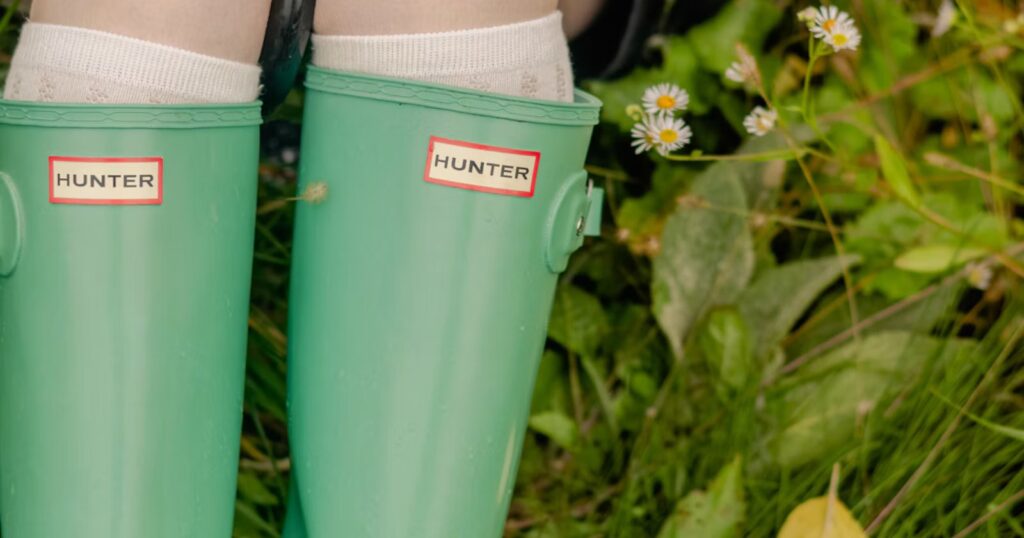
The boots are the reason most people know the company today, under a different name: Hunter.
Two Americans and a silk mill
The story starts with an American patent. In 1839, Charles Goodyear had found a way to make natural rubber, which turns sticky in heat and brittle in cold, into a durable material through a process called vulcanization. In January 1856, Henry Lee Norris, a businessman and bootmaker from the US, arrived in Scotland with his partner Spencer Thomas Parmelee to put that kind of rubber to work.
According to The Scotsman, the pair acquired land beside the Union Canal at Fountainbridge that had been home to the Castle Silk Mill. Within six months, the new business, Norris & Co, was making machinery belts and footwear. It soon became the North British Rubber Company. The Victoria and Albert Museum, which holds a pair of Hunter Green boots in its collection, says Norris brought over skilled American workers and machinery to start production.
The workforce began at four people. By 1875, The Scotsman reports, more than 600 men and women worked at Castle Mills.
More than boots
Footwear was only part of the business. The company made combs, golf balls, hoses, rubber flooring and sheeting for heavy industry. In 1858, Parmelee patented one of the first conveyor belts.
By 1900, Castle Mills was the largest industrial site in Edinburgh. The Edinburgh Reporter puts its workforce at 3,000 people at that point.
Boots for the trenches
The First World War changed what the mill was best known for. Soldiers on the Western Front spent months in trenches that flooded with rain and mud, and standing in cold water for long periods caused trench foot, a painful condition that could lead to infection and amputation.
The War Office needed a sturdy waterproof boot. The Edinburgh Reporter says the Wellington boot for soldiers was conceived in 1916, and that the factory ran 24 hours a day to meet demand. In total, the company produced 1,185,036 pairs of boots for the British Army.
As noted by the Scotsman, the company was called on again in the Second World War. Castle Mills produced boots alongside gas masks, tyres for army vehicles and fabric for barrage balloons.
Where the Hunter name comes in
The brand name came later. In 1955, according to the Edinburgh Reporter, the company launched two boots under the Hunter name, the Green Hunter and the Royal Hunter. The green boot in particular became a fixture of British country life.
Its fashion moments came decades after that. Princess Diana wore a pair in her engagement photos in 1981, and the boots surged in popularity again after Kate Moss was photographed in a pair at Glastonbury in 2005.
The Edinburgh mill didn’t last as long as the boot. In 1966, the North British Rubber Company was bought by Uniroyal, and rubber production moved out of Fountainbridge. Most of the old mill buildings were demolished in the 1970s. The surviving Castle Mills building reopened in 2019 as the home of Edinburgh Printmakers.
Hunter today
Hunter became a separate company but the past few years have been difficult. In June 2023, the US brand management firm Authentic Brands Group bought Hunter’s intellectual property.
According to TheIndustry.fashion, Hunter had been rescued at the height of the pandemic in 2020 with a £16.5 million cash injection, and the cancellation of big festivals such as Glastonbury, where its boots were a favourite, had hurt sales. The company had been up for sale since February 2023, when it raised another £7 million from shareholders and lenders to prepare for a buyer.
Under the deal, the UK-based Batra Group took on Hunter’s design and development, along with its shops, wholesale and online sales in the UK and continental Europe.
The Hunter boot is still sold around the world. The 1,185,036 pairs made for soldiers in the First World War came from one mill beside an Edinburgh canal, and that building is still standing.