
In 1911, Ford opened its first factory outside North America, assembling Model Ts at Trafford Park near Manchester. By 1914 it was on course to build 10,000 cars a year
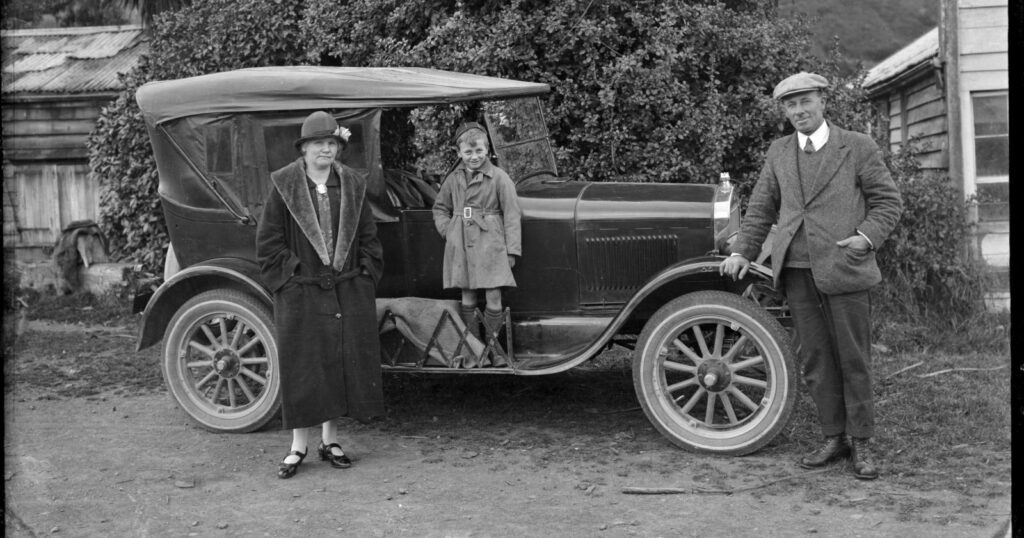
In October 1911, a disused tram works in Trafford Park, on the edge of Manchester, started building cars. They were Model Ts, the car Henry Ford had launched in America three years earlier, and the plant was the first factory Ford had opened anywhere outside North America.
It grew fast. Within three years, the Manchester plant was turning out Model Ts on a moving assembly line, and it was on course to build 10,000 cars in 1914 before the First World War got in the way.
Why Manchester
Ford cars had been arriving in Britain since 1903, when the first Model As were shipped over from the US. The company decided it needed a British operation after the Model T made its world debut at the 1908 Olympia motor show in London. Ford Motor Company (England) Limited was incorporated on March 8, 1911.
As the Society of Automotive Historians in Britain notes, Percival Perry, Ford’s British importer, was already selling more than 400 American-built Fords a year from premises in London. Growing further meant building cars locally.
Trafford Park was an obvious choice. Once a wooded estate where deer roamed, it had become an industrial zone after the Manchester Ship Canal opened in 1894, which gave factories there a direct water link to the sea. Ford was the second major American company to set up there, after Westinghouse.
A slow start, then a fast one
At first the plant was small. Grace’s Guide to British Industrial History records that it employed about 60 people and assembled cars from chassis and mechanical parts shipped in from America, with bodies sourced locally. Ford’s own account says four-man teams built each vehicle individually.
Output climbed anyway. The Society of Automotive Historians in Britain says production doubled from about 3,000 cars in 1912 to 6,000 in 1913. By then the Model T was Britain’s best-selling car, with 30 percent of the market, according to Grace’s Guide.
Ford was changing how it built cars at the same time. The Henry Ford museum’s company chronology dates the first assembly line experiments at the Highland Park plant in Michigan to April 1913, with a moving chassis line following that August. The ideas crossed the Atlantic quickly. In 1914, Trafford Park started Britain’s first moving assembly line for car production, building 21 cars an hour.
Records in the newspapers
Local papers followed the speed-ups closely. Grace’s Guide collects several reports from early 1914. In January, it was reported that a car had been built at Trafford Park in 11 minutes and was on the road in 19, said to beat the Detroit factory’s record by six minutes.
In March, the Newcastle Journal reported that the works had assembled 110 cars in a single ordinary working day, bodies and accessories included.
On course for 10,000
At that pace, 1914 was set to be the plant’s biggest year yet. The Society of Automotive Historians in Britain says 10,000 cars were planned for 1914 when war intervened.
The war changed the plant’s priorities. It kept making vehicles, the Society says, but mainly tractors. Car production picked up again in 1918, and by the end of that year the workforce had grown to more than 1,300, including about 200 women, according to a newspaper report collected by Grace’s Guide. In 1919, 41 percent of cars registered in Britain were Fords.
Outgrowing Trafford Park
The success also exposed the plant’s limits. By the early 1920s it was close to capacity, and Ford wanted direct access to a deep-water port. In 1923, it chose a new site by the River Thames at Dagenham in east London, Grace’s Guide says. The Dagenham plant opened in October 1931, and car production moved there from Trafford Park.
The Manchester factory had built cars for just under 20 years. In that time, it took Ford from a London showroom selling imported cars to Britain’s best-selling carmaker, and it was where British workers first built cars on a moving line.