
In 1895, American heiress Consuelo Vanderbilt was married off as a teenager to the Duke of Marlborough, who collected $2.5 million in railroad stock. He reportedly told her on the honeymoon that he had married her only to save Blenheim Palace, and the money did just that.
On November 6, 1895, St. Thomas Church on New York’s Fifth Avenue was packed for the wedding of the year. Crowds filled the street outside, hoping for a glimpse of the bride.
Consuelo Vanderbilt was 18, one of the richest young women in America, and she was marrying a British duke. According to later accounts, she stood at the altar weeping behind her veil.
A Gilded Age match
Consuelo was the daughter of William Kissam Vanderbilt, heir to a railroad fortune, and his ambitious wife, Alva. In the late 19th century, wealthy American families like the Vanderbilts had vast fortunes but were often snubbed by older high society.
One way to gain status was to marry a daughter into the British aristocracy. Many titled British families had grand estates but little cash, so these matches suited both sides. American brides who married into the aristocracy this way were nicknamed “dollar princesses.”
The duke who needed money
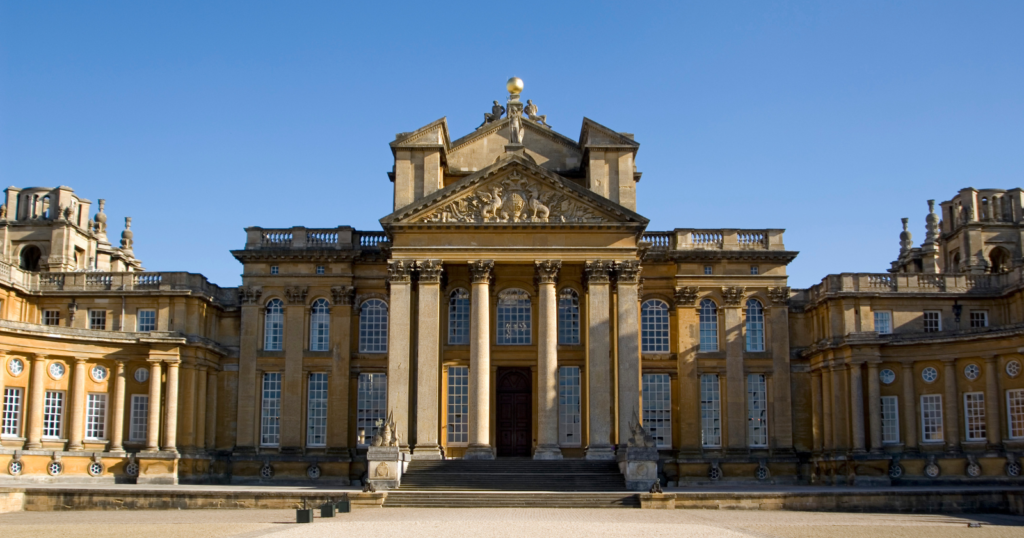
Charles Spencer-Churchill, the 9th Duke of Marlborough, was a cousin of Winston Churchill. He had inherited Blenheim Palace, the vast baroque house in Oxfordshire built for his ancestor, the 1st Duke of Marlborough, after his victory at the Battle of Blenheim in 1704.
By the 1890s, Blenheim was in trouble. Agricultural incomes had fallen, earlier dukes had sold off treasures, and the palace needed expensive repairs. The young duke needed money, and quickly.
A marriage arranged by her mother
Consuelo didn’t want to marry him. She was secretly engaged to an American, Winthrop Rutherfurd. But Alva was determined her daughter would become a duchess.
Alva kept Consuelo away from Rutherfurd, pressured her relentlessly and, according to Consuelo’s later account, claimed the stress was making her seriously ill. Years later, Alva admitted to an investigator that she had forced her daughter into the marriage.
The settlement
The marriage came with an enormous financial deal. The duke received $2.5 million in Beech Creek Railway stock, placed in trust, with a guaranteed annual income of 4 percent paid by the New York Central Railroad. The couple also received generous yearly allowances.
In today’s money, the settlement was worth tens of millions of dollars. Consuelo’s father later built the couple a London mansion, Sunderland House.
What the duke reportedly said
The honeymoon was not a happy one. According to Consuelo’s account, the duke told her he had married her only because he felt obliged to save Blenheim, and that he had given up the woman he loved in England to do it.
Her memoir, The Glitter and the Gold, published in 1953, shaped much of how the marriage is remembered. Some historians have since suggested it wasn’t entirely candid, so parts of the story rest on her account alone.
Saving Blenheim
The Vanderbilt money did transform the palace. The duke used it to restore Blenheim’s roofs, interiors and furnishings, and to rebuild its formal gardens. Later projects added the elaborate water terraces that visitors still admire today.
Consuelo also became a popular and active duchess. She had two sons, John and Ivor, and devoted much time to charity work among local families and later to causes supporting women and children.
Life after Blenheim
The marriage never recovered. The couple separated in 1906 and divorced in 1921. Consuelo then married the French aviator Jacques Balsan, this time for love.
In 1926, the marriage to the duke was annulled. Alva testified that she had coerced her daughter. Consuelo lived until 1964 and was buried near Blenheim, at the churchyard in Bladon, near her son Ivor.
Visiting Blenheim today
Blenheim Palace is now a UNESCO World Heritage Site and is open to the public for much of the year. It’s also known as the birthplace of Winston Churchill. Visitors can tour the state rooms, gardens and parkland, much of which was restored with Vanderbilt money.