In 1918, Milton Hershey quietly signed over his entire stake in the Hershey Chocolate Company, worth $60 million, to a school for orphan boys he had founded with his wife; that gift now funds a school trust worth more than $15 billion
On November 13, 1918, two days after the end of the First World War, Milton Hershey made a decision that would change thousands of lives. Without any announcement, he transferred the bulk of his fortune, his shares in the Hershey Chocolate Company, to a trust for a small school for orphan boys.
He didn’t hold a press conference or tell the newspapers. The public didn’t find out for five years.
From failure to chocolate fortune
Milton Hershey was born in 1857 in rural Pennsylvania and had little formal schooling. As a young man, he tried to build a candy business several times and failed, going bankrupt more than once.
His breakthrough came with caramels. His Lancaster Caramel Company became a success, and in 1900, he sold it for $1 million. He had already started making chocolate, and he focused on finding a way to produce milk chocolate cheaply enough for ordinary Americans to afford.
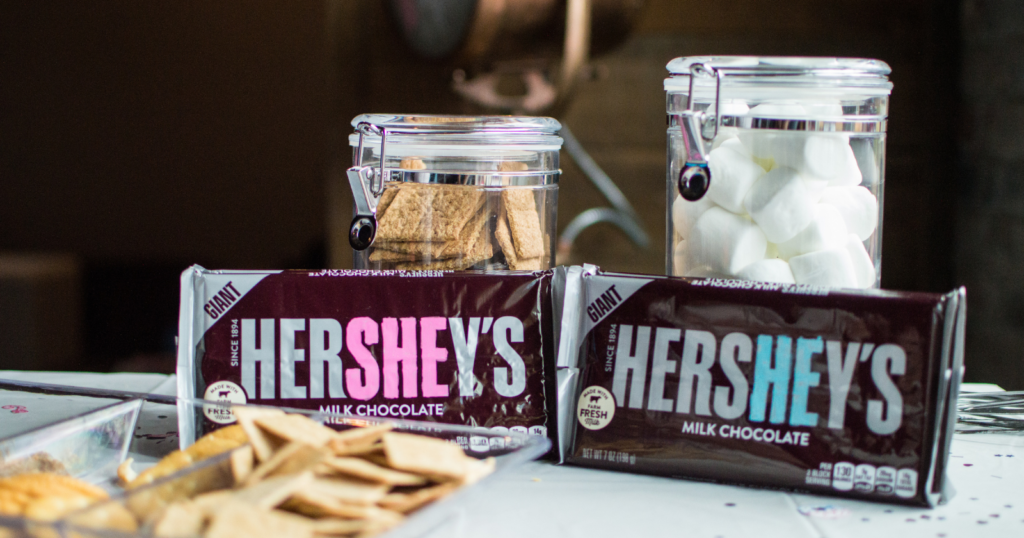
The Hershey bar was a huge hit. Hershey built a large factory in the Pennsylvania countryside, along with an entire company town for his workers, with homes, parks, schools and a trolley line. The town became known as Hershey.
A school for boys with no one
Milton married Catherine “Kitty” Sweeney in 1898. They were devoted to each other, but they were unable to have children.
In 1909, the couple founded the Hershey Industrial School, a home and school for orphaned boys. It began with just a few students living in the farmhouse where Milton was born. The boys received schooling, food, clothes and training in practical trades.
Catherine died in 1915 after a long illness. Milton never remarried.
The secret gift
Three years after her death, Milton transferred 5,000 shares of Hershey Chocolate Company stock, the bulk of his fortune, to the Hershey Trust Company, to be held for the school. It meant the school would own a controlling stake in his business.
The gift wasn’t widely known until November 1923, when newspapers reported it. The New York Times ran it on its front page, valuing the gift at $60 million, or roughly $1 billion in today’s money. Hershey later explained that, with no children of his own, he had decided to make the orphan boys of the United States his heirs.
How the gift grew
Over the following century, the Hershey Company grew into one of the world’s biggest confectionery businesses. As its value rose, so did the trust.
Today, the Milton Hershey School Trust is one of the richest educational endowments in the world. The school reported total assets of about $23.4 billion for the year ending July 2024. The trust still controls the Hershey Company through special voting shares, holding the large majority of shareholder votes.
That control has mattered. In 2002, when trustees tried to sell the company, local opposition and the state attorney general blocked it. In 2016, the company rejected a $23 billion takeover bid from Mondelez.
The school today
The Milton Hershey School, as it’s now called, is a free, private boarding school in Hershey, Pennsylvania. It no longer takes only orphans. Since the 1970s, it has admitted girls, and it now serves around 2,000 students from low-income families, from pre-kindergarten through 12th grade.
Students receive housing, meals, clothing, healthcare and education at no cost. They live in small homes with house parents, and graduates can receive financial help for college or training. The school has more than 11,000 graduates.
The trust has also funded other projects in the area, including Penn State’s Milton S. Hershey Medical Center, which opened in the 1960s.
A legacy that keeps growing
Milton Hershey died in 1945, aged 88. By then, he had given away almost everything he owned.
More than a century after that quiet transfer in 1918, his chocolate fortune is still doing what he intended. Every Hershey bar sold helps, in a small way, to support children he never met.