
In 1971, Richard Branson bought an Oxfordshire manor for £30,000 and turned its outbuildings into a studio. A 19-year-old Mike Oldfield recorded Tubular Bells there, and it became Virgin Records’ first release
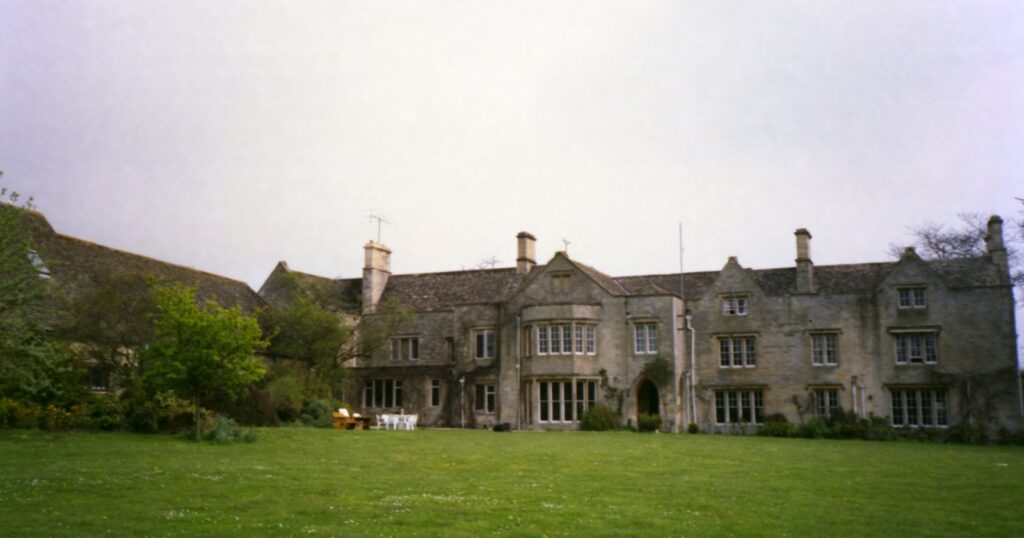
In 1971, Richard Branson was running a record shop and was not yet 21. That year he bought a country house near Oxford, and two years later a record made in its outbuildings became the first release on his new label.
A house found in Country Life
The house was the manor at Shipton-on-Cherwell, a village just north of Oxford. According to uDiscover Music’s history of Virgin’s early years, Branson found it by leafing through Country Life magazine. “Three months before his 21st birthday he bought, ‘The Manor’ as it became known for £30,000,” the account says. He paid for it with a loan from Coutts bank, secured on the shop’s sales figures, and the rest came from his Auntie Joyce.
The house had a long history before Branson. A 2011 Country Life sale listing traces it to the Standard family in the 1600s. In 1804 it was bought by William Turner, who renovated the interior and laid out a park around it. The Blenheim estate acquired the manor and park in 1867, and in 1920 it was sold to Frank Gray, a former Liberal MP for Oxford, who used it to rehabilitate young people.
A studio in the squash court
Branson renovated the house and changed the outbuildings into a recording studio.
The studio itself, Sound On Sound reported, was built in what had been the squash court. Country Life adds that he also dammed a small stream to make a lake in front of the house.
The Manor opened for business in October 1971, uDiscover reports, with Tom Newman as resident producer and engineer. A month later, a singer named Arthur Louis was among the first to record there. With him was a teenage guitarist named Mike Oldfield.
A week to prove it
Oldfield had been making demos of a long instrumental piece on a borrowed tape recorder. He told Sound On Sound in 2013 that while he was rehearsing at the Manor, he offered his tapes to the engineers. “I said, ‘I’ve got these demos. Would you like to have a listen?'” Newman and his fellow engineer Simon Heyworth passed them to Branson’s colleague Simon Draper.
The answer came after a dinner on Branson’s boat. “We’re going to give you a week in our new studio to see what you can do,” Branson told him, as Oldfield recalled it. In November 1972, during that one week, Oldfield recorded all of Part One. He finished Part Two in the studio’s spare hours over the following months, through April 1973. He was 19 for the whole of it.
The tubular bells themselves were a piece of luck. The singer John Cale had just finished an album at the Manor, uDiscover notes, and among the instruments he had been using was a set of tubular bells. Oldfield added them to his list.
No takers, so Virgin did it
The finished tapes did not sell themselves. “Mike received rejection after rejection,” Branson wrote on his 50th-anniversary blog post, so “we decided to launch our own record label to put out this album.”
Tubular Bells came out in the UK on May 25, 1973, 10 days after Oldfield’s 20th birthday, with the catalog number V2001. The album’s opening piano theme was then used in The Exorcist, released at the end of 1973, and only after that did Tubular Bells reach number one in Britain, according to Sound On Sound. The magazine puts its sales at more than 2.5 million in the UK and over 15 million worldwide.
Branson has said the record “kickstarted the Virgin brand.” EMI bought Virgin Records in 1992 and the Manor was later sold; Sound On Sound notes it is a private house again.