
In 1975, former Olympic bobsledder Keith Schellenberg paid £270,000 for the Hebridean island of Eigg. 22 years later the islanders’ trust bought it for £1.5 million
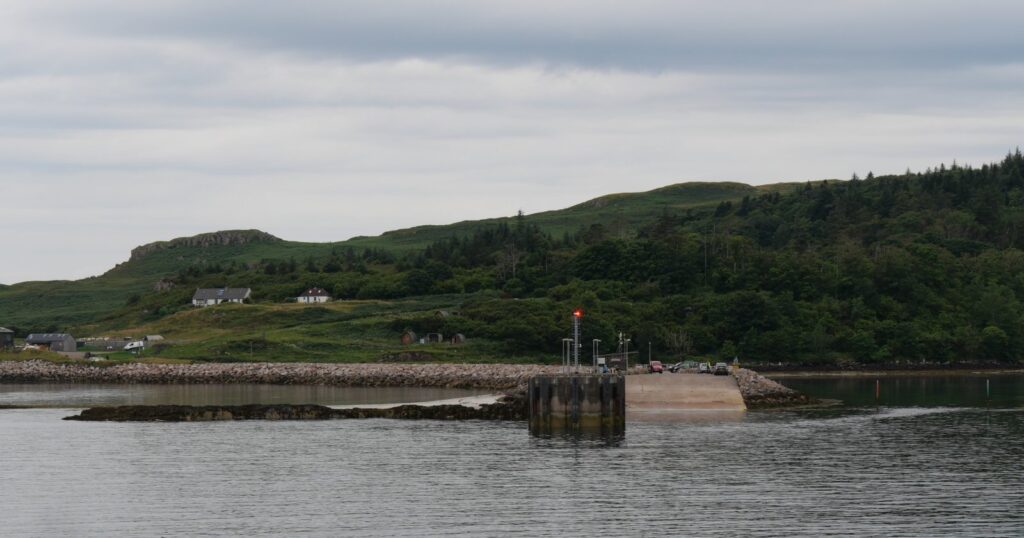
When Keith Schellenberg bought the Hebridean island of Eigg in 1975, the islanders were glad to see him. His 2019 obituary in the Press and Journal describes a man who “arrived to a hero’s welcome on Eigg” and ended up with his effigy and his Rolls-Royce burned. Twenty-two years after he arrived, the island belonged to the people who lived on it.
An Olympian buys an island
Schellenberg came to Eigg with a sporting record few landowners could match. According to Olympedia, the Olympic history database, he raced for Great Britain in the two-man and four-man bobsleigh at the 1956 Winter Olympics, finishing 11th and 12th. Eight years later he switched to luge, placed 25th in the men’s singles at Innsbruck, and carried the British flag at the opening ceremony.
His obituaries in the Daily Telegraph and the Daily Express gave the price he paid for Eigg as £270,000, though some accounts put it a few thousand pounds higher.
He was not the only one interested. Brian Wilson, who met him that year and was a government minister by the time of the buyout, wrote in The Scotsman that the Highlands and Islands Development Board “was preparing to buy Eigg.” Wilson added: “Schellenberg told me he had intervened to prevent it falling into public ownership – an odd motivation for a former Liberal candidate.”
Two decades of trouble
Schellenberg became the ninth laird of Eigg, held lavish parties and drove around the island in a 1927 Rolls-Royce Phantom, wearing goggles and a tweed jacket. Over the years, relations with the residents deteriorated.
In January 1994 the Rolls-Royce was destroyed by fire, burned to a blackened shell. When police investigated, the locals gave a unanimous answer: they would not say who started the fire even if they knew.
In 1995 Schellenberg sold Eigg to an artist called Maruma, a move Wilson described as “a final act of spite.” In 1999 his libel action against the Guardian, over a feature about his time on the island, came to trial. He dropped the case five weeks into the hearing, and the Press and Journal reports that it cost him around £750,000. Residents who made the two-day journey to the High Court in London testified that, in the paper’s words, “Scotland’s feudal landlord system granted the laird power over virtually every aspect of their lives.”
Bought by the people who lived there
Maruma’s ownership did not last. When Eigg came on the market again in 1996, an international appeal was launched to buy it for the community. A Press and Journal report on the 25th anniversary says one anonymous woman pledged £750,000, or £1 million with Gift Aid, on the sole condition that her name stayed secret.
The buyer was the Isle of Eigg Heritage Trust, a partnership of the islanders, Highland Council and the Scottish Wildlife Trust. It paid £1.5 million. According to a BBC report on the 25th anniversary, Highlands and Islands Enterprise gave a £17,000 grant and the rest came from donations, with some 10,000 people giving to the appeal.
The Press and Journal sums up the result in one line: “On June 12 1997, the 65 residents of Eigg became their own landlords.”
What came after
The years since have been kinder to the island. By the 25th anniversary in 2022, the Press and Journal reported, the population had risen to 110, visitor numbers had doubled, and the trust and its subsidiaries employed 22 people. In 2008 Eigg became the first community in the world to switch on an off-grid electricity system run on renewable power, using hydro, wind and solar to replace diesel generators that had supplied only a few hours of power a day.