
Blenheim Palace, where Winston Churchill was born, is out from under almost two years of scaffolding after a £12 million roof restoration, with the Great Hall and the Saloon reopened and their painted ceilings back on show
Blenheim Palace, Churchill's birthplace, has lost its scaffolding after a £12 million roof restoration, and the Great Hall and the Saloon have reopened.
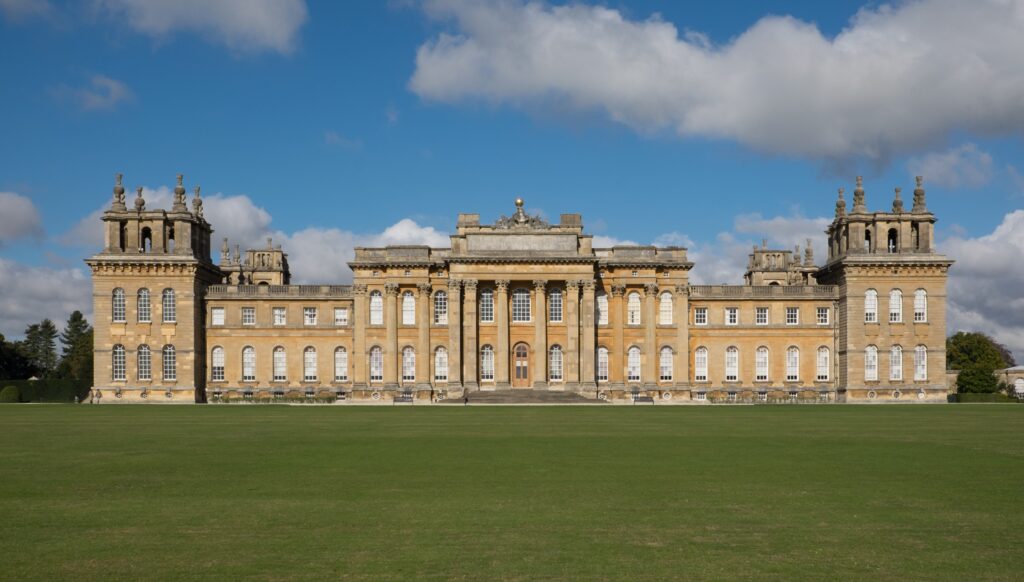
Blenheim Palace, the Oxfordshire birthplace of Sir Winston Churchill, is out from under its scaffolding after a £12 million restoration of its roof.
The palace had stood behind scaffolding for almost two years. Blenheim announced that its £12 million roof restoration was complete.
The palace said: “Now the scaffolding has come down.” The roof has been re-leaded and re-slated. The Saloon and the Great Hall have reopened, with their ceiling paintings on show again.
Blenheim added: “The statues stand clear against the sky once more, and the Palace’s silhouette can be seen as it was intended.”
The house dates to 1705 and is a UNESCO World Heritage Site. It is the current home of the 12th Duke of Marlborough.
It had suffered from damp, leaks, smoke damage and decay, and its roof in particular needed serious work, Time Out said on 25 November. Time Out reported that the roof, including its timber, and the surrounding Corinthian limestone facades were repaired and replaced as part of the works.
Time Out described the Great Hall and the Saloon as two of the palace’s iconic interiors. Blenheim calls the project “the most significant roof restoration in its history”.
The palace’s family story also reaches across the Atlantic. British Heritage has told how American heiress Consuelo Vanderbilt married the Duke of Marlborough in 1895.
Lead melted down and recast
Some of the most important work was hidden from view, according to the palace. It involved reworking materials, repairing the structures beneath them and improving the way the roof manages water and airflow.
The existing lead was not replaced. It was melted down and recast using traditional sand-casting techniques.
Details were redesigned to let the lead move naturally as temperatures change. The substrates beneath were repaired or replaced, and ventilation was improved.
The palace said these measures “address the underlying causes of failure and will help the roof perform for decades to come”.
Thousands of slates on the Heights and Galleries roofs, and on the Saloon roof, were assessed. Damaged or failing slates were replaced, renewing the roof coverings and keeping the buildings beneath protected from the weather.
In places the roof now “glistens with gold”. Two golden balls sit at its pinnacle, and a local specialist craftsman spent weeks regilding them in 23.5-carat gold.
The gilding was done in a clean, controlled environment amid the bustle of the wider construction site.
Stonework and a French king
Outside, carved limestone capitals crown the palace’s columns. Blenheim counts them among the most detailed features of its Baroque architecture.
Centuries of exposure to the weather had worn away much of their carving. It obscured the leaves and ornament that give the Corinthian style its character.
Specialist stonemasons repaired the capitals and reinstated lost details. The palace said the work brought “renewed definition to the stonework while respecting the craftsmanship of the original design”.
Time Out reported that the pediment on top of the North Portico has also been restored.
The marble bust of Louis XIV, the defeated French king, “sits proudly atop the South Portico once more”. Marble for its restoration was sourced from Italy.
The 1st Duke of Marlborough took the bust to symbolise his victory over Louis XIV in the War of the Spanish Succession.
Painted ceilings back on show
Inside, the Great Hall has an oil-painted ceiling by Sir James Thornhill. The Saloon features the work of Louis Laguerre.
Time Out reported that both rooms had been saved from permanent damage. Blenheim said the two rooms have reopened, “their magnificent ceiling paintings on show again after the long period of works”.
The palace said: “Look up, and you will see the craftsmanship that has been carefully protected for future generations.”
According to Time Out, Donald Insall Associates, the architects behind the conservation project, have built a virtual model of the palace.
The model will let the estate monitor how the building is holding up and understand the impact of the surrounding climate. It is designed to flag future issues before they become major repairs.
Blenheim’s page also invites visitors to see the restoration in its own reel, and through the eyes of two creators who came to see it.
The palace said: “Come and see the Palace in its full glory. It is a moment not to be missed.”