
In 1898, Andrew Carnegie paid £85,000 for Skibo Castle in the Scottish Highlands, then spent about £2 million tripling its size; a century later, Madonna married Guy Ritchie there
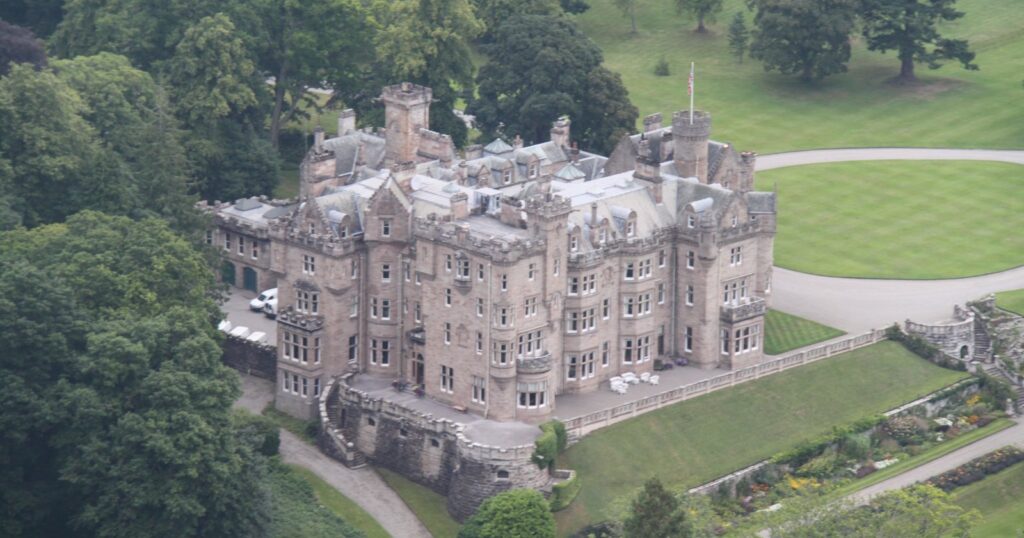
Andrew Carnegie had a name for Skibo Castle. In September 1917, a long profile of the estate, first printed in The Scotsman and picked up by the Otago Witness in New Zealand, noted that he used to call it his “earthly paradise.” The steel magnate had spent nearly 20 summers there, and by then it was reported that he was saying goodbye to it.
Carnegie was Scottish-born and had made his fortune in American steel, but it was his daughter who brought him to Sutherland. Margaret Carnegie was born in 1897, about a decade after he married Louise Whitfield. According to The Carnegie Club, which runs Skibo today, he wanted her to grow up “feeling as much at home in Scotland as she did in America.”
Skibo sits on the north side of the Dornoch Firth, and it was old ground. Historic Environment Scotland traces the estate back through a long list of owners, and records that Carnegie bought it in 1898. The profile describes about 20,000 acres, much of it heath and woodland, with several lochs.
Carnegie paid £85,000 for Skibo, according to the 1917 article. The old profile adds that he had got a bargain: it was a little over half of the £130,000 the previous owner had paid, and other offers came in just after his.
The house was then rebuilt on a grand scale. Canmore, Historic Environment Scotland’s catalog of historic places, puts it this way: “In addition to the £85,000 purchase price, he spent a further £2 million in the creation of an even larger mansion.” The work ran from 1899 to 1903, to designs by the architects Ross & Macbeth. The Carnegie Club says the remodeling “tripled the size of the castle and transformed the interior.”
Life at Skibo had a strong Highland flavor. The 1917 profile quotes the journalist W.T. Stead, who stayed there as a guest: “Mr Carnegie keeps his own piper, and every morning the inmates are wakened by the shrill music of the Highlands.” The piper also called guests to dinner. A large organ was installed in the hall and played every morning before breakfast. When Carnegie was in residence, the Union Jack and the Stars and Stripes flew together from the tower.
He reshaped the land as well. Historic Environment Scotland records that he dammed the River Evelix to create Loch Evelix and the Allt Garbh burn to create Loch Ospisdale, Margaret’s Loch and Lake Louise, the last two carrying the names of his daughter and his wife.
He had a private golf course, salmon and trout fishing on the Evelix and a yacht, the Seabreeze. King Edward VII, the old article adds, once anchored the royal yacht in the Dornoch Firth to call on him.
By 1917 Carnegie, in his 80s and in poor health, had stopped making the summer trip. His family held on to Skibo for decades. Historic Environment Scotland notes that his widow visited until 1934 and Margaret until 1980, and that the estate went up for sale in 1982.
The castle then stood empty until 1990, Canmore records, when the businessman Peter de Savary paid £10 million for the castle and its estate. Today it is run as the Carnegie Club, a private members’ club.
That is how Skibo came to host a pop star’s wedding. Madonna and the film director Guy Ritchie “were married Friday, Dec. 22, at Scotland’s Skibo Castle,” Rolling Stone reported. The Rev. Susan Brown performed the ceremony. Guests included Sting and Trudie Styler, Gwyneth Paltrow, Donatella Versace and Rupert Everett.
The day before, the couple had their four-month-old son, Rocco, baptized at Dornoch Cathedral. Almost no details of the wedding itself got out, Rolling Stone noted. A century after Carnegie arrived, Skibo was still a very private place.