
In 1929, Henry Ford secretly paid about $5,000 for a 300-year-old Cotswold cottage, buying it in his agent’s name so the seller wouldn’t raise the price; it crossed the Atlantic in 506 sacks and 211 crates and still stands in Michigan’s Greenfield Village
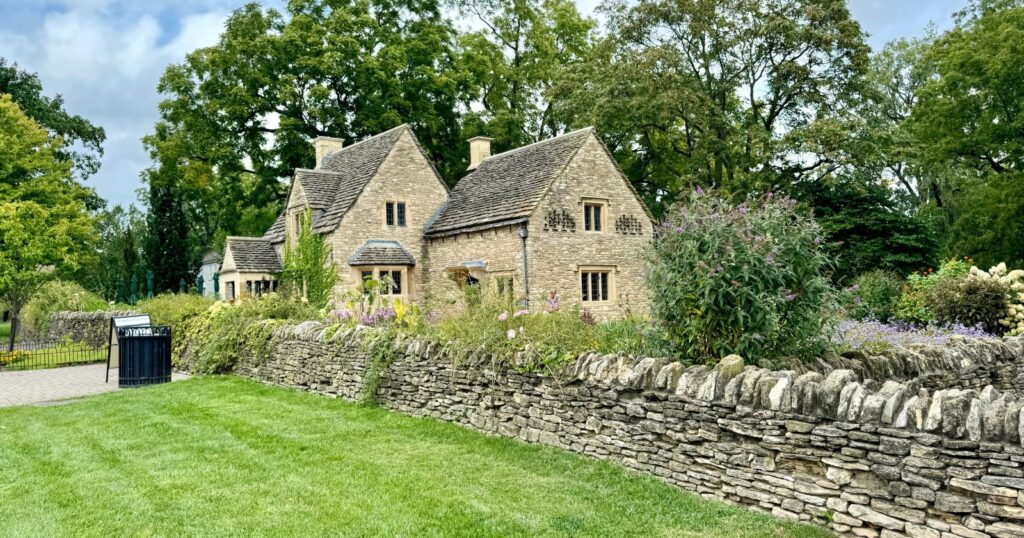
In Dearborn, Michigan, a few miles west of Detroit, there is a honey-colored stone cottage with a steep stone-tiled roof. It looks as if it belongs in a village in Gloucestershire.
Until 1930, it did.
The cottage was bought by Henry Ford, shipped across the Atlantic in pieces and rebuilt in Greenfield Village, the open-air museum he created next to his car empire. Nearly a century later, it is still there.
A carmaker in the Cotswolds
By the late 1920s, Ford was one of the richest men in the world, and he had developed a fondness for rural England. According to The Henry Ford, the museum that runs Greenfield Village, “Henry Ford loved the Cotswolds,” and on visits in the 1920s he was drawn to “the area’s natural beauty and charming architecture.”
By early 1929, he had decided he wanted a Cotswold house of his own for the village he was building in Dearborn. His secretary wrote in February that year that Ford was looking for “an old style that has not had too many changes made to it that could be restored to its true type.” The job of finding it went to Herbert Morton, Ford’s man in England.
The secret purchase
Morton found it in the tiny village of Lower Chedworth, in Gloucestershire. It was a pair of joined limestone cottages, which the museum says were “constructed out of native limestone in the early 1600s,” and probably built about 1619.
The museum says the owner, Margaret Cannon Smith, sold the house and its two acres in April 1929 “for approximately $5000.” The buyer on paper was Morton, not Ford. “Ford’s name was kept quiet,” the museum explains. “Had the seller been aware that the actual purchaser was Henry Ford, the asking price might have been higher.”
Improving it before it left
Ford did not move the cottage exactly as he found it. Before it was taken down, he had it made more picturesque. According to The Henry Ford, the left-hand cottage gained “a porch (a copy of one in the Cotswold village of Rissington), a dormer window, a bay window, and a beehive oven.” The museum’s collection records note that “several decorative additions were made to the house in England, before dismantling and re-erecting it in Greenfield Village.”
506 sacks and 211 crates
Then the cottage came apart. “The building stones were placed in 506 burlap sacks,” the museum says, while “doors, windows, staircases, and other architectural features were removed and packed in 211 crates.” The barn, stable and fence went too.
The journey began on March 28, 1930. According to the Friends of the National Railway Museum, the Great Western Railway loaded “475 tons of stone etc” into 67 wagons at Foss Cross station. The train ran to Brentford Docks, where the materials went onto barges to London Docks. From there, the stones crossed the Atlantic on the SS London Citizen.
The disassembled cottage arrived in Dearborn in April 1930. Two English craftsmen came over to rebuild it: mason C.T Troughton and carpenter Bill Ratcliffe. Work ran through the summer, and the museum says most of it was done by late September.
A few details changed in the move. A GSIA article notes that the roof’s stone slates were fixed with copper nails instead of the wooden pegs originally used, and that lead gutters and downpipes were added.
Ford goes back to Chedworth
Ford’s interest did not end with the purchase. In October 1930, according to the museum, he “unsurprisingly asked Morton to take him and Clara to the site where the cottage had been.” A few weeks later, he also bought an old forge from the village of Snowshill. It followed the same route to Michigan, reaching Dearborn in 1931, and was rebuilt next to the cottage.
Still standing in Michigan
Greenfield Village opened to the public in June 1933, and the cottage was ready for visitors. It has been there ever since, alongside Thomas Edison’s laboratory and the Wright brothers’ bicycle shop. The museum says it “remains a favorite with many visitors.”
In Lower Chedworth, the spot where it stood is now a small field. The cottage, built by English masons around 300 years before Ford found it, now sits thousands of miles away, bought under someone else’s name and carried across an ocean in sacks and crates.