
In 1963, British Railways was ready to scrap the Flying Scotsman, so businessman Alan Pegler bought it for around £3,000; 41 years later, the nation bought it back for £2.3 million
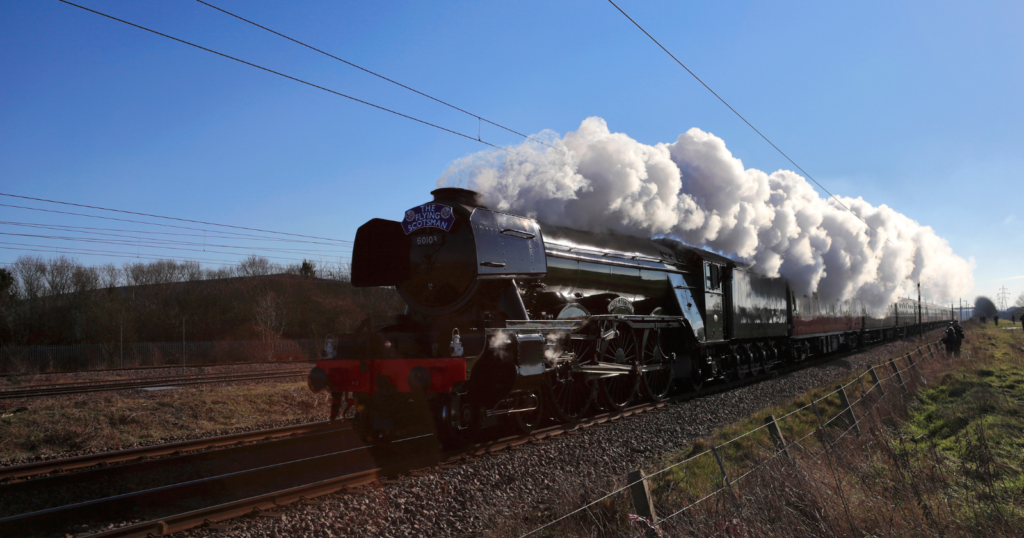
What is a steam engine worth? Over the past century, the answer for one green locomotive from Doncaster has swung from scrap value to millions, and back again more than once.
It has also been the financial ruin of more than one owner who loved it. Its story is easiest to follow through the price tags.
Built for the job, 1923
Flying Scotsman rolled out of Doncaster Works in 1923, designed by Sir Nigel Gresley for the newly formed London and North Eastern Railway. It was given its famous name for the British Empire Exhibition at Wembley in 1924.
Then it earned the reputation. On 1 May 1928 it hauled the first non-stop Flying Scotsman express from King’s Cross to Edinburgh, 392 miles in about eight hours. On 30 November 1934 it became the first steam locomotive officially recorded at 100mph. (One or two accounts put that run in 1932, but 1934 is the date in the record books.)
By the time British Railways took it out of service, it had covered more than two million miles. Its last scheduled train, on 14 January 1963, was the 1.15pm from King’s Cross to Leeds. It came off at Doncaster, where it had been built.
£3,000: the scrap price
British Railways had announced the year before that the engine would be scrapped. A group of enthusiasts calling itself Save Our Scotsman tried to raise its scrap value of £3,000, and failed.
Alan Pegler didn’t. He was a well-off businessman who had first seen the locomotive at the 1924 exhibition as a small boy. In 1961 he had received £70,000 for his shares in the family rubber firm, and he bought Flying Scotsman outright. Most accounts give the price as £3,000, though some say £3,500.
Many retellings add that he had the political backing of the Prime Minister, Harold Wilson. That’s hard to square with the dates, because Wilson didn’t become Prime Minister until October 1964.
As part of the deal Pegler secured a full overhaul and the right to run the engine on British Railways tracks. By 1968, when steam officially ended on BR, his was the only steam locomotive still allowed out on the main line. That May he celebrated by running it non-stop from London to Edinburgh again.
£132,000: the American bill
In 1969 Pegler shipped Flying Scotsman to the United States on a tour meant to promote British exports. Over three seasons it covered about 15,400 miles, from Boston and Washington to Texas, Montreal and finally San Francisco.
The first year roughly broke even, but the second lost money. By 1972 Pegler was bankrupt, owing around £132,000. He worked his passage home on a P&O cruise ship, giving talks about trains to the passengers. The locomotive stayed behind, stored on a US Army depot to keep it out of the hands of creditors.
£25,000, then £1.25 million: the private years
In January 1973, after a phone call from a fellow enthusiast, the construction magnate William McAlpine stepped in. According to the locomotive’s Wikipedia history, he bought it for £25,000 straight from the finance company in San Francisco and shipped it home.
McAlpine’s years were the engine’s calmest. The high point came in 1988–89, when it toured Australia. On 8 August 1989 it ran 422 miles non-stop from Parkes to Broken Hill, which still stands as the longest non-stop run by a steam locomotive.
In 1993 the pop producer Pete Waterman bought a half-share. Then, in February 1996, the businessman Tony Marchington bought Flying Scotsman outright. The Science Museum puts the price at £1.25 million, while other accounts say £1.5 million, a figure that seems to include a set of Pullman carriages and a depot at Southall.
Marchington paid for another major overhaul and tried to build a business around the engine. By the early 2000s that business was in trouble, and Flying Scotsman was up for sale again.
£2.3 million: the nation’s turn
A sealed-bid auction was held on 2 April 2004. There were real fears the locomotive might go abroad. The National Railway Museum in York put in the winning bid of £2.3 million, reportedly about 15 per cent more than the next-highest offer.
Most of the money came from a £1.8 million grant from the National Heritage Memorial Fund. The rest came from a public appeal, with Sir Richard Branson matching the public’s donations through Virgin. Accounts of the split vary slightly, and some reports round the price to £2.2 million or £2.5 million.
Buying it turned out to be the easy part. A restoration that was meant to cost about £750,000 dragged on for a decade and eventually came to roughly £4.5 million. Flying Scotsman finally steamed out of King’s Cross for York in February 2016, though trespassers on the line held up its big day.
Priceless, apparently
Flying Scotsman turned 100 in 2023 and is still working. This year it has been out on another tour of mainline trips and heritage railways. When it’s on show at the museum in York, visitors cite it as the main reason they came.
In May, LNER also moved its Flying Scotsman passenger service back to its historic mid-morning departures, though that train now runs with a modern Azuma. The original engine, meanwhile, has finally found an owner it can’t bankrupt.