
In 2005, Jeremy Clarkson bought a lighthouse home on the Isle of Man and fenced off the coastal path because ramblers kept peering into his kitchen, and seven years later he lost in court after arguing the path breached his human rights
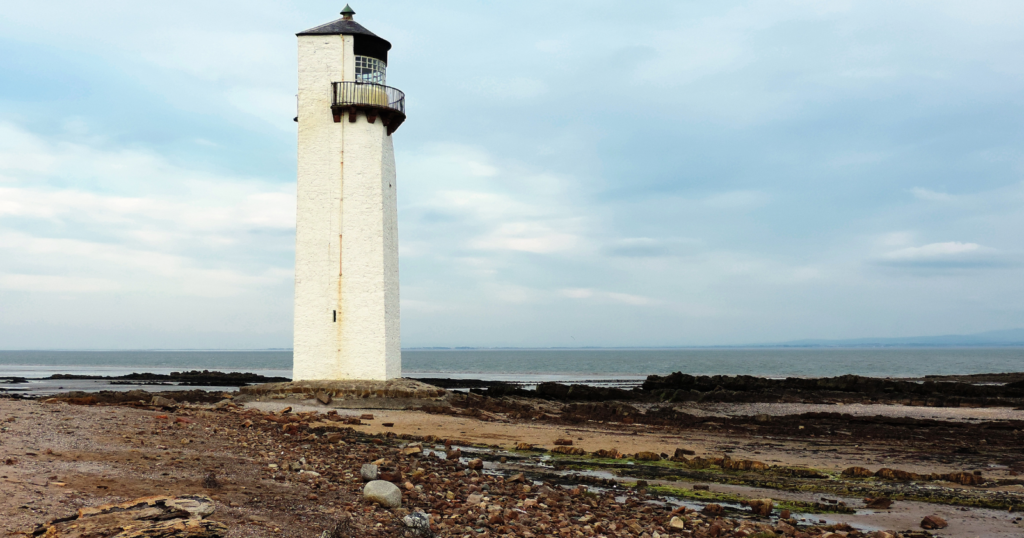
The old Manx name for the Langness peninsula translates as “the graveyard of the lost ships”. It’s a low, ragged finger of rock poking out from the south-east corner of the Isle of Man, near Castletown, and for centuries ships came to grief on it.
At its tip stands a white lighthouse. For a few years in the 2000s it was also the scene of one of the island’s most bad-tempered rows, between Jeremy Clarkson and the people who liked to walk past his kitchen window.
A light for the lost ships
The first attempt to make Langness safer was the Herring Tower, an unlit stone daymark built in 1811. It didn’t work. More than 40 wrecks were recorded after it went up.
The real answer came in 1880, when the Northern Lighthouse Board lit a proper lighthouse on Dreswick Point. It was designed by David and Thomas Stevenson, of the great Scottish engineering family. Thomas was the father of Robert Louis Stevenson.
The light was automated in 1996, and the keepers’ cottages beside it were no longer needed. The tower still works, flashing twice every 30 seconds, but the houses went private.
Mr and Mrs Clarkson move in
Clarkson and his wife, Frances Cain, bought the lighthouse cottages in the mid-2000s, with most reports giving 2005. It wasn’t a random choice. Frances is Manx, the daughter of Major Robert Cain, who won the Victoria Cross at Arnhem in 1944 and settled on the island after retiring.
For the Clarksons it was a holiday retreat, far from the cameras. Clarkson even showed the lighthouse off on Top Gear. The trouble was that a coastal path ran right past it, and walkers had been using it for as long as anyone could remember.
The Clarksons complained that ramblers were peering into their kitchen and taking photographs. So they closed off a section of path near the house and put up a fence. One account dates the fence to October 2006, though the dispute itself is usually said to have begun in 2005.
Enter PRoWL
The response was swift. Local walkers formed a pressure group called PRoWL, short for Public Rights of Way Langness, to get the path back. Its spokesman, Ian Costain, became the Clarksons’ most persistent opponent. Not all of the group’s tactics won friends, and during one Tynwald debate some of its protest material was criticised as offensive.
It quickly became a matter for the Manx parliament. In 2008 Tynwald set up a three-member delegation, led by David Cannan MHK, to find a compromise. It came up with an offer: a new, legally defined path routed away from the house, a warden for the peninsula, and a £20,000 contribution towards the Clarksons’ legal costs.
PRoWL called for the plan to be rejected, and Tynwald agreed. Instead it voted for a full public inquiry.
The inspector’s verdict
The inquiry, run by the independent inspector Roy Hickey, reported in 2010. It found that the coastal path around the lighthouse, and a whole network of other paths on the peninsula, were public rights of way. The Isle of Man’s transport minister, David Anderson, accepted the findings.
Not everyone on the island was cheering. When Manx Radio asked people in Castletown, many said they were more concerned about the Clarksons’ privacy than about the walkers.
The Clarksons fought on. Their final argument was that a public footpath running right beside their kitchen window breached their right to privacy under Article 8 of the European Convention on Human Rights.
April 2012: the Deemster decides
The case went before Deemster David Doyle, one of the island’s senior judges. In April 2012 he dismissed the challenge. He found that the path wasn’t incompatible with the Clarksons’ human rights, and that the balance favoured the public’s right to walk it.
The ruling came at an awkward moment for him. A few months earlier, Clarkson had annoyed walkers across Britain by asking publicly why he should fund helicopter rescues for ramblers.
The Clarksons had six weeks to appeal. When that period ran out on 7 June 2012, no appeal had been lodged, and the paths were confirmed as public. In all, roughly seven miles of Langness footpath were now protected rights of way that couldn’t be closed.
The lighthouse today
Clarkson no longer owns it. He and Frances divorced in the mid-2010s, and his country life now centres on Diddly Squat Farm in Oxfordshire. At least one local account says Frances kept the property.
The peninsula itself is one of the island’s most important sites for breeding and migrating birds. The two keepers’ cottages are let out as self-catering holiday homes. Guests can watch seals, basking sharks and dolphins from the windows. They can also watch walkers going past on the coastal path, which is exactly where it always was.