
Revealed: The 447 Roman coins a digger broke out of the A2 near Gravesend in 1964, hidden around AD 388 and saved by local historians on their knees, as 114 of them sell in Mayfair for £23,240 against a top estimate of £15,000
A digger hit a pot of Roman silver beside the A2 in 1964. Sixty-two years on, 114 of the 447 Springhead coins made a hammer £23,240 at Noonans, Mayfair.
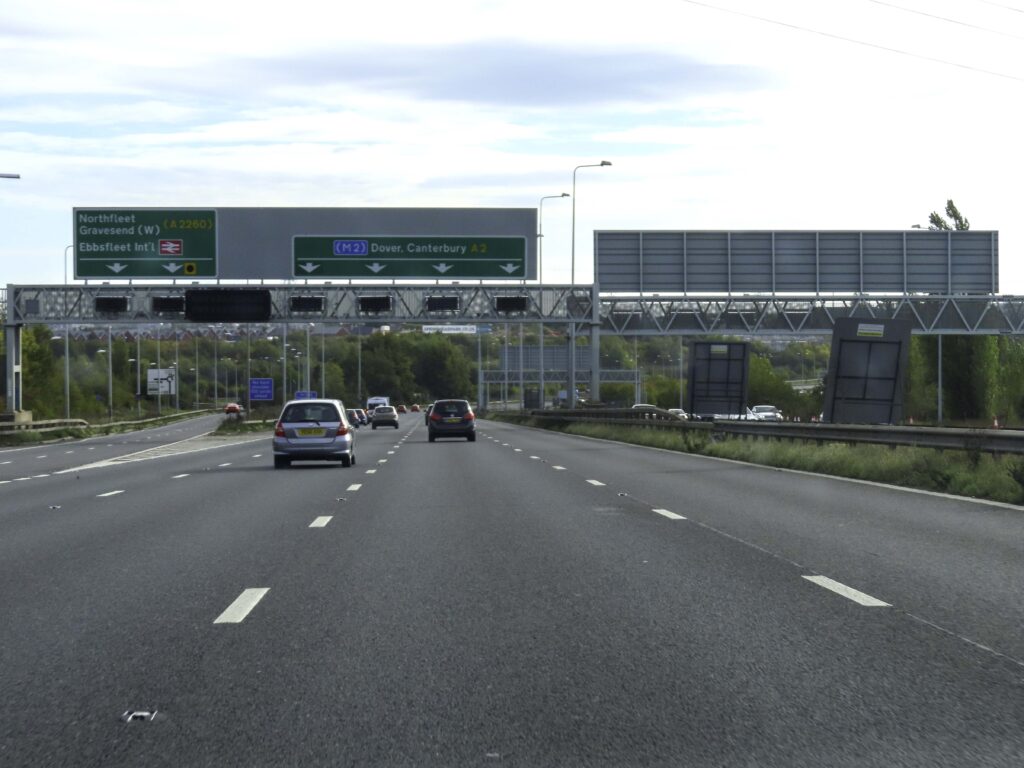
Victor Smith knelt in the last of the search lines beside the A2 at Springhead in October 1964, one of a line of Gravesend Historical Society members working along parallel search lines marked out with strings while earth movers ran outside the fenced-off area. He found two coins. In all, 447 were recovered.
On Tuesday 10 November 2026, 114 of those Roman silver coins sold at Noonans in Mayfair for a hammer total of £23,240. The pre-sale guidance had been up to £15,000.
- Found: 22 October 1964, during the widening of the A2 at Springhead, near Gravesend, Kent.
- Recovered: 447 coins, largely through the efforts of members of the Gravesend Historical Society.
- Buried: in or very shortly after AD 388, on the cataloguer’s dating.
- Sold: 114 silver siliquae on 10 November 2026, hammer total £23,240 against a top estimate of £15,000. Every lot sold.
- Still to come: the remaining coins are due at auction in spring 2027.
The hoard came to light because a mechanical excavator broke the ceramic vessel holding the coins, the BBC reported on the day of the sale. The site was Springhead, the Roman settlement of Vagniacis on Watling Street.
Smith’s account of the recovery appears in the auction catalogue foreword and in Noonans’ announcement of the sale: “I have memories of members of the Gravesend Historical Society on their knees searching for the coins, working their way along individual parallel search lines, divided from each other by strings. They did so as giant earth movers roared by outside the fenced off area. I was in the last line, finding only two coins.”
The facts
- Place: Springhead, near Gravesend, Kent — the Roman settlement of Vagniacis, on Watling Street.
- Date of discovery: 22 October 1964, during road widening on the A2.
- Hoard composition: 3 gold solidi, 12 silver miliarensia, 432 silver siliquae.
- Inquest: Northfleet Town Hall, January 1965. Declared Treasure Trove.
- British Museum: took 27 coins — the gold, the miliarensia and a dozen siliquae.
- Gravesend Historical Society: bought the remaining 420 siliquae with its reward money, topped up from its museum fund.
- Mints and emperors: mainly Trier; issues from the final years of Constantius II to the aftermath of Magnus Maximus.
- Sale: Noonans, 16 Bolton Street, Mayfair, 10 November 2026, 3pm. Lots 500–613.
- Hammer prices: £100 to £440, the top price for lot 552. Total £23,240 before buyer’s premium.
A bronze coin of Marcus Aurelius
Alan Ridgers, Smith’s school friend, had been field walking a year before the digger struck, and picked up a bronze coin of Marcus Aurelius. “That was a life-changing moment, because it prompted me to ask so many questions,” he recalled in the catalogue foreword, repeated in Noonans’ pre-sale release. “Who owned it? What did they do? Which language did they speak?”
Ridgers and Smith are the only members “still with us” who helped recover the hoard, according to the catalogue foreword by Richard Taylor, who called it a “find of a lifetime”.
The society was founded in 1924 and marked its centenary recently. By 1950, under Bill Penn, members were digging at Springhead Sunday after Sunday, uncovering temples, shops and roads. Travellers on Watling Street — a trunk route of Roman Britain, like the Fosse Way — “probably stopped to pray for healing and good fortune”, Taylor wrote in the catalogue.
Why anyone put the coins in a pot beside that road is not settled. “We can only speculate about why it was buried,” Taylor told the BBC. “Was this money arriving from the Continent, or wealth on its way back there? We may never know.”
The inquest at Northfleet Town Hall in January 1965 declared the find Treasure Trove. The British Museum took 27 coins, including the three gold solidi and the twelve miliarensia, and the society bought the other 420 silver pieces. Ernest Tilley, then its curator, wrote at the time: “We may congratulate ourselves on having this unique collection in our possession.” The line is quoted in the Noonans catalogue.
Why the silver still shines
Bradley Hopper, head of the coin department at Noonans, dates the burial to “in or very shortly after AD 388”, Noonans’ pre-sale release says. The latest coin, a miliarensis of Valentinian II from Trier, belongs to the joint coinage issued after the death of the usurper Magnus Maximus on 28 August 388, which puts the pot in the ground within months of his fall, the catalogue says. Taylor’s foreword and the BBC both give the looser “around the 380s AD”.
Trier dominates the mint marks. Gratian, Valens and Magnus Maximus are the commonest emperors in the group.
The surfaces are “remarkably fresh and clean”, Hopper said in the release, because the hoard was not dispersed by agriculture and was recovered before farm chemicals were in wide use. Many coins keep traces of their original lustre.
The find was published the same year by R. A. G. Carson of the British Museum in the Numismatic Chronicle, the catalogue notes. A recount for the sale does not align precisely with his figures: Carson recorded 169 coins of Gratian and 37 of Magnus Maximus across the whole hoard, while the recount of the society’s 420 siliquae gives 117 of Gratian and 67 of Maximus. Some Maximus coins had been stored in envelopes marked Gratian.
All 114 lots sold on Tuesday, at hammer prices between £100 and £440. The £23,240 total, confirmed against Noonans’ prices realised for sale 957, is a hammer figure and excludes buyer’s premium.
The proceeds are earmarked for storage, conservation and digitisation of the society’s local research archive. (British Heritage has traced what became of another celebrated find in the Staffordshire Hoard.)
The rest of the siliquae are due at Bolton Street in spring 2027 — minus a few coins from the hoard, which are staying in Gravesend.