
In 1998, conservationists began removing grey squirrels from the island of Anglesey to save the last red squirrels there. Today the island has the largest red squirrel population in Wales
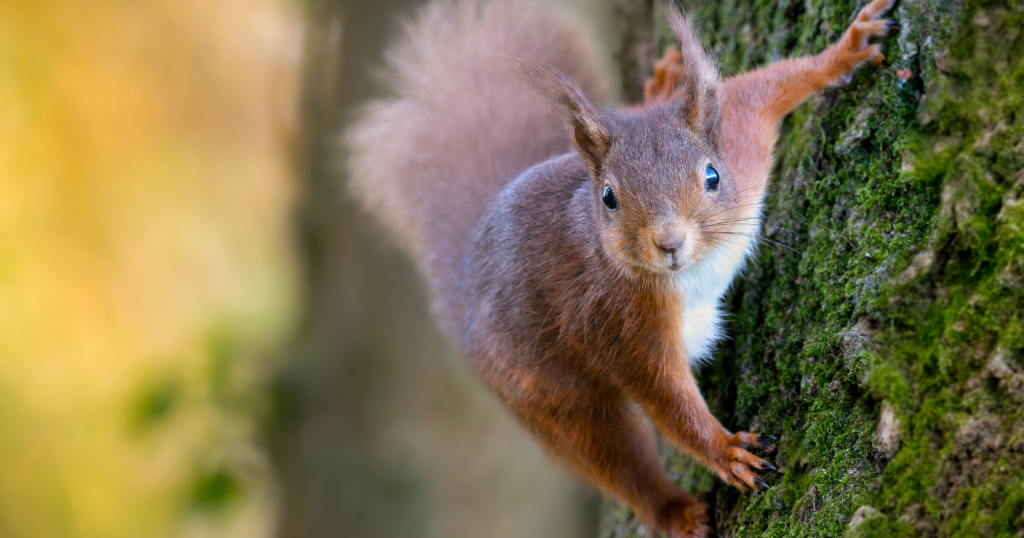
By the mid-1990s, red squirrels on Anglesey were close to gone. The island off the northwest coast of Wales had been taken over by grey squirrels, which Red Squirrels Trust Wales says were increasingly seen there from the early 1970s. According to the Red Squirrel Conservation Plan for Wales, published in 2018, “In 1997 only 40 red squirrels remained” on an island of 710 square kilometers.
Those survivors were clinging on in one place. A 2023 Natural Resources Wales report notes that in the late 1990s, Pentraeth forest “was the last woodland found to contain red squirrels” on Anglesey.
Grey squirrels, a North American species, have replaced the native red across most of Britain, and they can carry squirrelpox, a virus that is deadly to reds. A 2014 study in Biological Invasions, covering the first 13 years of the Anglesey trapping, frames the aim plainly: to cut grey numbers and “decrease the threat of squirrelpox virus infection for the native red squirrel.”
A few dozen reds while thousands of greys lived around them was never going to work. Ecologist Craig Shuttleworth, writing for the Snowdonia Society in 2019, put the grey population in the mid-1990s at “over 3,500 grey squirrels,” spread across the whole island. The goal set in 1996 was blunt: “Make Anglesey, once again, red squirrel country.”
Trapping started in 1998. The Welsh plan describes it simply: “Grey squirrels were once widespread but a trapping programme initiated in 1998 led to their eradication.”
Being an island helped. Anglesey is separated from mainland Wales so once the greys were cleared, new ones had fewer ways back in. Fewer is not none, though. A presentation by Shuttleworth on the project, lists the routes greys still use: “Natural dispersal over the bridges” and “Swimming the sea strait.”
According to the same presentation, eradication across the whole island, out to the coast, “was completed in 2013.” Shuttleworth’s 2019 piece puts it in human terms: in 2013, “the last island grey squirrel was removed.”
Clearing the greys was half the job. The other half was helping the reds spread back into woods they had already lost. The Natural Resources Wales report records that “in 2004 red squirrels were reintroduced to Newborough forest,” in the southwest of the island. Shuttleworth’s presentation lists nine further translocations of reds on Anglesey.
The numbers moved fast once the pressure lifted. The presentation sums it up as “Red Squirrel population increased from 40 to 800 animals.” The 2018 Welsh plan puts the adult population at “around 700 individuals” and says that “the Anglesey population has increased and is now substantial.”
In his 2019 article, Shuttleworth wrote that “the 700 adult red squirrels in Anglesey represent the largest and most genetically diverse population in Wales.” For comparison, the Welsh plan estimates the population in mid Wales at somewhere between 100 and 500, and says the population in Clocaenog Forest, once considered the largest in the country, “has declined in recent years.”
There is a gap in the record. The 2018 plan notes that Anglesey has had “no systematic monitoring,” and that reds are instead “regularly reported by the public across the island.” As far as we can tell, no full island count has been published since.
Squirrelpox is the other worry. The Animal and Plant Health Agency reported confirmed cases in wild Welsh reds in Gwynedd in 2017, on the mainland just across the strait, and the Welsh plan found “no evidence of it spreading to the Anglesey population.”
The threat has grown since. A 2020-21 outbreak killed about three-quarters of Gwynedd’s red squirrels. Earlier this year, it was reported that on Anglesey itself, more than 40 grey squirrels have been caught in the south of the island since February 2024.
For now, the island that had 40 red squirrels in 1997 has several hundred.