
When Beatrix Potter died in 1943, she left 4,000 acres and 14 farms in the Lake District to the National Trust on one condition: they had to keep grazing Herdwick sheep. More than 80 years later, the Trust still honors it.
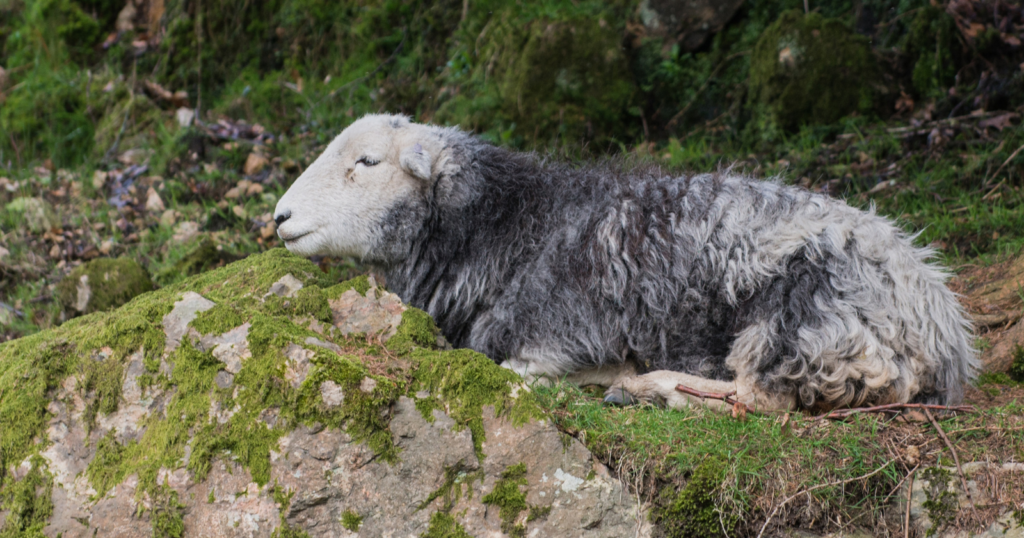
High on the fells of the Lake District, small grey-faced sheep graze among rocks and bracken, their thick coats beaded with rain. They’re Herdwicks, a hardy breed found almost nowhere else.
Many of them graze on land that once belonged to Beatrix Potter. Best known as the creator of Peter Rabbit, she spent the second half of her life as a farmer, and she made sure her sheep would outlast her.
From author to farmer
Beatrix Potter was born in London in 1866 and spent childhood holidays in the Lake District. Her early books, including The Tale of Peter Rabbit, published in 1902, became huge successes.
In 1905, she used her book earnings to buy Hill Top, a farm in the village of Near Sawrey. Over the following decades, she bought more farms and land across the area. After marrying local solicitor William Heelis in 1913, she devoted most of her time to farming rather than writing.
Falling for the Herdwick
Potter was particularly drawn to the Herdwick, a native Lake District breed. Herdwicks are small, tough and well suited to the harsh conditions of the high fells, where they can survive cold, wet winters and poor grazing.
They also have a remarkable instinct called “hefting.” Flocks learn to stay on their own patch of open fell, known as a heft, and pass that knowledge from ewe to lamb over generations, so the open hillsides don’t need fences.
Potter became a serious breeder, winning prizes at local agricultural shows with her shepherd, Tom Storey. In 1943, she was elected president of the Herdwick Sheep Breeders’ Association, the first woman chosen for the role, but she died before she could take it up.
Saving the landscape
Potter was also a committed conservationist. She was a friend of Canon Hardwicke Rawnsley, one of the founders of the National Trust, and she shared his worry that the Lake District’s farms and landscapes could be lost to development.
She bought several farms specifically to protect them, including the large Troutbeck Park estate in 1923. She also worked with the National Trust to help manage its growing collection of Lake District farms.
The will
Potter died on December 22, 1943. Under her will, she left more than 4,000 acres of land, around 14 farms and many cottages to the National Trust. The land passed to the Trust after her husband’s death two years later.
Her will set out several wishes. Among them, the farms were to be let at moderate rents, and the landlord’s sheep flocks on her fell farms were to be kept as pure Herdwick. Her aim was to protect not just the scenery but the traditional way of farming that shaped it.
How the Trust honors it today
More than 80 years later, the farms Potter left are still working farms run by National Trust tenants. The Trust requires tenants on the relevant farms to keep Herdwick flocks, in line with her wishes.
The National Trust now looks after many more hill farms across the Lake District, and Herdwicks graze on much of that land. In 2026, a farming couple taking on Penny Hill, one of Potter’s original farms, brought their own Herdwicks and inherited hundreds more that come with the tenancy.
Visiting Potter’s Lake District
Hill Top, Potter’s first farmhouse, is now run by the National Trust and is open to visitors. It’s kept much as she left it, and fans can spot scenes from her books in the house and garden. In nearby Hawkshead, her husband’s former office houses the Beatrix Potter Gallery.
If you walk on the fells, you’ll likely see Herdwicks grazing freely. Keep dogs on a lead around sheep, close gates behind you, and give lambing ewes plenty of space in spring.
A legacy beyond the books
Beatrix Potter is remembered around the world for her stories of rabbits, ducks and hedgehogs. But in the Lake District, her legacy can also be seen on the hillsides, in the farms that stayed intact and the flocks that still graze them.
It’s a reminder that one person’s careful planning can shape a landscape long after they’re gone.