
In 2001, Madonna and Guy Ritchie paid a reported £9 million for Ashcombe House, the Wiltshire estate Cecil Beaton once rented; after their divorce, Ritchie kept it
Madonna and Guy Ritchie paid a reported £9 million for Ashcombe House in 2001, a Wiltshire valley estate Cecil Beaton rented from 1930 to 1945.
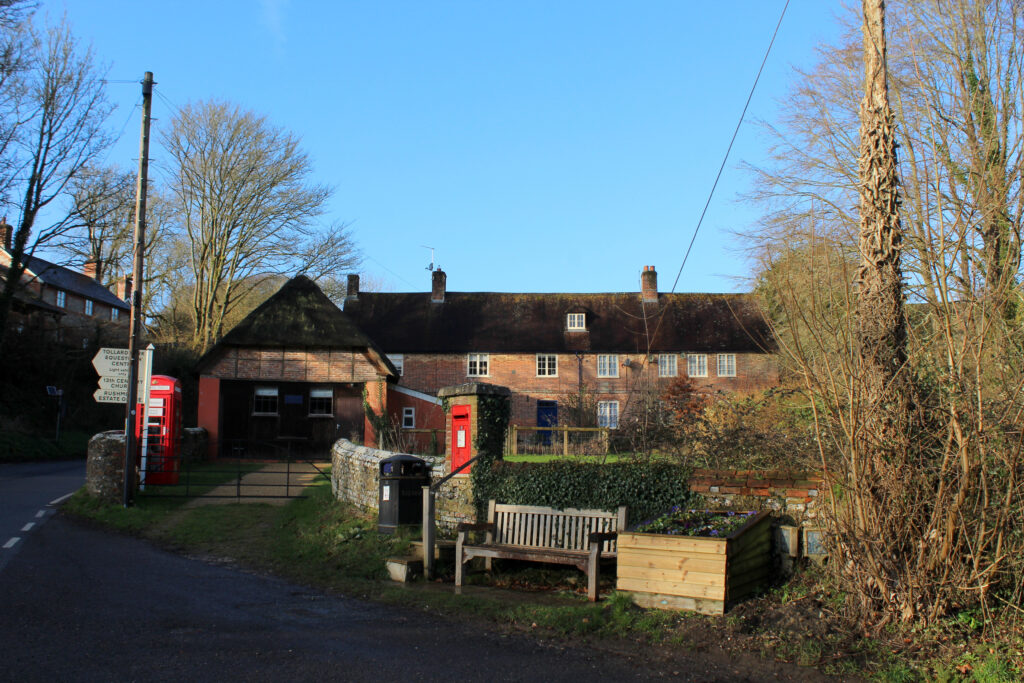
Ashcombe House sits in a valley in the chalk downs of south Wiltshire, near the village of Tollard Royal and close to the Dorset border. It is not a house that announces itself from the road, and the seclusion is most of the reason two very different sets of famous occupants wanted it.
In 2001 Madonna and Guy Ritchie bought the estate. BBC Wiltshire, on a page last updated on 18 June 2004, put the price at £9 million, saying the couple had become “landed” in 2001 “having spent £9 million quid on one of Wiltshire’s country retreats”, the house near Tollard Royal “formerly the home of fashion-photographer Cecil Beaton”. The figure has been repeated ever since and remains a reported one. No further detail of the purchase has been published.
The fifteen-year lease that made the house famous
Beaton never owned Ashcombe. He rented it. In 1930 he took the house from a Mr R. W. Borley, who had acquired the remains of the eighteenth-century country house after the First World War, “in exchange for fifty pounds a year and extensive renovations”, according to Lacey Minot, writing in the Courtauld’s Immediations journal in 2020. Minot’s study draws on Beaton’s own account of the place, Ashcombe: The Story of a Fifteen-Year Lease, published by Batsford in 1949.
The title of that memoir gives the shape of the thing. Beaton’s tenure lasted until 1945, so the house he made famous was never his to sell. The repairs, the decoration and the weekends all sat on a lease rather than a deed, and the arrangement ended when the term did. Minot records the last day plainly: in 1945, again accompanied by Edith Olivier, Beaton “passes through the house for the last time inhaling flowers, herbs and sawdust”.
Those fifteen years are why the name carried a literary reputation long before 2001. More than half a century later, the BBC page reporting the sale reached for Beaton in the same sentence as the price.
Country houses and famous occupants
A well-known buyer taking on an old and awkward English house is a familiar pattern, and the results vary with the owner. Jimmy Page bought Tower House in Holland Park, William Burges’s Gothic Revival experiment in west London. Keith Richards took on Redlands in West Wittering, which became better known for the police raid of 1967 than for its architecture.
Ashcombe falls somewhere between the two. It came with a reputation already attached, courtesy of Beaton’s memoir, and with the practical problems of any remote estate: access, boundaries and the rights of people walking the land. That last point produced the only sustained public argument about the house during Madonna and Ritchie’s ownership. The BBC Wiltshire page was written around a right-to-roam and footpath inquiry in 2004, a local matter that drew national attention because of who lived there.
For most of the decade that followed the purchase, the estate did what the couple had bought it to do. Both the BBC and later reporting described Ashcombe as their country retreat, away from London and out of view.
What the settlement left with Ritchie
When the marriage ended, the Wiltshire house stayed where it was. Madonna’s spokesman Liz Rosenberg said Ritchie would receive between 76 and 92 million dollars in cash and property, which the Wiltshire Gazette and Herald gave as £49 million to £60 million, and that the settlement “included Ashcombe House in Wiltshire”. The same account said the couple’s west London pub, the Punchbowl, would also remain with Ritchie.
Those totals belong to Rosenberg and to that report, and the bigger claims made about the size of the settlement elsewhere were contested at the time. The fact that holds without qualification is the one in the headline: Ritchie kept the Wiltshire estate.
The sequence is unusual even for an English country house. A fifteen-year tenancy produced a book and a reputation, a long quiet period followed, then a reported £9 million sale at the height of a celebrity marriage, and finally a divorce settlement in which the property stayed with the husband. Beaton’s lease is the part that has outlasted the rest, mostly because he wrote it down.