
In the 1970s, Mick Jagger paid a reported £55,000 for Stargroves, a Victorian mansion in Hampshire; within a few years Led Zeppelin and The Who were recording there in the Rolling Stones’ mobile studio
Mick Jagger paid a reported £55,000 for Stargroves in Hampshire, and The Who cut Won't Get Fooled Again there on the Rolling Stones' mobile in 1971.
Stargroves is a Victorian Gothic manor house in the village of East Woodhay in Hampshire, a short drive from Highclere and close to the county boundary with Berkshire. Mick Jagger bought it in the 1970s for a reported £55,000, Hampshire Live said, and the Grade II listed house became a working address for British rock, with the Rolling Stones’ mobile studio parked outside while the musicians set up indoors.
The house has never been open to the public, and most of what is known about the sessions there comes from the bands themselves. Two of those accounts are firm. The Who recorded at Stargroves on the Stones’ mobile in April 1971. Led Zeppelin were at the house in May 1972 working on their fifth album, with one song taped outdoors in the garden.
A Hampshire house rebuilt after a fire
Stargrove House was destroyed by fire in the early 1840s, and a new manor house was later built in a Victorian Gothic style. That replacement is the building Jagger bought more than a century later, a Grade II listed pile in a village better known for lanes and farmland than for rock records, and a few miles from the Carnarvon estate at Highclere.
Buying a large Victorian house was something of a habit among British musicians at the turn of the 1970s. George Harrison took on Friar Park, a crumbling Gothic mansion at Henley with caves, grottoes and topiary, and spent the rest of his life restoring it. Jagger’s bandmate Keith Richards had Redlands in West Sussex, the thatched house at the centre of the 1967 drugs raid. Jimmy Page bought the Tower House in Holland Park, William Burges’s painted Gothic experiment in brick and marble.
Stargroves was different in one respect. It was not only a residence. It also took in sessions, because the Stones had the equipment to turn a room, a hallway or a lawn into a studio.
The mobile studio in the drive
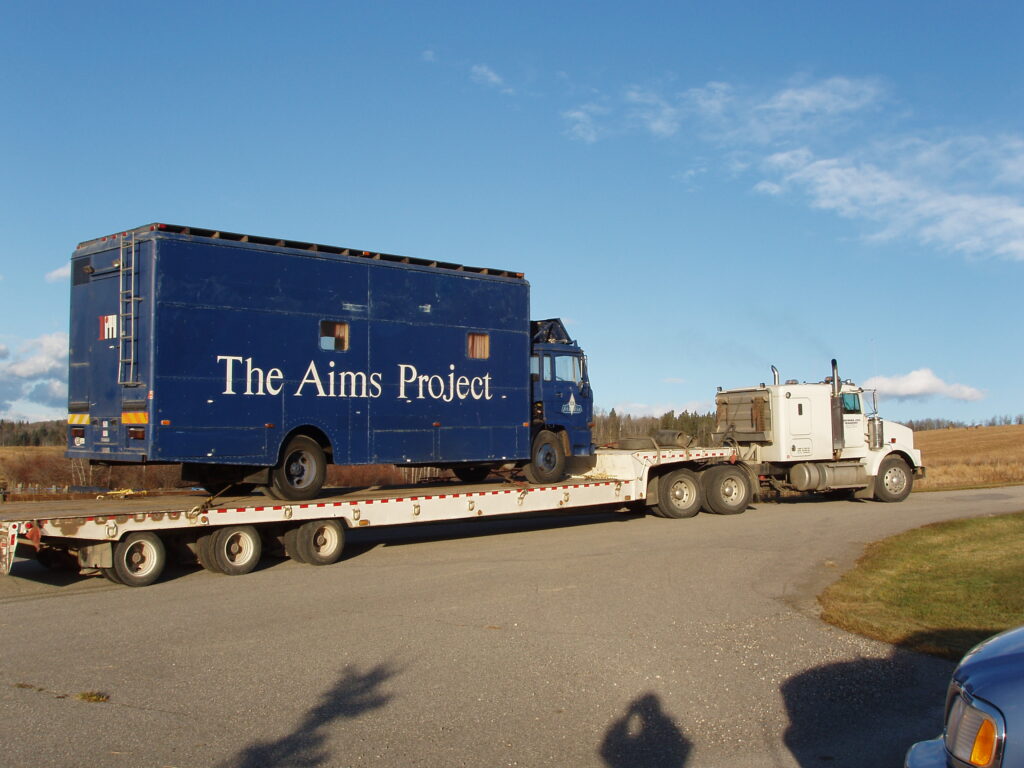
The Rolling Stones Mobile Studio was a truck fitted out with a mixing desk and tape machines and driven to wherever a band wanted to work. It freed groups from booking blocks of time in London studios and let them record in houses, halls and gardens, with the engineers sitting outside in the vehicle and cables run in through a door or a window.
The clearest surviving credit for its use at the house comes from The Who. The band’s official site says of “Won’t Get Fooled Again”, written by Pete Townshend and produced by the group, that it was “recorded on the Rolling Stones’ mobile at Stargroves in April 1971”. The track closed Who’s Next later that year.
The Stones used the house for their own work too. Hampshire Live said Jagger recorded there with the band, including tracks that appeared on Sticky Fingers, Exile on Main Street and It’s Only Rock ‘n Roll. Those were the years when the group’s working method was at its most scattered, moving between studios, borrowed houses and whatever address had room for a truck outside.
Led Zeppelin, May 1972
Led Zeppelin’s official chronology carries an entry dated 15 May 1972 headed “Recording at Stargroves”. After working at Olympic Studios the previous month, the band moved to what the site calls “Mick Jagger’s country estate in Hampshire, England” for their fifth album. The songs named there are “The Song Remains the Same”, “The Rain Song”, “Black Country Woman”, “The Rover” and “Walter’s Walk”.
“Black Country Woman” was taped outdoors in the garden. The first two of those songs opened Houses of the Holy, released the following spring, while the others sat in the vaults and surfaced on later records.
One distinction matters. Zeppelin’s own account of the May 1972 sessions does not name the Rolling Stones mobile. It is The Who’s credit that places the truck at the house, in April the year before. The two bands worked at Stargroves about 13 months apart, and the house is the common factor in the two accounts.
Together the entries show how quickly a private Hampshire house turned into a recording address. Within a few years of Jagger’s purchase, two of the loudest bands in the country had tracked parts of their best-known albums in its rooms and on its lawn.
Jagger did not keep it long. Hampshire Live said he sold Stargroves for £200,000 in 1979. There is no public access, so the garden where “Black Country Woman” was taped stays out of view behind the trees at East Woodhay.