
In 1970, Roger Daltrey of the Who bought a 1610 Sussex manor with stained-glass windows by Edward Burne-Jones and 35 acres of land; more than 55 years later, he still lives there, and the estate has grown to almost 600 acres, with its own trout fishery
On a spring day in 1970, Roger Daltrey and his future wife, Heather, went to see an old house in the East Sussex countryside near Burwash. The hallway was dark, the place was damp and the kitchen was in a terrible state.
Then they walked into the front room and saw the view across the Sussex Weald. Daltrey, then 26 and the singer of the Who, decided to buy it. More than half a century later, Holmshurst Manor is still his home.
A house from 1610
Holmshurst Manor was built in 1610 by a local landowner named Goddard Hepden. His initials, “GH,” are still carved in a coat of arms above the door. Hepden was born in Burwash around 1550 and raised 12 children.
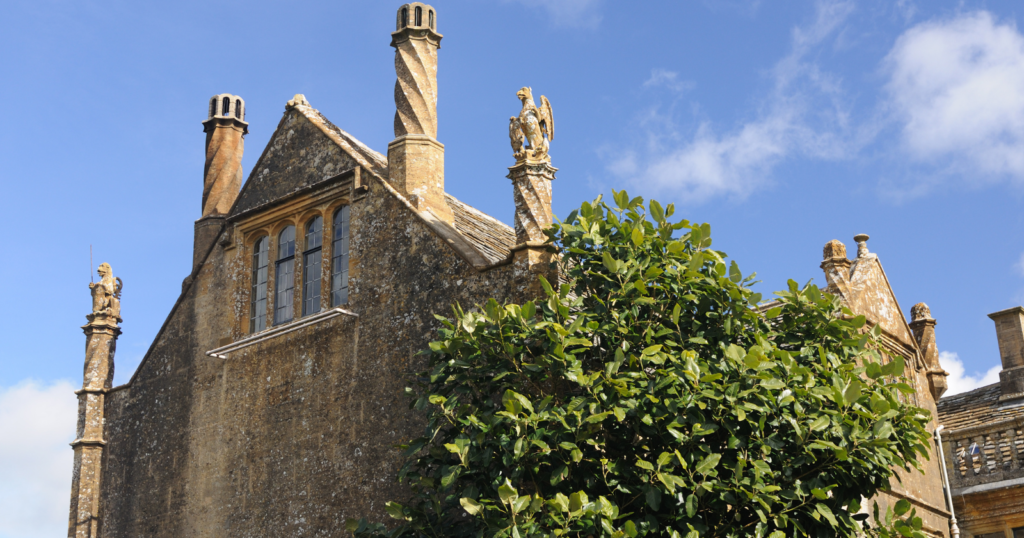
The house is a fine example of Jacobean architecture, the style popular during the reign of James I. It is built of brick and stone, with a tiled roof, clustered chimneys, oak panelling, around 20 rooms and a long gallery. Its stained-glass windows are reported to be the work of Edward Burne-Jones, the Victorian artist linked with the Pre-Raphaelite movement.
From Shepherd’s Bush to the countryside
Daltrey grew up in Shepherd’s Bush in west London and left school to work in a sheet-metal factory before the Who took off. By 1970, the band was one of the biggest in the world, following the success of their rock opera, Tommy.
Fame had its downsides. Daltrey later said he felt trapped in London, with fans constantly waiting outside his home. Holmshurst offered space and privacy, and he and Heather moved in on 26 June 1971, the year they married.
A rock star turned farmer
At Holmshurst, Daltrey threw himself into country life. He kept the house’s historic character but added modern comforts, including a sauna, and later built a recording studio in one of the barns.
He also took up farming. He bought cattle, worked the land and even dug out lakes himself with a bulldozer. He has said that the hard physical work was the perfect antidote to the chaos of touring with the Who.
Building a trout fishery
Daltrey’s biggest project was Lakedown Trout Fishery, a series of four spring-fed lakes he created on the estate with a friend. He later opened it to the public, saying he enjoyed meeting visitors who were more interested in fish than in a rock star.
The fishery has become a well-known part of the area. More recently, a brewery, Lakedown Brewing Co., has opened alongside it, and the site now hosts live music events.
An estate that kept growing
When Daltrey bought Holmshurst, it came with 35 acres. Over the decades, he added neighbouring farmland, and the estate grew to several hundred acres. In one recent interview, he said he now has almost 600 acres.
The estate includes farmland, woodland, the lakes and several historic buildings. The manor house, oast houses and granary are listed buildings, along with two cottages. Daltrey has described himself as a caretaker rather than an owner, saying that nobody truly owns a listed house.
Still at home after more than 55 years
Daltrey has spent most of his adult life at Holmshurst, raising his family there with Heather. Away from music, he is known for his charity work, especially with the Teenage Cancer Trust, which he has supported for decades.
Many rock stars bought grand country homes in the 1960s and 70s, but few kept them for so long. When asked whether he still travels much, Daltrey has simply asked why he would want to leave. For a house first seen on a damp spring day in 1970, Holmshurst has proved to be a lasting home.