
In 1856, Charles Dickens paid £1,790 for Gad’s Hill Place, the Kent house his father had told him he might own one day if he worked hard; he died there in 1870, and today it’s a school
Dickens paid £1,790 for Gad's Hill Place in March 1856, the Kent house his father had pointed out to him as a boy; he died there in 1870. It is now a school.
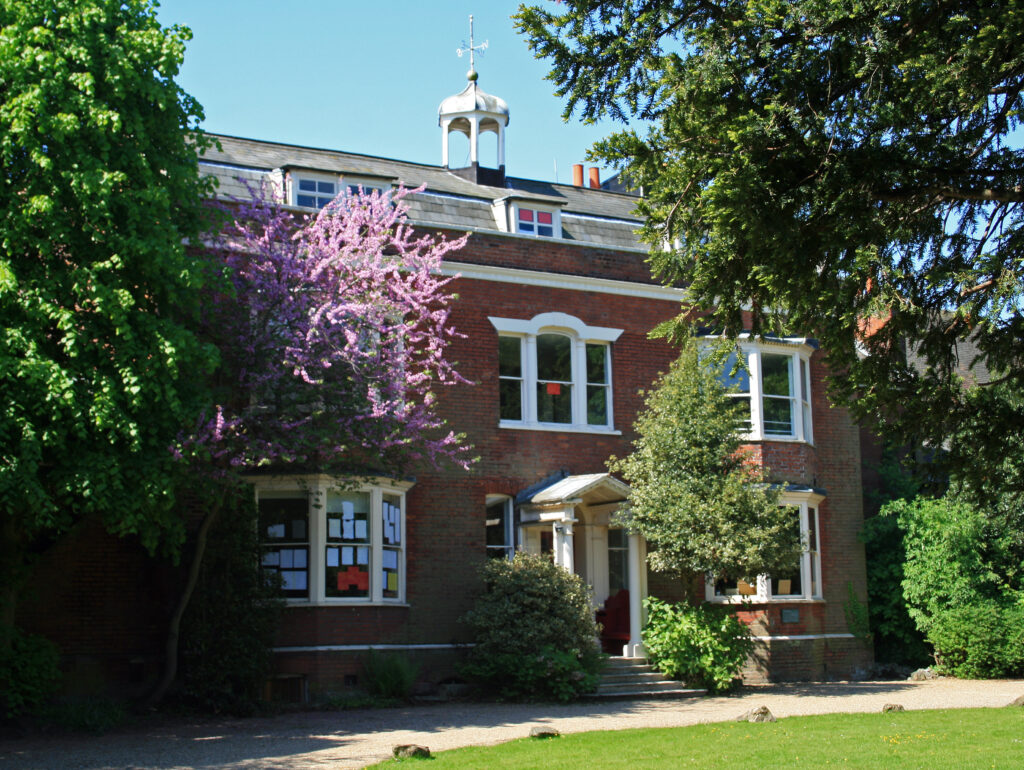
In March 1856 Charles Dickens paid £1,790 for Gad’s Hill Place, a house of 1780 at Higham in Kent, a few miles from Rochester. The purchase brought with it about 12 acres of land, including a large shrubbery on the far side of the road. The house had been built for Thomas Stephens, a former Mayor of Rochester.
Dickens was 44, the author of Bleak House and Hard Times. Gad’s Hill Place became the last house he owned and the place where he died on 9 June 1870. The ground floor rooms survive much as he left them, and the upper floors are full of teenagers, because the house has been a school since the 1920s.
The house at the top of the hill
Dickens told the story of the purchase himself, and told it sideways. In the essay “Travelling Abroad”, collected in The Uncommercial Traveller in 1860, the narrator meets a small boy who asks to be taken to the top of the hill to look at a house. “And ever since I can recollect,” the boy says, “my father, seeing me so fond of it, has often said to me, ‘If you were to be very persevering and were to work hard, you might some day come to live in it.’ Though that’s impossible!”
The narrator then lets the reader in on it: “that house happens to be my house, and I have reason to believe that what he said was true.” The “very queer small boy” is Dickens, who had looked at the house as a child living at Chatham. Those Kent years run through the life of Charles Dickens, and Discover Gravesham records the local claim that Gad’s Hill became the house owned by Miss Havisham in Great Expectations.
A cheque for £1,790
The cheque was written on 14 March 1856, and Discover Gravesham’s account of the sale breaks the figure down: “The house itself cost £1,700 and the extra £90 was for the shrubbery across the road.” The total of £1,790 is the sum given by the house itself and by Medway Council, which records the purchase in March 1856 as, it seems, an investment at first.
The seller was Eliza Lynn Linton, who signed herself Mrs Lynn Linton and who was already writing for Dickens. She had begun contributing to Household Words, the weekly he edited, in 1853, work that steadied her finances after her 1851 novel Realities failed, and she inherited Gad’s Hill Place after her father’s death on 1 February 1855. Kent Maps Online calls her a hard bargainer: she asked £1,800, Dickens countered with £1,500 and the two settled at £1,700, and when she asked a further £40 for the ornamental timber he called in an arbitrator and ended up paying £70. Those are the figures of the negotiation over the house; the sum that left his account was £1,790. By the same account, the two were never really friends despite the working and property dealings between them.
Dickens did not move in at once. The sitting occupant, the Reverend Joseph Hindle, was allowed to stay until March 1857, and the family arrived in June that year. Repairs and improvements began as soon as the house was his. The first month brought Hans Christian Andersen, invited for two weeks, who extended his stay to five and, it seems, did not please his host. Dickens was accepted locally soon enough: cricket matches were played in his meadow, and he arranged Boxing Day sports each year.
From a writer’s last house to a school of 300
Shortly after the family moved in, Dickens separated from his wife, Catherine. Her sister Georgina Hogarth stayed on as his housekeeper and looked after the younger children, six sons aged from fifteen to six. When he sold his London home, Tavistock House, in 1860, he moved his books, pictures and finer furniture down to Higham and made Gad’s Hill his main residence. His biographer John Forster wrote that “continued ownership brought increased liking”.
On the evening of 8 June 1870 Dickens had a stroke at dinner with Georgina. He never regained consciousness and died the following day. He was buried in Westminster Abbey.
The house is Grade I listed. Its ground floor rooms, the hall, study, drawing room, dining room, billiard room and conservatory, remain structurally unaltered since Dickens’s occupation, and those rooms and the garden are open to the public, as are other historic literary homes. John Burt bought the property in 1923 and converted it into a residential school for girls. Other writers’ houses have had quieter afterlives: Monk’s House in Sussex, which Virginia and Leonard Woolf bought in 1919, is now shown as a writer’s home. It is now a co-educational independent day school taking pupils from nursery to GCSE, with more than 300 on the roll, and the seniors are taught on the floors above the rooms where Dickens worked.