
In 1818, Thomas Wildman paid £94,500 for Newstead Abbey, the crumbling Nottinghamshire seat his old Harrow schoolfellow Lord Byron had to sell to clear his debts; today Nottingham City Council owns it
Thomas Wildman's £94,500 bid for Newstead Abbey was accepted in December 1817, and Byron signed the deeds on 11 November 1818; the city owns it now.
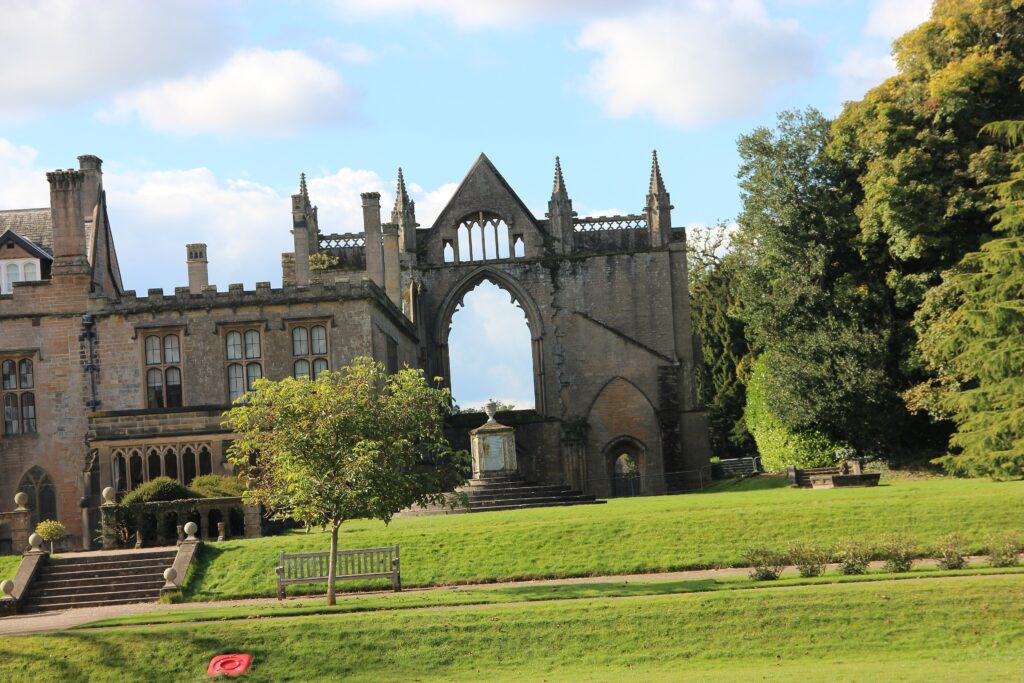
The sale of Newstead Abbey took the best part of a year to settle, which is why two dates attach to it. Colonel Thomas Wildman’s bid of £94,500 for the house and its 3,226 acres was accepted in December 1817. Byron signed the deeds on 11 November 1818, and Wildman acquired the estate formally in February 1819. The year on the deeds is the one that has stuck to the sale.
Byron heard that the sale had gone through on 11 December 1817 and signed eleven months later, on the day he sent the first canto of Don Juan to England. Those dates come from John Beckett’s book Lord Byron and Newstead, as set out in a Byron Society review, which also records that the trustees eventually received £97,972, rather more than the agreed figure.
Why Byron let Newstead go
Byron was able to sell in 1817 “in defiance of tradition, without legal difficulty, to pay off his massive debts”, the Byron Society review says. The same account traces the borrowing back to his arrival at Cambridge in October 1805, when, it says, he ran up huge debts on the understanding that he would soon come into great wealth.
Newstead had been an Augustinian priory until the dissolution of the monasteries in the 1530s. By the time the sale was agreed, the Southwell and Nottingham Church History Project, run at the University of Nottingham, says the property was then in “a very poor state”.
That condition shaped the price and everything that followed. A buyer taking on Newstead in 1818 was not acquiring a finished seat but a half-ruined one, with the medieval west front of the priory church still standing as a screen in front of the domestic range.
The soldier who spent about as much again
The Southwell project describes Wildman as “a schoolfellow of the poet at Harrow”, a man who had served as an aide-de-camp to Lord Uxbridge at Waterloo and was afterwards equerry to the Duke of Sussex.
What he did at Newstead cost him as much as the purchase. The Southwell project says Wildman spent an equal amount of money on repairing and restoring the house. The Byron Society reviewer put a figure on it, writing that Wildman’s “committed restoration work” was “£100,000 worth” and “is with us today”, which is about as much again as the agreed purchase price.
The work was practical as well as antiquarian. The reviewer singles out the decision to install water closets in the Abbey itself. Wildman also converted the monastic chapter house into a private chapel, a change the Southwell project records with a caveat: the chapter house had never been a place of worship, but the administrative room where the business of the monastery was transacted, where confessions were heard, and where the Prior pronounced disciplinary sentences on monks who broke the rule.
From Wildman’s hands to the city’s
Wildman lived at Newstead for the rest of his life. The Southwell project says he died in 1859 and that the Abbey was bought by William Frederick Webb in 1860. The official Newstead Abbey site dates the change a year later, saying that “Byron sold the Abbey in 1818 to Thomas Wildman in whose hands it remained until 1861 when purchased by William Frederick Webb, an African explorer”. The two accounts have not been reconciled, and the safest statement is that the estate passed to Webb at the turn of the 1860s.
Webb died in 1899. His estates at Newstead and at Cowton in North Yorkshire went to his daughter Lady Chermside, who died without issue in 1910, then to another daughter, Miss Ethel Webb, who died in 1915, and then to trustees for the benefit of his son, Captain Roderick Webb, who died on active service in 1916. Within a generation, the family line that had bought the Abbey from Wildman’s estate had run out.
The last private transfer came in 1931, when Charles Ian Fraser sold the Newstead estate to the Nottinghamshire philanthropist Sir Julien Cahn. Later the same year Cahn presented it to Nottingham Corporation, “whose successor Nottingham City Council owns it today”, the Southwell project says. The Abbey still sits in that corner of Nottinghamshire, not far from Southwell. A house bought out of a poet’s debts in 1818 became municipal property in 1931.
Visitors now see Wildman’s Newstead as much as Byron’s. The cloisters, the chapel in the old chapter house and the rooms along the west front owe their survival to the money a Waterloo officer put into a building his schoolfellow could not afford to keep, and the Abbey has since become one of Britain’s best known historic literary homes. Byron’s own rooms, his letters and his deeds are shown alongside the Victorian interiors that replaced the decay he left behind.