
Henry VIII’s Hurst Castle, built in the 1540s to guard the Solent, has a Victorian west wing rotating out onto the beach as the sea washes away its foundations, and keeping it standing for a few more decades would cost more than £6 million
Conservationists face a hard choice at Hurst Castle, where the Victorian west wing is rotating onto the beach and holding the line would cost over £6 million.
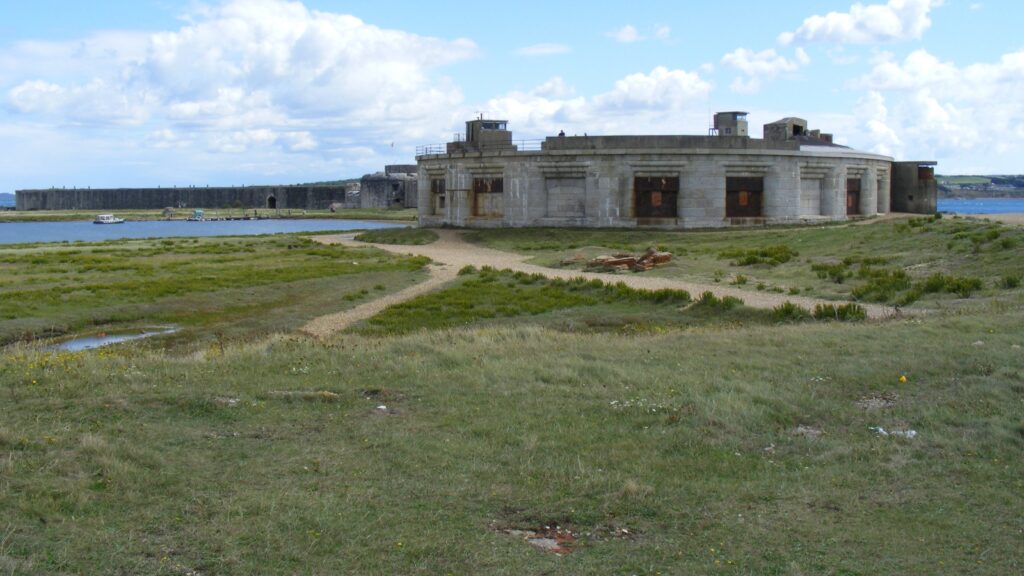
A Victorian gun battery at Hurst Castle is rotating out onto the beach under its own weight, and engineers put the cost of buying the fort another few decades at more than £6 million, about $7.5 million.
The movement was described on 16 November by Smithsonian Magazine, which said that as the foundations wore away “the entire west wing started to rotate under its own weight, spinning slowly and gloomily out toward the sand”. It is that 19th-century wing that is moving, not the Tudor fort at the centre.
Hurst sits at the end of a shingle spit commanding the Needles Passage between the Isle of Wight and the mainland. The central part was built between 1541 and 1544 by Henry VIII as one of a chain of artillery forts protecting key ports and landing places around southern England, among them Southampton and the growing naval base at Portsmouth.
“It’s a race against time,” said Rob Woodside, who spent seven years as a director at English Heritage and has since left the charity.
The wall that went into the sea
On 26 February 2021 a section of wall on the 19th-century east wing collapsed after the sea exposed and undercut its foundations. “The whole of that wall ejected,” castle keeper Jason Crane told Smithsonian. “It puked right out into the sea.” The collapse left a 38-ton cannon rolling down onto the beach.
Both wing batteries are built from heavy Norwegian granite, with Ministry of Defence anti-aircraft turrets added in the 20th century, all sitting on a brick foundation laid directly on the beach. After the collapse, engineers wired dozens of sensors through the east wing to watch for the next break.
English Heritage has already spent heavily on the site. It put £750,000 into works in 2019, underpinning the west wing’s foundations, replacing broken groynes and barriers and replenishing the beach with 7,500 tonnes of shingle. Two years earlier it spent £1m repairing and conserving the roof. Its latest update, from 2024, says monitoring in the east and west wings shows movement within tolerance, and that there can be no quick fix.
Hurst is not the only coastal site in Britain losing ground to the sea. On the Pembrokeshire coast, erosion has threatened a medieval cemetery at St Patrick’s Chapel.
Boulders, and the bill for them
Engineers first suggested dropping 20-ton Norwegian boulders underwater to break up tidal surges, an option Woodside called the “gold-plated” approach. That would likely have protected the castle for around a century, at a cost of more than $137 million.
Plan B uses smaller boulders placed at the surf line to disrupt the water approaching the castle. After coastal modelling and 3D surveys of the foundations, engineers estimate it would buy another few decades, at more than £6 million, before the rocks needed maintenance themselves.
A month after Smithsonian’s writer visited the castle in October 2024, the British government’s body for protecting heritage sites rejected Woodside’s pitch. “We had a bit of a crunch, really,” he said. He left English Heritage not long afterwards. The Daily Mail reported on 18 November that funding is in short supply, leaving conservationists with a challenging decision.
Prison, garrison, ruin
Hurst was garrisoned but never once attacked. It was used occasionally as a prison, most famously when Charles I was held there in 1648, and it stayed in military use until 1956, playing an active role through both world wars as part of the wider defence of the Solent. It has been in the care of English Heritage and its predecessor the Ministry of Works since 1956.
Matt Thompson, a curator at English Heritage, said the charity has not committed to a single plan, nor to letting Hurst simply fall into the sea. “You can’t stand there and turn the tides,” he said.
Woodside set out the alternative in blunt terms. “Eventually you’ll have to start to close the western end, then the property entirely, on safety grounds,” he said. “Basically, you’re in a process of ruination. You’re going from a structure to an archaeological monument.”