
Paul McCartney told Michael Jackson that music publishing was where the money was, and in 1985 Jackson outbid him for the rights to more than 250 Beatles songs, paying $47.5 million in a deal that ended their friendship
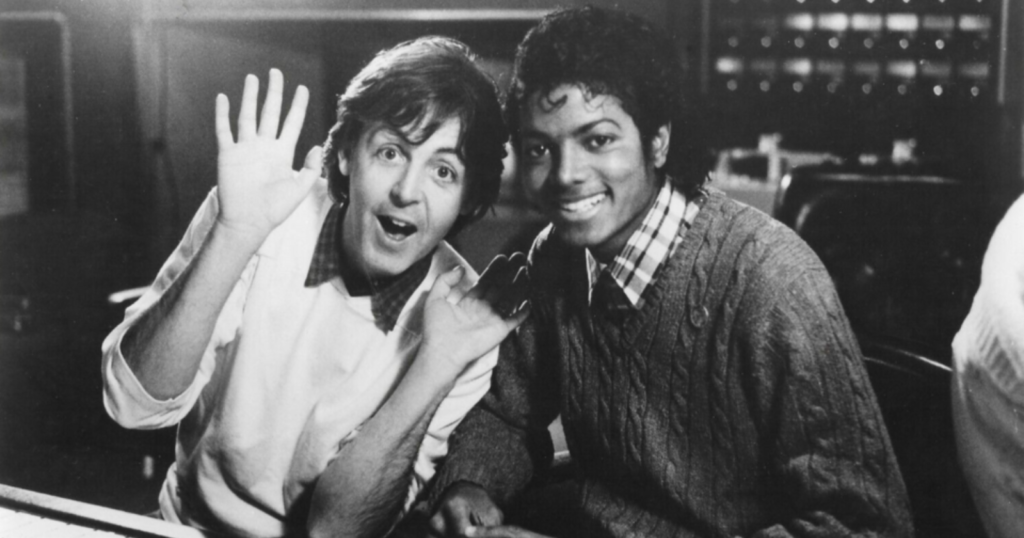
In the early 1980s, two of the biggest stars in music became friends. Michael Jackson visited Paul McCartney and his wife Linda in England, and the two recorded hit duets together, including “The Girl Is Mine” and “Say Say Say”.
During one of those visits, McCartney shared some business advice. Owning the rights to songs, he explained, was one of the best investments in the music industry. Jackson listened carefully, perhaps more carefully than McCartney realised.
How the Beatles lost their songs
The story goes back to the 1960s. In 1963, the Beatles’ manager Brian Epstein and music publisher Dick James set up a company in London called Northern Songs to publish John Lennon and Paul McCartney’s songs. Publishing rights earn money whenever a song is played, recorded or used in films and adverts.
In 1969, after a bitter takeover battle, Northern Songs was bought by ATV, a British media company controlled by Lew Grade. Lennon and McCartney lost control of the company that owned their songs. They continued to receive songwriter royalties, but others owned the publishing rights.
A chance to buy them back
In the early 1980s, ATV came under the control of Australian businessman Robert Holmes à Court. In 1984, he put the music catalogue up for sale. It included the publishing rights to 251 Beatles songs, along with around 4,000 other songs by many artists.
McCartney had already tried to buy the Beatles songs a few years earlier, reportedly together with Yoko Ono, but that effort came to nothing. When the catalogue went on sale, he considered the price too high, and he has said he didn’t want to pay so much for songs he had written for very little in the first place.
Jackson makes his move
Jackson’s lawyer, John Branca, led months of negotiations on his behalf. Other buyers were interested, and the talks were long and difficult. At one point, Jackson’s team walked away from the deal.
In August 1985, Jackson agreed to pay $47.5 million for the whole ATV catalogue. As part of the deal, “Penny Lane” was reportedly carved out so Holmes à Court could give it to his daughter. Jackson was reported to have said that if McCartney didn’t want to invest in his own songs, he would.
“Someone’s friend”
McCartney was hurt. He later said he felt it was “dodgy” to be someone’s friend and then buy the songs out from under them. The two men drifted apart. In 2001, McCartney said Jackson would not even answer his letters.
Over the years, McCartney complained that he had to pay to use his own songs in some cases, and that he had little say in how they were used. The episode became one of the best-known business lessons in music history.
From Jackson to Sony
Jackson’s investment turned out to be enormously valuable. In 1995, needing money, he sold half of ATV to Sony for around $95 million, creating Sony/ATV, which grew into one of the largest music publishers in the world.
After Jackson died in 2009, his estate sold its remaining share to Sony in 2016 for $750 million. That stake included the Beatles songs along with many other valuable copyrights.
McCartney’s long road back
US copyright law allows songwriters to reclaim some rights after a set number of years. McCartney began the process and, in 2017, sued Sony/ATV to make sure he could recover the US rights to his early songs. The two sides reached a confidential settlement later that year.
For McCartney, it was the end of a long journey that began with a friendly conversation. The advice he gave Jackson turned out to be good, just not in the way he intended.