
Westminster Council has approved a Beatles attraction at 3 Savile Row, but no band may play live on the rooftop where the Beatles gave their last concert in 1969
Westminster councillors voted unanimously on 24 November to approve a seven-storey Beatles attraction at 3 Savile Row, with live music ruled out on the roof.
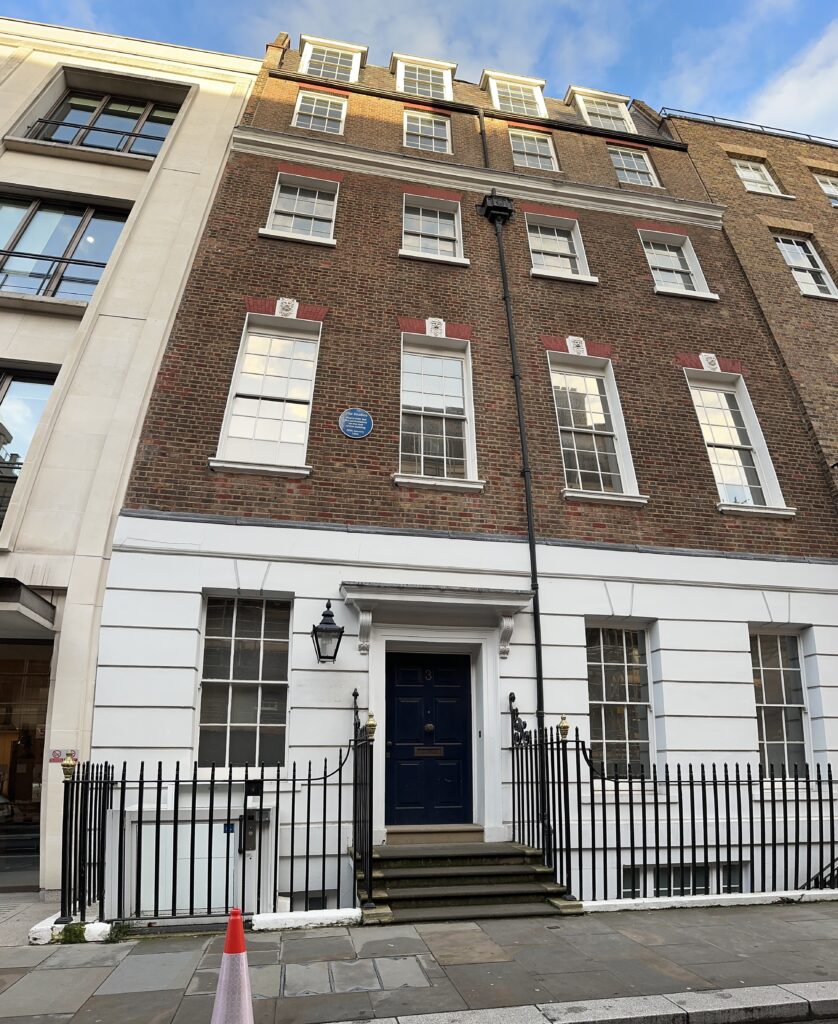
Beatles fans will be able to stand on the Savile Row rooftop where the band played their last public concert, after Westminster Council approved plans for a seven-storey attraction inside the building. But no group will be allowed to play live up there.
Councillors granted planning permission on the evening of 24 November for the “3 Savile Row Experience”, a museum in the Mayfair building that was the band’s headquarters between 1968 and 1972.
IanVisits, reporting from the meeting, said: “After a comparatively short late-evening debate, the committee voted unanimously and quite enthusiastically in favour of the plans.”
The scheme went before councillors as a seven-storey “cultural experience and exhibition” commemorating the history and legacy of the Fab Four.
Apple Corps, the intellectual property company established by the Beatles in 1968, re-acquired the building in May 2026 and said it planned to open it to the public as a visitor attraction in 2027.
The conditions attached to the permission rule out any re-staging of the performance that made the roof famous. No live music is allowed up there, although there is an option for recorded music.
Any amplified audio will have to be controlled through noise limiters. The restriction on live music on the rooftop is meant to avoid “unacceptable noise levels”, and the installation of a two-metre-high acoustic barrier has also been proposed.
What visitors will get
The seven floors will include previously unseen archive material, rotating exhibitions and a recreated recording studio, as well as access to the rooftop where John Lennon, Paul McCartney, George Harrison and Ringo Starr played in January 1969. Paul McCartney had already bought a Victorian house a short walk from Abbey Road in 1965, and the band’s earlier story is still walked on Liverpool’s Beatles trail.
Parts of the Let It Be sessions were recorded in the building, and the attraction will re-create the studio where the band worked on that album. Items from the Apple Corps archives will also be on show alongside temporary exhibitions.
Apple Corps said the attraction, which would include a cafe-bar and an exhibition shop, could attract up to 900 visitors on weekdays and 1,140 visitors at weekends. IanVisits puts the expected figures at around 900 a day during the week and just over 1,100 a day at weekends.
Planned opening hours are 9am to 6pm from Sunday to Friday, and 9am to 8pm on Saturday, with ticketed time-slot entry. Pricing details will be confirmed closer to the opening date.
The basement cafe and bar will be allowed to stay open until midnight for pre-booked events, capped at 104 events per year to minimise disturbance to neighbours.
The museum has also committed to offering 2,000 free tickets and at least 500 teacher engagements and workshops for local people.
Tom Greene, chief executive of Apple Corps, said: “Every single day, fans are taking pictures of the outside of 3 Savile Row. But next year they can go in.” Of the rooftop, he said: “Even the railings remain the same from that famous day in 1969.”
Paul McCartney called the plans “terrific” and said tourists who come to England go to Abbey Road “but they can’t go inside [the studios]”. He said of the studios: “it snares up the traffic and the drivers get really annoyed.”
Tailors and the freeholder objected
The Pollen Estate, the area’s freeholder, objected to the scheme, citing overcrowding on the narrow pavement outside the museum and the need to preserve the street’s heritage as a centre for tailors and clothing. A joint letter signed by eleven Savile Row tailors objected for similar reasons.
The Savile Row Bespoke Association, which represents the area’s tailors, said the street’s narrow pavements “would lead to dangerous congestion and have a significant negative impact on those who visit and work” there.
The Mayfair Neighbourhood Forum said the number of tourists would “need to be greatly reduced” and asked for the attraction to be monitored for 12 months before any expansion.
Planning officers said the proposed changes clashed with local land use policies, but that the building’s unique connection to the Beatles warranted an exception.
Officers also pointed out that the building sits in planning Class E, which means it could be turned into a restaurant or another non-tailoring use without planning permission, including evening opening. Converting it into a museum space would therefore restrict opening hours from what is currently possible. The building is not in use by a tailor.
The last rooftop concert
On 30 January 1969 the Beatles played their last public concert on the roof of 3 Savile Row, to an audience in the street below, before the Metropolitan police arrived and ordered them to reduce the volume.
Over a 42-minute set the band played songs from Let It Be, including Get Back, Don’t Let Me Down, I’ve Got a Feeling and Dig a Pony, as well as an impromptu jam of the national anthem. The performance was documented in The Beatles: Get Back, released in 2021.
The building’s protection is recorded in more than one way. The Guardian describes it as Grade II-listed. The Historic England list entry for 3 Savile Row, number 1236103, was first made on 24 February 1958 and is widely recorded as Grade II*, covering a terraced town house of about 1733.
Now that planning permission has been granted, the museum is expected to open at some point in 2027.