
In 1965, Paul McCartney paid £40,000 for a Victorian house a short walk from Abbey Road, and more than 60 years later he still owns it
Paul McCartney bought 7 Cavendish Avenue in St John’s Wood for £40,000 in 1965, a few minutes from Abbey Road. It became the Beatles’ London base, two of their songs were born there, and it is still his London home.
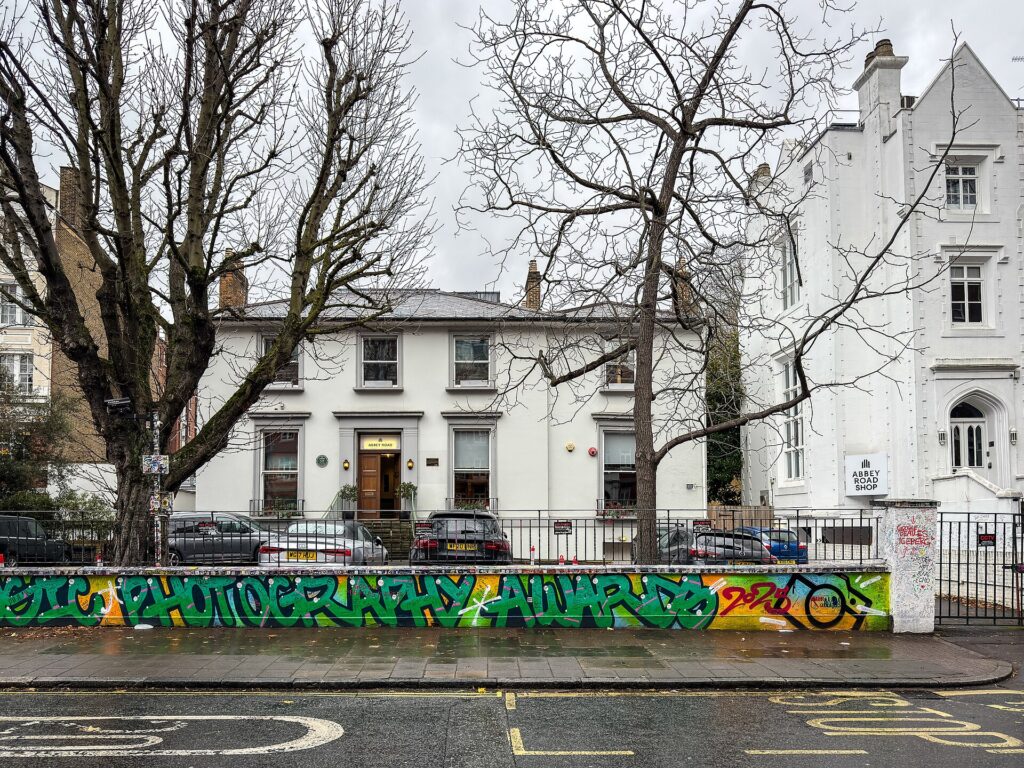
On 13 April 1965, Paul McCartney bought a house in St John’s Wood, north-west London. He was 22, the Beatles were the most famous band in the world, and he had been living as a lodger with the family of his girlfriend, the actress Jane Asher, in Wimpole Street. The house was 7 Cavendish Avenue, and he paid £40,000 for it.
The seller was Desmond O’Neill, a Harley Street physician, who told the local paper that “the house was getting rather too big”. For McCartney, the attraction was partly where it stood. The EMI recording studios on Abbey Road, where the Beatles made almost all their records, were a few minutes’ walk away.
More than 60 years later, it is still his London home.
A Victorian house behind a high wall
The house is often described as Regency or Georgian, but the official record says otherwise. Historic England, which listed it at Grade II in January 1970, dates it to the mid-19th century. It is a detached brick house of three storeys over a basement, with a stuccoed ground floor, a Doric porch, sash windows and an elaborate bracketed cornice under a slate roof. When the Marylebone and Paddington Mercury reported the sale in 1965, it called it simply a “three-storey Victorian house”.
Cavendish Avenue runs between Circus Road and Wellington Place, close to Lord’s Cricket Ground, and takes its name from the Cavendish family, once major landowners in the area. The pop singer Billy Fury lived at number 1.
McCartney did not move in straight away. He hired the architect John Adams and his wife Marina to redesign the interior, and according to the biographer Philip Norman, his brief was for the kind of house where “a smell of cabbage floated up from the basement”. The work ran over time and over budget. A report in May 1966 said he had spent a further £30,000 on the house and garden. He moved in that year, after a gate and intercom had been fitted to keep fans out.
The Beatles’ base round the corner
McCartney was the only Beatle who stayed in London. John Lennon, George Harrison and Ringo Starr all lived out in the Surrey stockbroker belt, so Cavendish Avenue became the obvious place to meet before and after sessions at Abbey Road. When the band’s manager Brian Epstein died in August 1967, the four of them gathered at McCartney’s house to decide what to do next. They chose to press on with the film that became Magical Mystery Tour.
Songs came out of the house too. McCartney wrote “Your Mother Should Know” on a harmonium in the dining room while relatives were staying. “I wrote it in Cavendish Avenue on the harmonium I have in the dining room there,” he later recalled. At the end of 1969, as the Beatles were falling apart, he set up a new Studer four-track tape machine at home and began recording his first solo album, McCartney, almost entirely on his own. He summed up the set-up as “Studer, one mic, and nerve”.
The fans at the gate
Living so close to Abbey Road had a price. A devoted group of fans, later known as the Apple Scruffs, kept watch outside the house at all hours, and some found their way in. One of them took a ladder from McCartney’s own garden, propped it against a bathroom window he had left slightly open, and climbed through. Among the things taken was a photograph of his father.
McCartney turned the episode into a song for Abbey Road. “A woman did actually sneak into my house through the bathroom window that was a bit ajar,” he said later. “But I got the song in return.” The song was “She Came In Through the Bathroom Window”.
The one he kept
McCartney’s life moved on in every other way. He married Linda Eastman in 1969, and the family spent long stretches at the farm on the Kintyre peninsula he had bought for about £35,000 in 1966, and later on a farm near Rye in East Sussex, bought in 1973. But he never sold Cavendish Avenue.
His bandmates moved on more readily. John Lennon sold his Ascot estate, Tittenhurst Park, to Ringo Starr only four years after buying it. Of the others, only George Harrison held on to a home in the same way, at Friar Park, which he bought in 1970 and his family still owns.
Recent reports, including a January 2026 round-up of his properties and a November 2026 piece on the street, say he still owns the house and still uses it. Property there now runs to millions: in 2025 another house in the street, built in 1969 and described as needing modernisation, was on the market for £3.6 million.
The house is private and still hidden behind a high brick wall and gates. Fans who walk over from the zebra crossing on Abbey Road can see the gate and not much more, which is how it has been for six decades.