
In 1905, Beatrix Potter used the royalties from Peter Rabbit and her first little books to buy a working farm in the Lake District village of Near Sawrey. Over the next 38 years, she bought and managed farms across the Lake District, and when she died she left 14 farms and more than 4,000 acres to the National Trust
Beatrix Potter bought Hill Top in 1905, the year her fiancé died. Over 38 years she built up a Lake District estate of fell farms and Herdwick sheep, and left 14 farms and more than 4,000 acres to the National Trust.
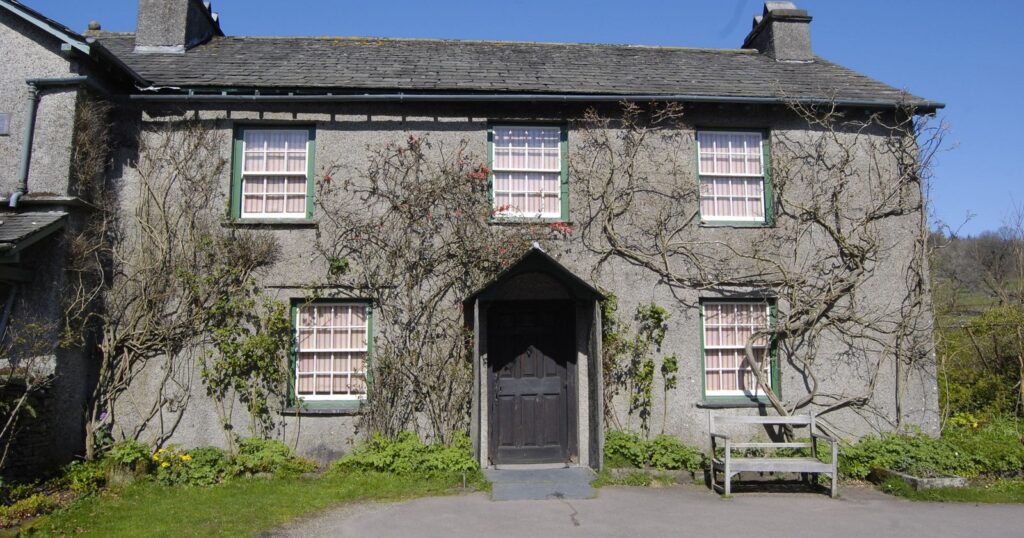
The summer of 1905 should have been the happiest of Beatrix Potter’s life. She was about to turn 39, her little books were selling, and on 25 July her editor, Norman Warne, asked her to marry him. She said yes. A month later he was dead, and Potter was left grieving a man her parents had never wanted her to marry.
That same year she bought a farm. By 1905 her publisher, Frederick Warne, had brought out six of her books, beginning with The Tale of Peter Rabbit, and according to the National Trust she used the profits to buy Hill Top, a 17th-century farmhouse with 34 acres in the village of Near Sawrey, between Windermere and Esthwaite Water. A small legacy from an aunt helped. She had stayed in the village on a family holiday and once called it “as nearly perfect a little place as I ever lived in”.
It was the first of many purchases. Over the next 38 years the woman who drew Peter Rabbit became one of the most determined landowners in the Lake District.
A working farm, not a holiday cottage
Hill Top was never just a pretty country retreat. It was a working farm, and Potter, still tied to her parents in London for much of the year, threw herself into it whenever she could get away. The place found its way straight into her work. The Tale of Tom Kitten and The Tale of Jemima Puddle-Duck are both set in and around the house, and readers can still pick out the garden path and porch in the illustrations.
In 1909 she bought a second farm, Castle Farm, across the road. Her adviser on that purchase and many after it was William Heelis, a solicitor from a local Hawkshead firm who kept an eye out for land coming up for sale. In 1913, aged 47 and once again against her parents’ wishes, she married him at St Mary Abbots in Kensington. They made their home at Castle Cottage on Castle Farm, and she kept Hill Top as a place to work.
After the wedding the books slowed almost to a stop. Her last little book, The Tale of Little Pig Robinson, came out in 1930. By then most of her energy was going into farming and land.
The sheep that took over
Her biggest single farm came in 1923. Troutbeck Park, a sheep farm of more than 1,800 acres on the lower slopes of the Kirkstone Pass, came up for sale with a real risk that it would be broken up. Potter bought the whole thing. It came with a flock of more than 1,000 Herdwicks, the small, hardy fell sheep that are native to the Lake District and were already falling out of favour with farmers who wanted softer wool and fatter lambs.
With her shepherd Tom Storey, she built that flock into one of the best in the country, and their Herdwicks took prizes at the local shows. She was not farming for the romance of it. In December 1930 she wrote to her cousin that the wool price had collapsed from 9¾ to 4¾, and that she was worried about rats getting into the heap: “1600 fleeces is a big stack.”
Late in her life the Herdwick Sheep Breeders’ Association elected her as its next president, the first time it had chosen a woman. She died before she could take office.
Selling Peter Rabbit to save a lake shore
Potter had known one of the National Trust’s founders, Canon Hardwicke Rawnsley, since a family holiday at Wray Castle in 1882, and she came to share his view that the Lakes needed protecting from speculators. In 1927, when developers threatened Cockshott Point on the shore of Windermere, she sold fifty redrawn Peter Rabbit illustrations to American buyers through The Horn Book Magazine in Boston to help the Trust buy it.
In 1930 she went further. The Monk Coniston estate, a spread of fell farms that included Tarn Hows, was at risk of being sold off piecemeal, so she bought the whole estate on the understanding that the Trust would take half off her hands, at cost, as soon as it could raise the money. It did so that year, and then asked her to manage its half as well as her own, which she did for several years.
“I wish there may be a sufficient representative number of the old farms in the hands of the Trust,” she wrote to Rawnsley’s widow, Eleanor, in 1934.
What the will said
Beatrix Potter died at Castle Cottage on 22 December 1943, aged 77. Her will left her Lake District farms and land to the National Trust, though her husband could keep the use of the property he chose to retain for the rest of his life. The V&A puts the bequest at 14 farms and more than 4,000 acres, and it came with her flocks of Herdwick sheep. It was the largest gift of its kind the Trust had received.
It came with conditions. According to Visit Cumbria‘s account of the will, the farms were to be let at moderate rents, and the landlord’s flocks on the fell farms were to stay pure Herdwick. The point was to keep them as working farms, not a landscape kept only for the view. Hill Top was the exception. It was to be kept as she had left it.
Her ashes were scattered on her own land, and the exact spot was never made public. William Heelis died in 1945, and the property he had kept passed to the Trust as well. That second stage is why the numbers vary depending on who is counting. Potter’s biographer Linda Lear, like the Beatrix Potter Society, puts the combined Heelis property at more than 4,000 acres, 17 farms and eight cottages.
Still farmed, still Herdwick
Hill Top opened to visitors in July 1946. The farm attached to it is still working, now at more than 250 acres, and the National Trust says its Herdwicks are descended from her original flock. In 2005 the Trust named its new head office in Swindon “Heelis”, after her married name.
British Heritage has looked at Potter’s wider legacy before, from her science to her stories. But the land is the part that is easiest to see. The money that came from a rabbit in a blue jacket went into fields, fell farms and a lake shore, and because of the way she wrote her will, most of it is still farmed and still grazed by Herdwicks, and much of it can still be walked.