
“Ugly” was Darwin’s word for Down House in a letter to his sister in July 1842, and he lived there forty years, wrote On the Origin of Species and used the gardens as an open-air laboratory until his death in 1882
English Heritage records that Charles Darwin called Down House "ugly" in 1842, then spent forty years working in its rooms and gardens until his death.
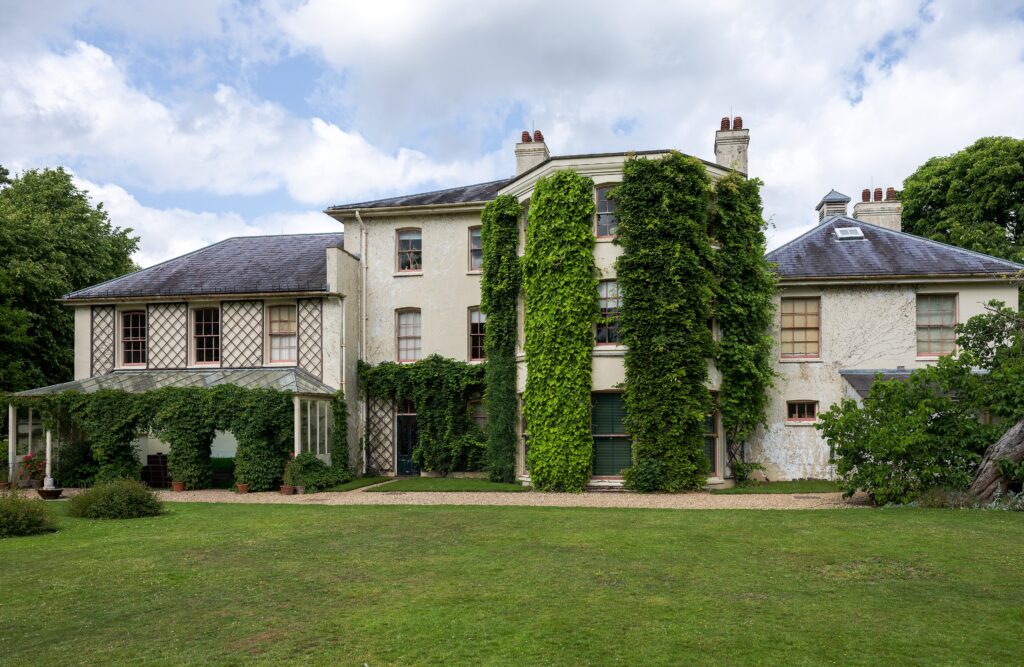
English Heritage, in its history of Down House, records that Charles Darwin described the Kent house as “ugly” and looking “neither old nor new” in a letter to his sister, and then lived in it for 40 years, until his death in 1882. He wrote On the Origin of Species by Means of Natural Selection (1859) there and used the gardens, which he and his wife Emma remodelled along with the house, as an open-air laboratory.
The letter is dated 24 July 1842 and was written to his sister Catherine. In the text published by the Darwin Correspondence Project, Darwin set the house down in six words: “House ugly, looks neither old nor new.” The same letter puts a figure on the purchase, with Darwin writing that “I believe the price is about 2200£”.
The house was “precisely what he and his wife, Emma, were looking for”, according to English Heritage: “a house ‘at the extreme verge of the world’ with room for expansion, acres of land, and neighbours who were neither ‘too near nor too far’.” The move out of London was made for the children. In the summer of 1842 Emma was six months pregnant with her third child, and getting clear of the family’s cramped London house had become pressing. The Darwins moved into Down on 24 September 1842.
The house the Darwins took on
Down House was built in the early 18th century, probably on the site of a 17th-century house. It faced east and was a simple box shape. Late in the same century it was extensively modernised, probably soon after George Butler, a rich businessman and landowner, bought it in 1778. He added a kitchen and service block at the south end, rearranged the principal ground-floor rooms, moved the main entrance to the north side and put the staircase in its present position.
Ownership changed several times after Butler’s death in 1783. Nathanial Godbold, a property speculator from Fulham, acquired the house in 1818 and rented it to John Johnson, colonel of engineers in the Honourable East India Company, who later bought it. The Revd J Drummond, vicar of Down, bought it in 1837 and commissioned Edward Cresy (1792-1858), an architect and civil engineer who lived locally, to install a new roof, two bathrooms, a stable yard and a cottage.
Darwin kept Cresy on. From the spring after the move he had him make further changes, chief among them a full-height bay window with views across the garden, which meant raising the ceiling and the height of the rooms above. Darwin also had the lane at the front diverted and dug down a few feet, to screen the family from people walking out from Downe village, and built an external corridor along the north side so that the front door opened eastwards.
Forty years of building and botany
The house grew with the household. In 1846 Cresy built a new service wing that also provided a schoolroom and an extra bedroom. In 1857 the Darwins decided the dining room was too small for visiting relatives and ordered a two-storey extension at the north end, finished in 1858. The light ground-floor room became a drawing room, and the dining room moved into the former drawing room. In 1876 the architect William Cecil Marshall built a further extension on the north side, intended as a billiard room and probably prompted by the arrival of the Darwins’ son Frank, who came to live at Down with his baby son after the death of his wife. In his final years Darwin moved out of his Old Study into that new ground-floor room, the New Study.
Outside, work began shortly after the family arrived on what Darwin called a “detestable slip” of land then in use as a kitchen garden. In the late 1850s, while writing On the Origin of Species, he took over a corner of it for his “experimental beds”. His discovery of “heterostylous” species was a step in his investigations into plant evolution and later formed the basis of Different Forms of Flowers on Plants of the Same Species, published in 1877. In the early 1860s he had a hothouse built adjoining the greenhouse to provide the growing conditions his experiments needed.
Family life ran through the same rooms. Emma Darwin bore ten children, of whom three died young: Mary within weeks of the move to Down in 1842, the eldest daughter, Annie, in 1851 at the age of ten from tuberculosis, and Charles Waring of scarlet fever when it tore through the village in 1858. Five boys and two girls survived. “We were always free to go where we would & that was chiefly the drawing room and about the garden, so that we were very much with both my Father & Mother”, their daughter Henrietta Litchfield recalled.
From memorial appeal to public opening
The house became a memorial through a public campaign. After Sir Arthur Keith used his 1927 presidential address to the British Association for the Advancement of Science to appeal for one, Sir George Buckston Browne bought Down House for £4,250 and paid a further £10,000 for repairs. English Heritage bought the property in 1996 and reopened it to visitors in 1998.
It opens at Luxted Road, Downe, as the Home of Charles Darwin, with a handheld tour carrying expert commentaries, animations, film footage and narration by David Attenborough, and with the greenhouse, the gardens and the Sandwalk among the things to see. British Heritage has covered other houses tied to the men who worked in them, among them Bateman’s, which Rudyard Kipling took in 1902, and Chartwell, bought by Winston Churchill.