
In 1959, J. Paul Getty, the world’s richest private citizen, paid about £60,000 for Sutton Place, a Tudor mansion in Surrey, then installed a coin-operated payphone after the phone bills soared
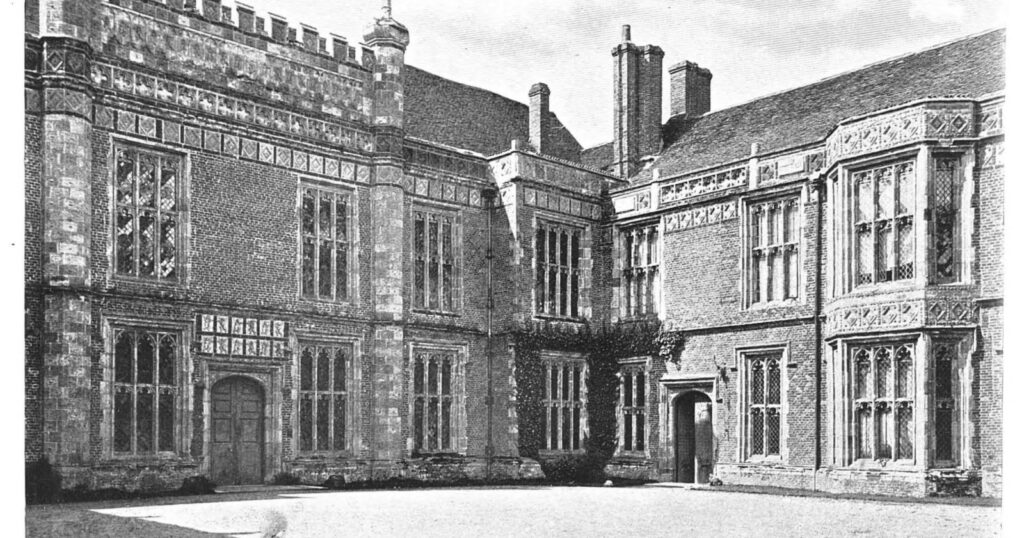
Just outside Guildford in Surrey stands a red-brick Tudor mansion trimmed with terracotta and capped with little onion-domed turrets. For the last 17 years of his life, it was home to one of the richest men in the world. It was also a house where guests who wanted to make a phone call were pointed toward a payphone.
A courtier’s house
Sutton Place was built around 1525 for Sir Richard Weston. Its listing as a Grade I building, the highest category of protection in England, describes “red and brown diaper pattern brickwork with terracotta dressings” and “thin polygonal turrets capped by onion domes and finials,” according to British Listed Buildings. It was “originally built as square house round a courtyard.”
According to The Art Newspaper, Westons held it for about four centuries. In 1919, it was bought by the 5th Duke of Sutherland, who lived there for roughly 40 years.
America’s richest man buys a bargain
Jean Paul Getty had made his fortune in oil, much of it in the United States and the Middle East. In 1957, Fortune published a ranking of the largest American fortunes, and Getty came out on top, with an estimated net worth of $700 million to $1 billion. The list, the magazine later noted, “was not topped by a Rockefeller or Mellon or Whitney or Astor, but by Jean Paul Getty.”
Two years later, he bought Sutton Place from the Duke and settled permanently in England. The price was low for a house of its size and history. According to The Art Newspaper, “John Paul Getty bought Sutton Place in 1959 for £60,000.” Country Life gives the same figure, which it says was “half what the Duke is said to have paid” four decades earlier.
Getty’s own figure was lower still. Fortune reported in 1986 that he was proudest of having paid £50,000, which he estimated at “less than one-twentieth its replacement value.”
The payphone
The story that has stuck to Sutton Place ever since is the payphone. As the J. Paul Getty Museum puts it, “Getty really did have a payphone installed at Sutton Place, his home outside London.”
The museum, drawing on Getty’s autobiography, As I See It, explains how it happened. During the renovation, after the estate manager “discovered soaring telephone bills” that seemed to come from “long-distance and overseas calls made by the many people passing through the premises.” Getty’s response was a coin-operated phone in “a smallish, but easily accessible, room on the ground floor of the house.” At the same time, “special dial-locking devices were placed on each of the half-dozen or more regular telephone instruments.”
It did not last forever. According to the museum, “the locks and payphone were removed after about 18 months.”
“Not my house”
Getty rejected the idea that the payphone proved he was a miser. In his autobiography, he offered the reason as “fiscal responsibility rather than miserliness,” the museum says. Part of his defense was about ownership. “Getty explains that he did not own Sutton Place; it was the property of Getty Oil and its stakeholders.”
The later sale of the house fits that account. When Getty died at Sutton Place in 1976, the house did not pass to his family as a private home. Four years later, The Art Newspaper reports, “Getty Oil sold the property to Stanley J. Seeger,” an American collector.
After Getty
The house has kept changing hands among the very rich. Seeger leased it to Frederick Koch, of the Koch industrial family, who bought it in 1986 for £8 million, according to The Art Newspaper, and spent a further £12 million on refurbishment. By 1999, it was on the market with an asking price of £25 million.
That is a long way from the £60,000 Getty paid. His frugality is still the thing most people remember about him at Sutton Place. The Tudor house gave him a home for the rest of his life, and the payphone gave him a reputation he never managed to shake.