
In 1996, Pete Townshend of The Who bought the Georgian mansion on Richmond Hill where Ronnie Wood once jammed with Mick Jagger and David Bowie, lived there for 25 years, and when he finally put it up for sale in 2021 it sold for £15 million in two weeks
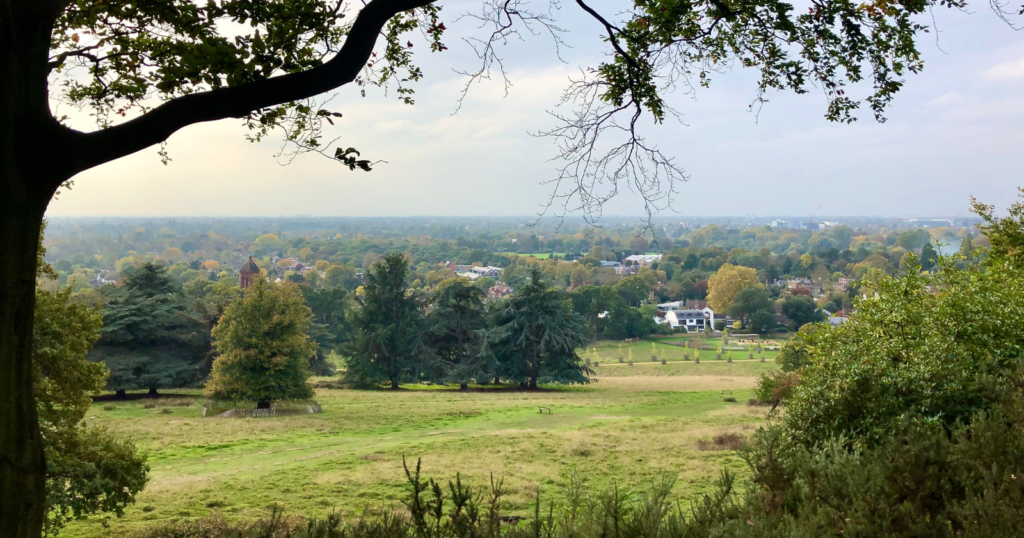
Stand at the top of Richmond Hill and look west, and the Thames curls away through Petersham Meadows towards the Surrey woods. Turner painted the view. It’s often described as the only view in England protected by an Act of Parliament.
At the corner of Nightingale Lane sits a modest-looking brick house with bow windows facing that view. Over 250 years it has had a remarkable run of owners, from a Georgian lady to a film star and two of the most famous guitarists in British rock.
Lady St Aubyn’s house, 1775
The Wick was designed in 1775 by Robert Mylne, the Scottish architect behind the original Blackfriars Bridge. His client was Lady St Aubyn, and the house went up on the site of an old tavern, the Bull’s Head.
From the road it looks almost restrained. The drama is round the back, where oval rooms and bow windows look straight out over the river. Today it’s listed Grade I, together with Wick Cottage next door, which puts it in the same league as England’s most important buildings.
Across the road stands Wick House, built for the painter Sir Joshua Reynolds. Richmond Hill was that sort of address.
The Mills family
In the 20th century the Wick became, for many years, the family home of the actor Sir John Mills and his wife, the writer Mary Hayley Bell. A pleasing local legend holds that the wind whistling round the house helped inspire her novel Whistle Down the Wind, later filmed with her daughter Hayley in the lead.
In 1971, the Mills family sold to a young guitarist from the Faces. Most sources date the purchase to June 1971, though one rock-history writer puts it a year later.
Ronnie Wood’s open house
In his autobiography, Ronnie Wood called the Wick “the most beautiful house in the world”, and he filled it with the best-known musicians of the day.
He converted the basement into a studio, and Pete Townshend later said he had helped build it in 1973. Keith Richards spent months in the cottage in the terraced garden, reportedly keeping clear of police attention at his Chelsea home. George Harrison is said to have dropped in with members of Monty Python.
Then came the famous night. Wood, the Faces drummer Kenney Jones and the American bassist Willie Weeks were recording with Mick Jagger, and David Bowie was there too. Out of the jam came a rough version of a song built on a throwaway chorus: “It’s only rock ‘n roll, but I like it.”
Wood later told the story himself. He and Jagger did a deal: Wood kept “I Can Feel the Fire” for his solo album, and Jagger took the other one. The song became a Rolling Stones hit in 1974, credited to Jagger and Richards alone, and Wood joined the band the following year. Accounts disagree on the details, too. Some date the session to December 1973 and others to 1974, and while some have Bowie singing, others have him on saxophone.
Wood’s solo albums I’ve Got My Own Album to Do and Now Look were made in the same basement.
Pete Townshend’s quiet quarter-century
In 1996 Wood sold the house to Townshend, reportedly for about £2 million. It was a natural fit. Townshend was a west London boy, born in Chiswick, and had long been rooted in this stretch of the Thames, where his Eel Pie studios sat at Twickenham.
Where Wood’s years had been a party, Townshend’s were work. He used the basement studio he’d helped build to write and produce much of his own music, along with a fair amount of commercial work. He also restored and upgraded the house.
He stayed nearly 26 years, though most reports round it to 25.
Two weeks in 2021
In July 2021 the Wick went on the market through the agency Pereds, inviting offers over £15 million. It didn’t stay there long. According to The Real Deal, Townshend found a buyer in about two weeks, and the agents soon marked it sold. Reports say the asking price was achieved, though the buyer has never been named.
By October he was gone. “It’s been a wrench,” he wrote on Instagram, adding that moving house is never any fun. He left the studio behind but took the mixing console he’d used on Who records. In the sales particulars, the basement where “It’s Only Rock ‘n Roll” was born was described as a TV lounge.
Townshend headed for the countryside, though he didn’t leave London altogether. More recently he showed off a new writing studio in the capital, built by none other than Rick Astley.
The Wick, meanwhile, has gone quiet. Its new owner keeps a low profile. The view from the back windows, still protected, is exactly as Turner saw it.