
Ahead of 300 new homes at Mancot in Flintshire, archaeologists found a 2,000-year-old Romano-British settlement overlooking Chester, with casting moulds and an unusually large group of brooches the inhabitants appear to have made on site
Heneb says excavation before 300 homes at Mancot, Flintshire, found a Romano-British settlement with casting moulds and brooches made on site.
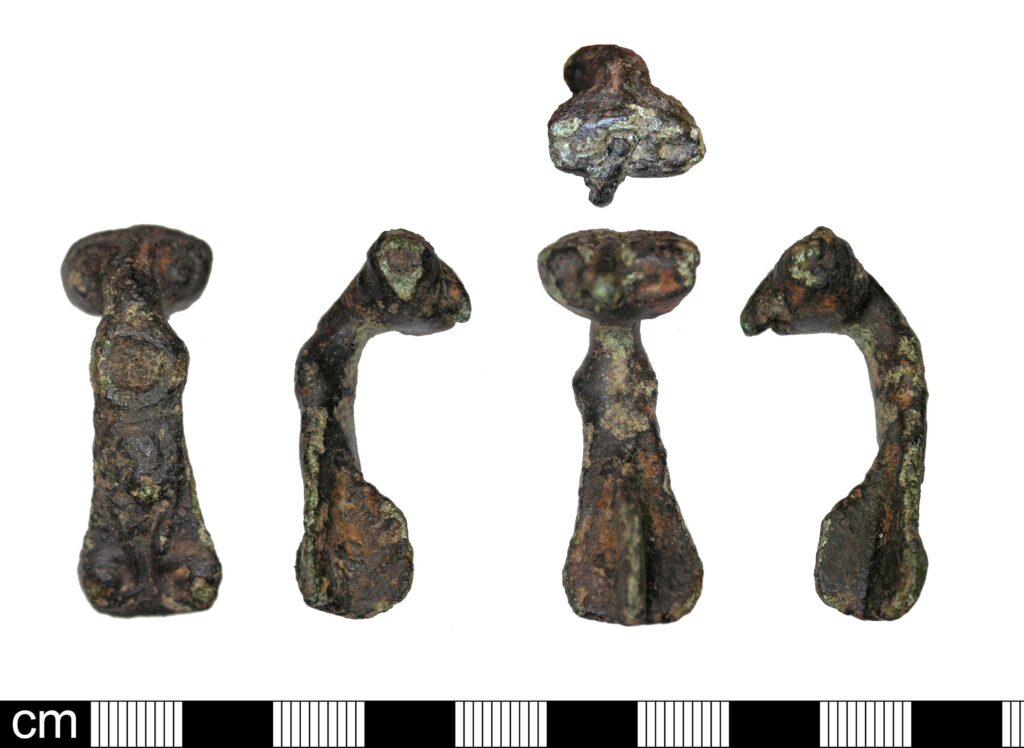
Archaeologists working ahead of 300 new homes at Mancot in Flintshire recorded a previously unknown Romano-British settlement some 2,000 years old on ground overlooking Chester, according to Heneb: The Trust for Welsh Archaeology. The excavation produced casting moulds and an unusually large group of brooches that the people living there appear to have made on site.
The remains were uncovered in December 2025 by Heneb archaeologists working on behalf of Castle Green Homes at the company’s Gladstone Grange development on Gladstone Way, in Mancot, Hawarden. The site had been allocated for housing by Flintshire Council, and the developer assessed its archaeological potential before the scheme began, commissioning Heneb as part of that process.
Ground geophysics identified buried structures and historic activity. Heneb then carried out a full investigation of the archaeological remains before any development of the site, work that has since been completed. The findings record Roman activity in an area where none had previously been documented.
Chris Matthews, the project manager, told the BBC the find was “very exciting” and that it changed what was understood about the history of the area. He said it was “the very beginning of what could be a very long period of discoveries in the area”.
A settlement above Deva Victrix
The site overlooks Chester, home to the Roman legionary fortress of Deva Victrix, on the border of Cheshire and north Wales. Very little evidence of Roman activity had previously been recorded in this part of Flintshire, and the country around the fortress has often been characterised as a largely undeveloped hinterland. Heneb described the discovery as unexpected and, speaking to the BBC, as one of the biggest collections of Roman artefacts found in the county.
Matthews said archaeologists and historians in the area had long debated whether the absence of local finds reflected a “poor relationship” between the Romans and the native population. Finds at Mancot, and at Greenfield and Rossett in Wrexham, were making them realise it “probably wasn’t the case”, he told the BBC.
Excavation revealed a Romano-British industrial settlement preserved within a network of plot boundaries and drainage systems. The settlement appears to extend westwards beneath the area known as Big Mancot, in the village that sits between Hawarden and Queensferry.
Occupation ran through several phases. Timber-built houses, some possibly dating to the end of the Iron Age, were replaced by elongated, semi-rectangular buildings by the third century AD. Matthews said the site “possibly” originated in the Iron Age and “continued to have successive occupation for a very long period of time”. Two coins support that span: one from the reign of Commodus, emperor from AD 177 to 192, and another depicting Constantine, who reigned about 200 years later.
Moulds, brooches and a spindle whorl
Among the most notable material from the site is a large assemblage of Roman metalwork, including a wide variety of brooches. Brooches fastened Roman clothing and were also decorative, often enamelled, brightly coloured and shaped as animals. Those recorded at Mancot include an enamelled Wirral type and a large brooch of a kind often found on Anglesey.
Excavators also recovered lead casting moulds. Heneb said “substantial evidence” suggests the settlement’s inhabitants manufactured the brooches themselves, probably as part of a wider industrial supply network serving both the local community and Chester. The moulds show a wide range of brooches was being produced.
Matthews said the workshop showed industry making use of the metal resources in the area and producing “important commodities for Roman society”. Pottery fragments from the site point to trading as far away as mainland Europe, the BBC reported.
Dozens of items were removed before construction, including pottery, coins and the jewellery; the finds also include a lead spindle whorl, used in spinning thread. Heneb’s plan of the Roman buildings shows them ranged along a large drainage ditch that formed the eastern boundary for most of them. Houses have since been built on part of the settlement site.
Conservation first, then public display
The objects are undergoing detailed analysis and conservation. Specialists at the National Museum of Wales in Cardiff will examine the brooches and moulds to establish how they were made, which metals were used and where those metals came from.
Once that work is complete, the material will be transferred to Flintshire Museum Services, joining the county’s collection of Roman archaeology, with a public display planned. Sophie Fish, museums manager at Gwella, which manages the council’s libraries and leisure, said she hoped some of the most interesting finds from Mancot could be shown at Mold Museum in 2027.
“I am particularly excited by the wonderful Roman brooches that have recently been excavated at Mancot,” Fish told the BBC. “They give us a unique insight into life almost 2,000 years ago.”
The sequence at Mancot of survey, then excavation, then construction also applies on infrastructure schemes, including the work carried out before a new Southern Water pipe could be laid between Otterbourne and neighbouring ground.
Heneb said the Mancot settlement forms part of an emerging pattern of Romano-British sites identified across north-east Wales in recent years, and that together they suggest Roman Wales was more complex and interconnected than previously understood. Continued research will be needed on the people, industries and communities recorded in the region.