
In 1862, Sandringham was bought for the 20-year-old Prince of Wales for £220,000. He set every clock on the estate half an hour fast for winter shooting, and “Sandringham time” lasted until the night George V died there in 1936
Sandringham was bought for the Prince of Wales in 1862. He set its clocks half an hour fast for the shooting, decades before Britain had summer time, and by dawn after George V died there in 1936 they were back on Greenwich Mean Time.
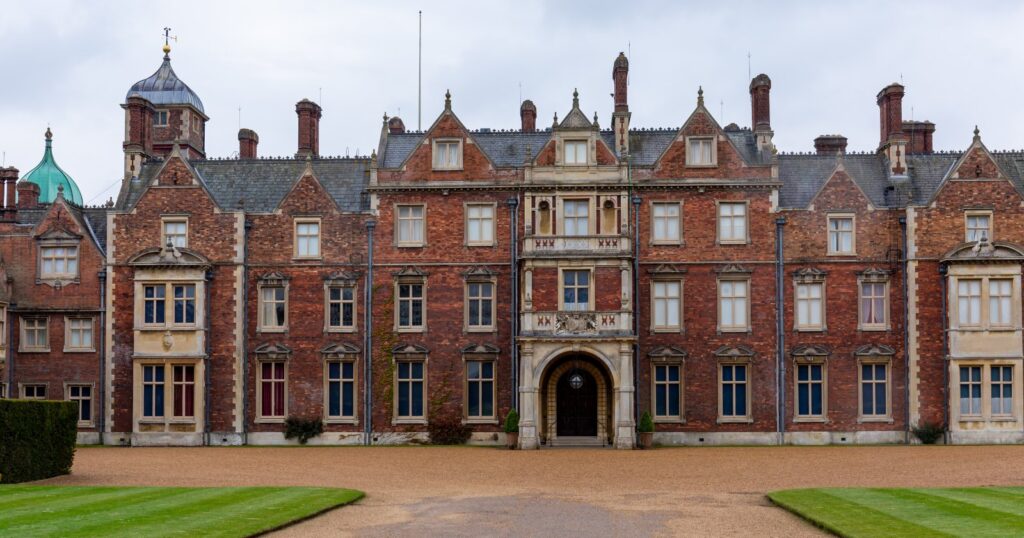
In 1861, Prince Albert was house-hunting for his eldest son. Albert Edward, Prince of Wales, was about to turn 20, and his parents were worried about the company he kept. Albert’s answer was marriage and a country estate. According to the history of the house, his staff looked at 18 possible properties, including Newstead Abbey and Houghton Hall, before settling on Sandringham Hall in Norfolk. It helped that the owner, Charles Spencer Cowper, was the stepson of the prime minister, Lord Palmerston, who recommended it personally.
Albert died that December, before the deal was done. Queen Victoria made it clear the plan would go ahead anyway: “His wishes – his plans – about everything are to be my law.” The prince, then 20, went to inspect the estate in February 1862, and on 22 February the Norfolk papers reported that he had concluded the purchase for £220,000. The estate ran to about 8,000 acres.
The money came from the revenues of the Duchy of Cornwall, which had been piling up untouched throughout his childhood. Palmerston told the House of Commons in 1863 that £220,000 of those savings had gone on “the purchase of the Norfolk estate”. Some historians have called the price exorbitant. Others, including the estate’s own recent historian, Helen Walch, have argued it was reasonable.
A house rebuilt for shooting
The prince married Princess Alexandra of Denmark in March 1863, and Sandringham became their country home. Alexandra liked Norfolk because it reminded her of Denmark. The old hall, though, was far too small for the household and the guests he wanted to entertain. The architect A. J. Humbert pulled most of it down and built a much larger red-brick house in its place, a rebuild the Norfolk Heritage Explorer dates to between 1867 and 1870. A plaque in the entrance hall still records that it “was built by Albert Edward Prince of Wales and Alexandra his wife”.
The house was a setting for one thing above all: shooting. The prince turned Sandringham into one of the finest sporting estates in England, and weekend shooting parties became the point of the place. The game books recorded bags of between 6,000 and 8,000 birds a year in the 1870s, rising to more than 20,000 a year by 1900, mostly pheasants and partridges. The estate’s game larder could hold between six and seven thousand head of game at a time.
Half an hour borrowed from the dark
The shooting season ran from October to February, when Norfolk afternoons are short. So the prince did something only a royal could get away with. He had every clock on the estate set half an hour ahead of Greenwich Mean Time. Everything on the estate happened half an hour earlier in real time, which left more of the short winter daylight for the guns.
A popular story has it that the clocks were really changed because Alexandra was always late. Historic UK and Royal Central both dismiss that and put it down to the shooting. The custom later spread to Windsor and Balmoral.
Some modern accounts, including a Royal Observatory Greenwich article, date it to 1901, the year he became king. That cannot be right. In April 1893 The Strand Magazine warned visitors that “every clock on the place, from the loud-voiced one over the stables to the tiniest of continental masterpieces, is kept half an hour fast”. It was older still. When Queen Victoria went to Sandringham in 1871, as the prince lay gravely ill there with typhoid, she had the clocks put back. Lady Macclesfield noted that the Queen “thought it a ridiculous habit and a ‘lie'”.
Summer time before summer time
What makes Sandringham time more than a royal quirk is how early it was. Parliament only made Greenwich Mean Time the legal time in Great Britain in 1880. The builder William Willett did not publish his pamphlet Waste of Daylight, the campaign that led to British Summer Time, until 1907, and the clocks did not go forward nationally until 21 May 1916, under the Summer Time Act.
By the 1890s at the latest, then, one Norfolk estate was running its own version of daylight saving, decades before the rest of the country. And it ran the other way round. British Summer Time moves the clocks forward to give summer evenings more light. Sandringham did it in winter, for the guns.
The night George V died
Edward VII died in 1910. Queen Alexandra kept the big house for the rest of her life, so his son, George V, lived with his family in the much smaller York Cottage on the estate. He loved the place regardless, calling it “dear old Sandringham, the place I love better than anywhere else in the world”. He kept the clocks half an hour fast. After Alexandra died in 1925 he moved into the main house, and in 1932 he gave the first royal Christmas broadcast from a studio there, in a speech written by Rudyard Kipling that began: “I speak now from my home and from my heart to you all.”
George V died in his bedroom at Sandringham at 11.55pm on 20 January 1936. The estate’s private time caused confusion in those final hours. His doctor, Lord Dawson, later recorded that he had hastened the end with injections of morphine and cocaine, partly so that the death could be announced in the next morning’s Times rather than in the evening papers.
The new king, Edward VIII, did not wait. After talking it over with his mother, he decided that the estate would start the new reign on proper time, and by dawn the clocks, including the one in Sandringham parish church, had been put back half an hour to Greenwich Mean Time. He had never liked the place. In a 1919 letter he described dinner there as “too dull and boring for words”, and as king he called the estate a “voracious white elephant”. Before the year was out he had abdicated. His brother, George VI, bought Sandringham from him, since it was the monarch’s private property rather than the Crown’s. Neither he nor any monarch since brought Sandringham time back.
Sandringham today
The estate now covers about 20,000 acres and still belongs to the monarch personally, today King Charles III. George VI died there in 1952, Elizabeth II made her first televised Christmas broadcast from the house in 1957, and she opened it to the public in 1977. The royal family still gathers there at Christmas, on ordinary GMT.
There is one reminder on the estate of how much the family thought about time. In 1892 the prince’s eldest son, Prince Albert Victor, died of pneumonia at Sandringham, and he is commemorated on the clock tower. Its Latin inscription translates as: “The hours perish and will be charged to our account.”