
Father found the Isle of Man’s only pair of Viking women’s brooches in 2018. Now his son has found the second, with a 1,100-year-old sword probably broken in a burial rite, in what may be the island’s earliest known female Viking grave
Daniel Crowe left the brooches uncleaned. Declared Treasure at Douglas Courthouse on 9 November, the Viking find went on show at the Manx Museum two days later.
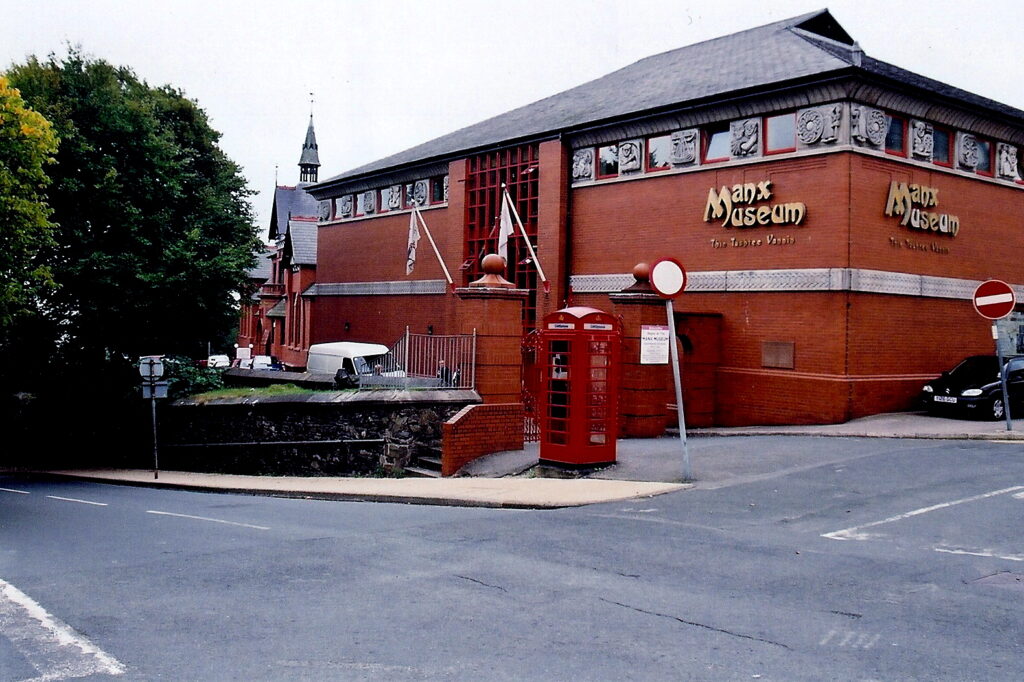
Daniel Crowe did not clean the green bronze brooches he lifted from a Manx field in February. He left them as they were for professional examination, and on Wednesday 11 November a selection of the Viking-age objects he and a fellow detectorist recovered went on show in the Viking Gallery at the Manx Museum in Douglas.
The group, dated to around AD 900 and more than 1,100 years old, was declared Treasure at Douglas Courthouse on 9 November 2026. The Isle of Man is a Crown Dependency, not part of the United Kingdom, with its own parliament and its own treasure law.
Manx National Heritage (MNH) says the two oval brooches among the finds may point to the earliest known female Viking Age burial on the Island.
- What was found: three decorated bronze brooches, a broken Viking sword, decorated lead weights and fragments of bronze balance scales, a bronze ladle and an axehead.
- When: discovered in February 2026; declared Treasure at Douglas Courthouse on 9 November 2026; on public display from Wednesday 11 November 2026.
- Who found it: metal detectorist Daniel Crowe, assisted by Rhett Britton, who found the axehead, part of the balance scales and additional iron objects, according to Manx National Heritage.
- The family link: the only other pair of oval women’s brooches from the Island was found in 2018 by Daniel’s father, John Crowe, with fellow detectorist Craig Evans.
- Where to see it: the Viking Gallery, Manx Museum, Douglas, from 9.30am on 11 November, Manx Radio reported.
Two of the three brooches are oval, decorated with interlocking animals, and of the type typically worn by women. MNH says they “could be around 50 years older” than the 2018 pair, “potentially evidence of the earliest known female Viking Age burial on the Isle of Man”.
Allison Fox, MNH’s Curator for Archaeology, said in the same release that the brooches “appear to represent our earliest known female Viking Age burial”. The hedging is deliberate: the original burial site had been disturbed, and MNH says the precise circumstances remain uncertain.
The third brooch was originally gilded, is decorated with spirals and has a glass centre. MNH says it is the first of its kind found on the Island.
All three have turned green over the centuries through oxidation, the BBC reported.
A father’s pair, then a son’s
The 2018 brooches found by John Crowe and Craig Evans went on display after conservation in 2021, according to the BBC. Until February they were the only such pair known from the Island.
Daniel Crowe was taught to detect by his father and is a member of the Manx Metal Detecting Society, IOM Today reported. He contacted MNH after the find, and Fox came out for an initial excavation.
He is keeping the exact location under wraps out of respect for the farmer who owns the land, IOM Today said. Asked for his favourite object, he picked the sword: “Obviously, it’s got to be the sword.”
A sword broken, probably in the rite
It is the 13th Viking sword found on the Isle of Man, and around two-thirds of it survives. X-rays revealed a hilt decorated with fine silver metal inlay and twisted silver wire; MNH says only two other Manx Viking swords carry comparable decoration.
MNH says the sword “is broken, probably as part of the Viking burial ritual, with some additional damage occurring after burial”. The BBC’s report put it more firmly, describing the sword as deliberately broken in line with Viking burial practices.
Jewellery of a kind typically associated with women was found alongside a weapon traditionally associated with men. MNH says that raises the possibility of a double burial, or of two separate graves of the same period close to one another.
The BBC reported that the objects are thought to have been disturbed over many years of the land being worked, and were scattered over an area of up to 328ft (100m). They are thought to be the grave goods of a man and a woman, buried side by side or in two separate graves near each other.
The decorated lead weights and the fragments of bronze balance scales are the first of their type found on the Isle of Man. They were used by Vikings to weigh precious metals and coins.
One weight carries a decorative bronze fitting, possibly reused from a small chest or a religious object, in an art style of Britain and Ireland. A bronze ladle, possibly used for feasting or ceremonies, had not previously been recorded on the Island; the BBC also mentions fragments of a cauldron and a ladle.
James Brooks, the coroner who declared the find Treasure at Douglas Courthouse, said the artwork on some of the items would be of “exceptional quality today, let alone when they were made”, the BBC reported.
The facts
- Date of the objects: around AD 900; more than 1,100 years old.
- Found: February 2026, on the Isle of Man; exact location not disclosed.
- Declared Treasure: 9 November 2026, Douglas Courthouse, by Coroner of Inquests James Brooks.
- On display: Viking Gallery, Manx Museum, Douglas, from 9.30am on Wednesday 11 November 2026.
- The sword: the 13th Viking sword found on the Island; around two-thirds survives.
- Brooches: three; two oval of a type typically worn by women, one originally gilded with a glass centre and the first of its kind on the Island.
- Vikings on Man: first arrived in the 9th century (MNH).
- Tynwald: traces its origins to the Viking Age and is recognised as one of the world’s oldest continuous parliaments (MNH).
- Treasure law: finds are reported to Manx National Heritage; if they fall under the Treasure Act 2017, they are also reported to the Coroner of Inquests, who decides whether an artefact is Treasure (MNH).
Vikings first arrived on the Island in the 9th century, in the centuries British writers once loosely called the Dark Ages, and Tynwald still traces its origins to the Viking Age, MNH’s editor’s notes state.
Before conservation, the Manx Care radiology team helped scan the objects, Fox said in the MNH release. Further conservation and research are still to come.
For now, a selection of the group is on show in the Viking Gallery at the Manx Museum in Douglas.