
Ombersley Court, the Worcestershire house where the Duke of Wellington recovered after Waterloo, is for sale at £13.5 million, nine years after it was guided at £3.5 million
Ombersley Court, the Grade I-listed Worcestershire house where the Duke of Wellington recuperated after Waterloo, is on the market at £13.5 million.
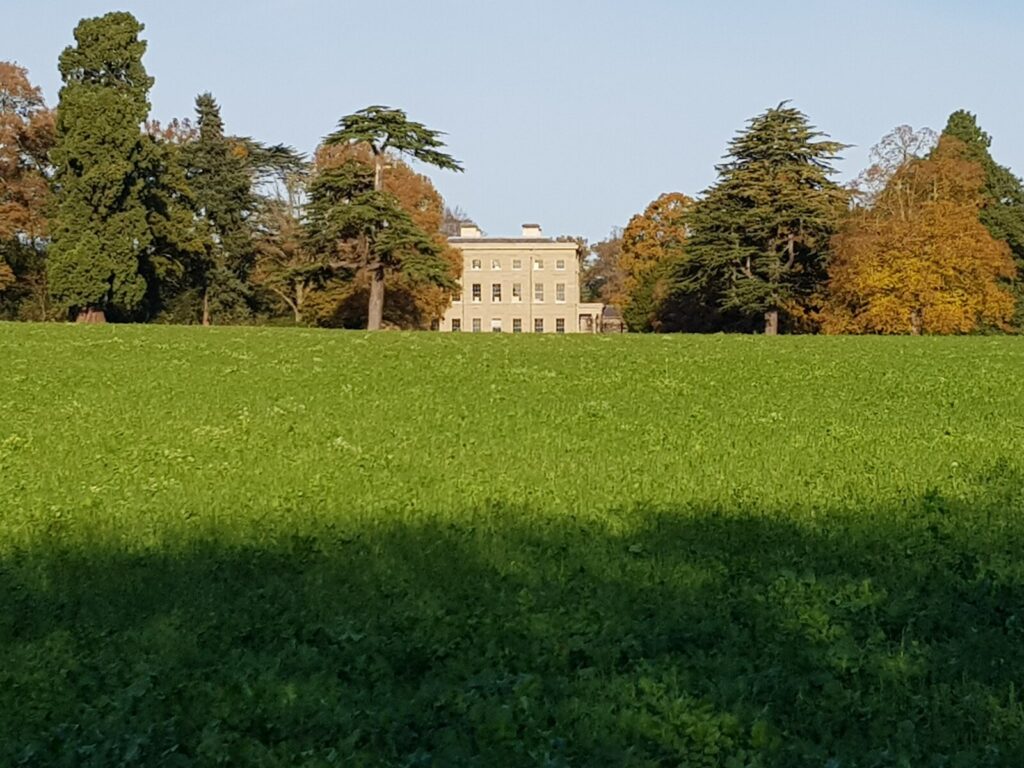
A Worcestershire country house where the Duke of Wellington was invited to recover after Waterloo is for sale at £13.5 million, nine years after it was guided at £3.5 million.
Ombersley Court, a Grade I-listed house on the edge of the village of Ombersley, near Droitwich, is listed with UK Sotheby’s International Realty at an asking price of £13,500,000. The listing, handled by agent Andrew Barnes, gives 12 bedrooms, 10 bathrooms and a 40-acre estate.
The house has been on the market since April 2026, when owner Tim Hopkins put it up with Strutt & Parker for £13.5 million, according to the Telegraph’s Great Estates column. That column carried the standfirst “Grade I-listed Ombersley is on the market for £13.5m” on 21 June 2026, under the headline “I’ve spent almost a decade renovating my 300-year-old country house”.
The Duke of Wellington “was famously invited by his good friend Lord Arthur Hill, the 2nd Baron Sandys to recuperate at Ombersley Court for a few months following victory at the Battle of Waterloo”, the listing says.
Lord Arthur Hill was one of Wellington’s aides-de-camp at the Battle of Waterloo, Birmingham Live reported in June 2022, “which led to a visit by the Duke”.
Wellington’s room left as it was
Six bedrooms are on the first floor. They include the Duke of Wellington’s room, which the listing says “has been left in its original condition including the silk wall covering and curtains”.
Royalty stayed as well. The Boudoir “was used by the Prince Regent, George IV when he stayed at Ombersley”, according to the listing. Francis York records the Prince Regent, later George IV, as having stayed at the house in 1807.
The approach is along a long driveway to a 19th-century portico, with a galleried Grand Hall inside and the Sandys coat of arms on the fireplaces.
Three centuries in one family
The build dates given by different accounts do not match. The Sotheby’s listing says the property “was originally built in 1730 for the first Lord Sandys and it remained with the same family for the next 300 years”.
Save Britain’s Heritage, quoted by Birmingham Live, puts it earlier, saying the house was “originally built by Francis Smith of Warwick for the first Lord Sandys in 1724”. Francis York also dates the present house to the 1720s, built for Samuel Sandys, later the 1st Lord Sandys, and designed by Smith.
The outside is later work. “The exterior was recased in Grinshill Stone ashlar by the Marchioness of Downshire in 1812–14 to the design of John Webb,” Save Britain’s Heritage said.
The Sotheby’s listing credits Webb with the grounds as well, which it dates to the early 18th century and places under the Marchioness of Downshire, along with a walled kitchen garden designed by Webb in 1812. There is an ice house, and Grade II* listed stables around an open courtyard that hold three apartments.
The family’s occupation ended with the deaths of Richard Hill, 7th Baron Sandys, and Patricia, Lady Sandys, who had no children. Francis York puts the run of family occupation at more than 300 years.
“When the 7th Lord Sandys and his wife died without direct heirs, the property was put on the market for £3.5 million by Savills and snapped by local businessman Mr Hopkins in 2017,” Birmingham Live reported.
That £3.5 million was the Savills asking figure. A Telegraph report of 10 April 2023 said Tim Hopkins bought the house “for a reported £3.5 million in 2017”.
What the asking price covers
How much land goes with the house is another point on which the accounts differ. The Sotheby’s listing describes a “historic country house set in a 40-acre estate”. Francis York gives 36 hectares, or 90 acres. Birmingham Live referred in 2022 to “120 acre grounds”, and the Telegraph in 2026 to “almost 50 acres”.
A four-bedroom cottage is “available by separate negotiation” and is not included in the £13.5 million. One principal reception room has been left unfinished and is “identified as the perfect location for a large family kitchen”, with the seller offering to complete the work to the buyer’s design.
Hopkins, who also owns The Elms Hotel in Abberley, has spent almost a decade on the house. “The current owner has painstakingly renovated the house to the highest of standards, taking care to preserve the original features,” the listing says.
Ombersley Court opened to visitors for a day on 11 June 2022 with Save Britain’s Heritage. British Heritage has also reported on the lost Victorian flowerbeds traced by drone at Witley Court in Worcestershire.
The £13.5 million is an asking price and not a sale figure.
Other celebrity and country homes covered by British Heritage include Alan Carr’s Ayton Castle and Rod Stewart’s Durrington House.