
The former Prince Andrew paid £1 million upfront and a token rent for Royal Lodge, where the Queen Mother died, and when he was forced out, a £1.8 million repair bill swallowed his £302,000 compensation, and the King reportedly paid the rest
The Crown Estate has set out how Andrew Mountbatten-Windsor's Royal Lodge lease ended: £301,967.66 owed to him, £1.8 million owed by him for repairs, and a net £1.5 million due to the Crown Estate, money the King is reported to have provided.
“His lease on Royal Lodge has, to date, provided him with legal protection to continue in residence.” Buckingham Palace put that line into its statement of 30 October 2025, the day the King began removing his brother’s style, titles and honours. The next sentence said formal notice had been served to surrender the lease, and that the man now known as Andrew Mountbatten-Windsor would move to private accommodation.
The lease ended on 8 October 2026, and the paperwork now public shows what it came to. In 2003 he paid a £1 million premium and took the house for 75 years at a rent of a peppercorn. Leaving early entitled him to about £302,000 in compensation, but the bill for putting the house back in repair was settled at £1.8 million. That left roughly £1.5 million owed to the Crown Estate, and PA Media and Sky News, citing unnamed sources, both reported that the King had privately made the money available.
A Regency cottage reduced to one room
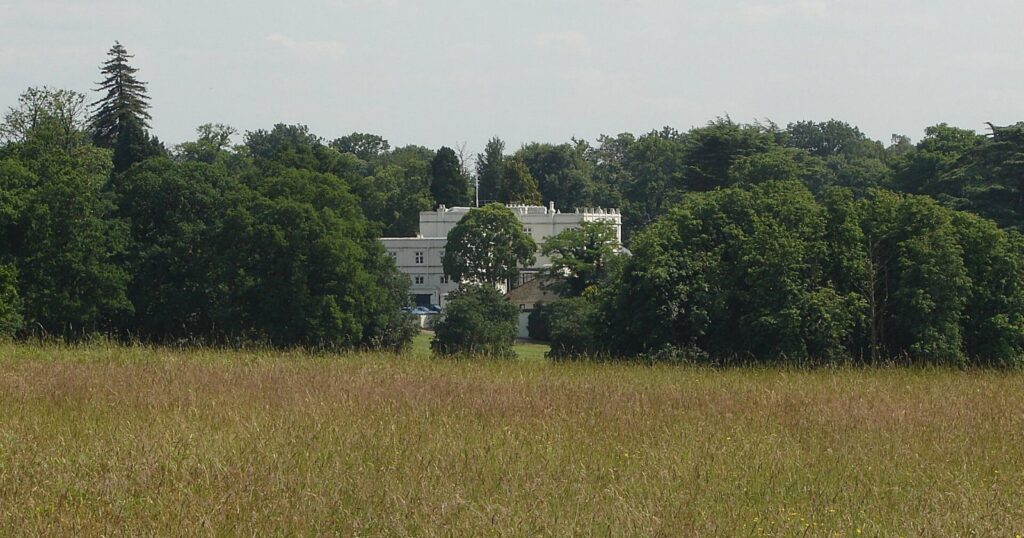
Royal Lodge stands in Windsor Great Park, south of the castle. Early in the 19th century the Prince Regent, later George IV, made an older house on the site his Windsor home. In the words of the Royal Collection, he turned it into “a rambling cottage orné”.
Little of it outlasted him. The Royal Collection says that on his accession in 1830, William IV pulled down all the original building and much of the Regent’s new work. Historic England’s listing entry credits the demolition to his queen, Adelaide, instead.
By the listing’s account, only Jeffry Wyatville’s dining room of about 1820, now the drawing room, survives from the Regent’s cottage. The listing dates the house to the early 19th century, with late 18th-century origins, and notes that it was altered and extended in the 20th. It is rendered and painted, with a parapet hiding a low roof and Tudor-arched ground-floor windows along the garden front, and it has been listed at Grade II since 1972.
In 1931 George V offered the house to his second son and daughter-in-law, the Duke and Duchess of York. Five years later they were King George VI and Queen Elizabeth. She outlived her husband by half a century, and in 1990 the Crown Estate staff of the Great Park marked her 90th birthday with a watercolour of the house by Hugh Buchanan, now in the Royal Collection.
She died at Royal Lodge on 30 March 2002, aged 101. The palace announcement that day said she died “peacefully in her sleep”.
A premium and a peppercorn
Her grandson’s lease is dated 8 August 2003 and runs from June 2003 to June 2078. The National Audit Office, which examined it in a June 2026 investigation, describes a Grade II listed house with 40 hectares of grounds, eight cottages and a police suite.
The Crown Estate opened by asking for £3.5 million up front: a £1 million premium plus £2.5 million to buy out the rent. It reckoned the house needed at least £5 million of refurbishment. In August 2003 the tenant committed to spending £7.5 million on the work, and on the auditors’ account it was that commitment which brought the price down to the £1 million premium and a peppercorn. The renovations were finished within two years, the landlord told the NAO. The auditors also found that in each lease they reviewed, Royal Lodge’s included, the agreed price fell within the range recommended by the Crown Estate’s independent valuers.
The lease gave him no equitable interest in the house. He could assign it only to his widow, to one or both of his named daughters, or to a trust for the sole benefit of one or both daughters. He could not sublet the main house, but the lease let him sublet three cottages on the estate, with the landlord’s permission, and keep the income. The NAO wrote that it did not know what rent was charged.
A later letter from the Keeper of the Privy Purse filled in some of that, passing on information from Mountbatten-Windsor’s own household. For most of the tenancy, it said, only one cottage was let, below market rent, to a tenant who worked for the Royal family. At some point since late 2021, all three were let at the same time for less than a year, bringing in just over £2,000 a month between them before maintenance and general expenses.
The Keeper wrote that he had not had access to the underlying documents. His letter gives no total for the two decades.
The only lease the NAO reviewed with a paid early exit
If the tenant gave the house back within the first 25 years, the landlord would pay him compensation on a sliding scale, calculated from a total of £6.96 million that shrank as the years passed. Of the six leases the NAO reviewed, Royal Lodge’s was the only one with a clause like that. The Crown Estate said it was there to recognise the large investment he made at the start.
He served notice on 30 October 2025, the day of the palace statement, giving the 12 months the lease required. The auditors record it as a “Notice offering to Surrender the Lease”, served by him as the tenant, whatever the pressure behind it. Twenty-two years into the term, the possible payment stood between £301,967.66 and £488,342.21, depending on the exact date of surrender. Any sum would be offset against dilapidations found at handover.
The Crown Estate had already lowered expectations. In a briefing to MPs on the Public Accounts Committee, reported by LBC in December 2025, it said its initial assessment was that once dilapidations were counted he would “in all likelihood” not be owed anything.
He did not wait out the notice. On Monday 2 February 2026 he was photographed riding a horse in the Great Park near Royal Lodge. Two days later ABC News reported that he had moved out, to the King’s Sandringham estate in Norfolk, shortly after the US Department of Justice released files relating to the late sex offender Jeffrey Epstein. The palace’s October statement had noted that he continues to deny the allegations against him.
A repair bill nearly six times the compensation
The final account came in a letter from the Crown Estate to the chair of the Public Accounts Committee, dated 9 October 2026, updating MPs on what it called “the surrender of the lease of Royal Lodge and East Lodge”. The two sides had agreed to bring the Royal Lodge surrender forward from 30 October to 8 October. After negotiations with the tenant’s adviser, a gross settlement of £1.8 million was agreed for his repairing obligations. The compensation due to him came to £301,967.66, the bottom of the NAO’s range. Take one from the other and the Crown Estate expected to receive £1,498,032.34.
The letter does not say where that money came from. PA understood that funds made available by the King would cover the £1.5 million, and Sky News had the same story; neither gave the terms. AP and AFP, each citing an unnamed person familiar with it, described it as a loan. Every one of these accounts rested on unnamed sources, and neither Buckingham Palace nor the Crown Estate confirmed the King’s role on the record.
So the headlines that had him “granted” or “awarded” £302,000 were describing a credit. On the landlord’s own figures the money flowed the other way: the £302,000 was set against a bill nearly six times its size.
What becomes of the house is undecided. The letter promised an assessment covering planning and heritage requirements, security and valuation among other things, to be considered in the context of the Crown Estate’s statutory duty to aim at maintaining the present character of the Windsor Estate as a royal park and forest.
When the Crown Estate announced the surrender on 9 October, a spokesperson said the focus was “firmly on its future use”, and, according to PA, that two nationally recognised agents would market the property. The Great Park around it is open daily and free to enter. Neither the letter nor the statement said anything about opening the house.
MPs, for their part, found that the Crown Estate “did not identify specific lessons from the Royal Lodge lease arrangement”, ITV News reported of the committee’s November 2026 report. They asked that future leases follow normal commercial practice and prohibit subletting as standard unless the landlord gives prior permission, and that the Crown Estate obtain the relevant financial details. On Royal Lodge’s cottages, the NAO had said it did not know what rent was charged.
In 2025 the palace said the lease gave him legal protection to stay. It ended more than 50 years early, and the compensation written into it in 2003 never reached him as money. It went against his own repair bill.