
A Grade II-listed cottage on the Polesden Lacey estate that was a youth hostel for 79 years is set to reopen next year, run by volunteers many of whom first met there in the 1970s, after they agreed a lease with the National Trust
Tanners Hatch, a Grade II-listed cottage on the Polesden Lacey estate, closed in 2025 after 79 years as a youth hostel and is set to reopen under volunteers.
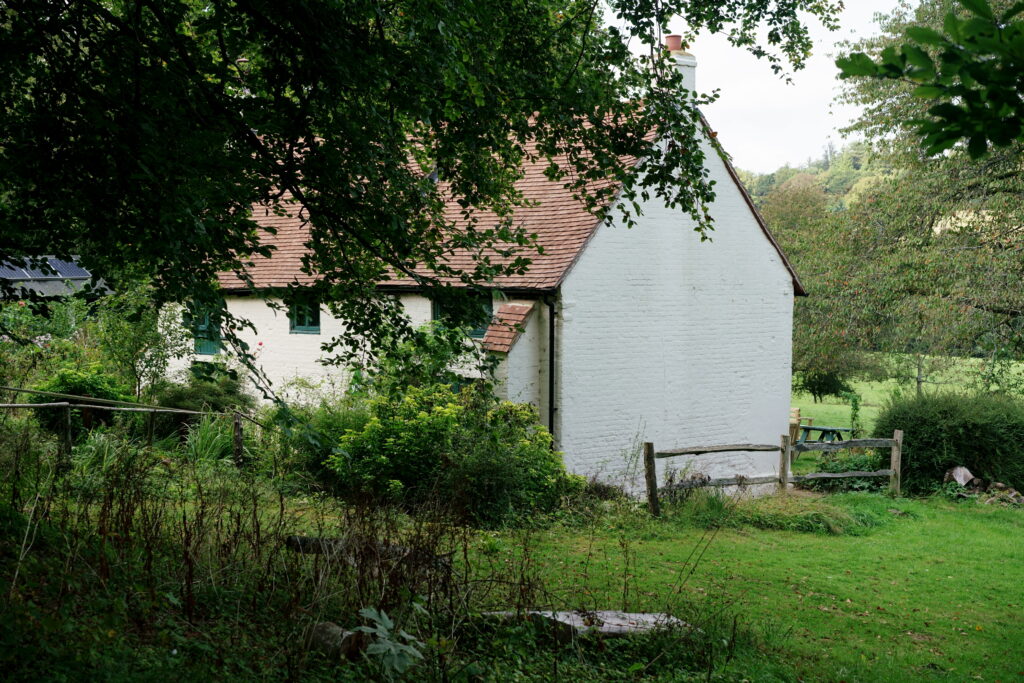
A youth hostel in the Surrey Hills that closed in 2025 after 79 years is set to reopen under a group of volunteers, many of whom first met while staying there in the 1970s.
Tanners Hatch, a Grade II-listed former estate workers’ cottage on the Polesden Lacey estate, will pass to the volunteers under a lease agreed with the National Trust, BBC News reported on 22 November 2026. The group has formed a community interest company, or CIC, and intends to run the hostel on an independent basis from early next year.
“We are thrilled to be able to ensure that this very special place will still be here for people to escape the rat race for a while,” said Nicole Lazarus, chair of the CIC.
The company is called Friends of Tanners Hatch CIC. Independent Hostels reported in mid-November that the company had signed the lease and that Tanners Hatch would reopen in 2027 as an independent, entirely volunteer-run hostel.
Sarah Archer, from the National Trust, said: “We are delighted to welcome our new tenants to Tanners Hatch and to see this special building continue its longstanding use as a youth hostel.” She added that it was very important to the trust that the Grade II-listed building was “cared for and enjoyed long into the future”.
Seventy-nine years under the YHA
The Youth Hostel Association ran Tanners Hatch for 79 years until the 2025 closure. Independent Hostels said the YHA closed the hostel in late 2025, after its final few years had been open for exclusive hire only.
The cottage stands in woods a mile from the nearest road and about 25 miles from central London, according to the same account. It said the buildings fell into dereliction in the 1930s and were rediscovered as the youth hostel movement took shape in the 1940s. Walkers and volunteers renovated the cottages with the agreement of the landlords, later to become the National Trust, and the hostel opened in 1946.
For its first half-century the hostel had no electricity, Independent Hostels said. It was warmed by a log fire and lit by gas lamps. The building also hosted the meetings that led to the formation of the Long Distance Walkers Association.
A 17th century building on an older timber frame
The National Trust’s heritage record for Tanner’s Hatch describes a historic building on a probable medieval site, with the present 17th century and later structure standing on the edge of woodland on the north side of Ranmore Common. The record places it on the site of an early entrance to the common, of a kind known locally as “hatches”.
The listing, as set out in that record, describes a 17th century building with 18th and 20th century extensions. It is timber-framed and clad to the front in whitewashed rubble and brick on a plinth, with the frame exposed at the rear and plain tiled roofs.
Work by the Domestic Buildings Research Group (Surrey), cited in the same record, divides the building into two phases. The west end is original, with substantial curved arching braces in a two-bay timber frame that can be seen at the rear, and was made at least in the early 16th century. That west end was rebuilt around 1614.
The name is far older than the hostel. Tanners Hatch is named as such on a map of the area drawn between 1612 and 1615, and the trust’s record says the name almost certainly refers to the practice of stripping oak bark for use in the tanning trade. The holding was owned by the Wood family when the 1614 survey of the parish was drawn up. After John Wood died in 1837, his widow Mary sold it to Joseph Bonsor junior of Polesden Lacey.
Accounts of the 20th century work differ. The listing states that the building was restored in 1946, the heritage record says, while the same record carries a description of fairly drastic works by Noel Vincent that used bomb-damaged materials from London, and says the whole building was repaired from a dilapidated condition around 1950 for the YHA.
What the volunteers plan
The Polesden Lacey estate was bequeathed to the National Trust by Margaret Greville in 1942, the BBC said. Before it became a hostel, Tanners Hatch was a cottage for workers on the estate.
Friends of Tanners Hatch CIC will provide accommodation for individuals, families and groups, with an emphasis on inclusion, access to nature, youth engagement and heritage preservation, Independent Hostels said. Sam Dalley wrote there: “I’m thrilled to announce that Friends of Tanners Hatch, a newly formed Community Interest Company (CIC), has today signed a lease for the building with the National Trust.”
Readers planning colder-weather trips to trust properties can also see British Heritage’s guide to ten National Trust homes that stay open through Britain’s coldest months, as well as the stories of T.E. Lawrence’s Clouds Hill cottage in Dorset and Beatrix Potter’s Hill Top farm.
The BBC gave no firmer timing than early next year, when the volunteers intend to run Tanners Hatch on an independent basis.