
In 1980, the Duchy of Cornwall bought Highgrove, a Georgian house near Tetbury, as a country home for Prince Charles. Since he became king the Duchy has passed to his son, and Charles now pays rent to live in the house he spent more than 40 years gardening
The Duchy of Cornwall bought Highgrove for Prince Charles in 1980, and he spent four decades building its famous organic garden. Because the house belongs to the Duchy rather than to him, it passed to William in 2022, and the King now pays a market rent to stay.
In June 1980, Prince Charles wrote to Margaret Thatcher to give up a house he had never lived in. Since 1974 he had been the expected occupant of Chevening, the grand Kent estate set aside by law for a member of the royal family or a senior minister. A few weeks after renouncing it, the 31-year-old prince had a country home of his own choosing, in Gloucestershire.
Highgrove belonged to the Conservative MP Maurice Macmillan, son of the former prime minister Harold Macmillan. His family had bought it in 1956 for £89,000, and in 1980 he put it on the market for £730,000. According to the house’s recorded history, the estate then ran to 347 acres, with nine bedrooms and six bathrooms. The Duchy of Cornwall bought it in August 1980 for a figure believed to be between £800,000 and £1 million, raised partly by selling three other Duchy properties, including part of the nearby village of Daglingworth.
The buyer matters. Highgrove was not bought by Charles. It was bought by the Duchy, for the use of whoever happened to be Duke of Cornwall. For 42 years that distinction made no practical difference. Then, in September 2022, it made all the difference.
A Georgian house with a troubled past
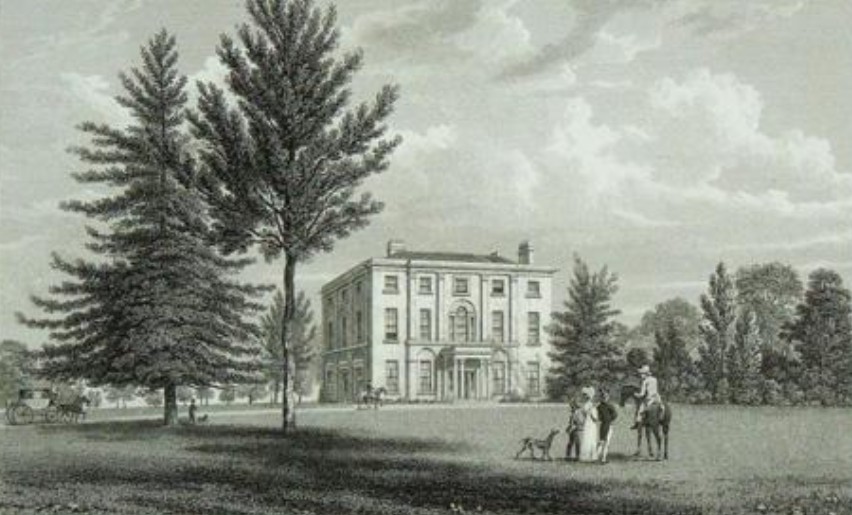
The house stands at Doughton, just south-west of Tetbury. It was built between 1796 and 1798 for John Paul Paul, probably to designs by the architect Anthony Keck, and an 1825 engraving shows it as it was before later changes: a plain, three-storey block of dressed stone.

Its history was not always gentle. In 1850 a daughter of the house, Miss Paul, was burnt to death when her dress caught fire. In 1893 a fire gutted the interior, and the house was rebuilt the following year by the Bristol architect John Hart, who restored its earlier appearance. Highgrove was Grade II listed in 1985.
Charles found the facade too severe. He asked the artist Felix Kelly to paint how it might look with more classical dress, and in 1987 the architect Peter Falconer added a balustrade, a pediment and pilasters, along with a single-storey staff wing. The Georgian Group, not an easy body to please, approved.
“A blank canvas”
The real work was outside. When the Duchy bought the estate, the garden was, in the words of Clarence House, “little more than a neglected kitchen garden, an overgrown copse, some pastureland and a few hollow oaks.” Charles later told the Royal Horticultural Society: “The thing about (Highgrove) was that it was a blank canvas; I had to start from scratch.”
He hired the designer Lanning Roper in 1981, but Roper died in 1983. The garden that grew up instead was shaped by Charles and a small circle of advisers: the naturalist Miriam Rothschild, the garden designer Rosemary Verey and the Marchioness of Salisbury, an early champion of organic gardening.
It went in piece by piece. The Sundial Garden came first, in 1981, around a sundial that was a wedding present from the Duke of Beaufort. Rothschild sowed the Wildflower Meadow in 1982 from a mix of 32 species. The Terrace Garden followed in 1984, then a tree house in 1988 for the two young princes, William and Harry. In the 1990s came the Thyme Walk, the arboretum and the Stumpery, a woodland garden of upturned tree roots designed with Julian and Isabel Bannerman. In 2001 the Carpet Garden, based on two Turkish rugs in the house, won a Silver-Gilt medal at the Chelsea Flower Show before being rebuilt at Highgrove.
Organic farming began on the home farm in 1985, and the whole estate was fully organic by 1994, long before the word was fashionable. The gardens now cover 15 acres, all of them organic, and by 2019 were taking almost 40,000 visitors a year on paid tours. Even the waste is part of the design: a reed-bed system has treated sewage from the house since 1990.
Charles did not just commission it. He gardened it. The RHS describes him walking the grounds at weekends with a pruning saw, and laying hedges himself, which he says keeps him “relatively sane”. His gardeners call him “The Boss”. “I hate all that over-manicured style of gardening,” he has said. “I like working with nature.”
Why the house was never his
To understand what happened next, you have to go back to 17 March 1337. That day Edward III created the Duchy of Cornwall for his son Edward, the Black Prince, as an estate to give the heir an income of his own. The charter set the rule that still applies: the Duke of Cornwall is the monarch’s eldest surviving son and heir to the throne. He takes the Duchy automatically, either at birth or the moment his parent becomes sovereign. Today it holds about 130,000 acres across more than 20 counties, including the Duchy’s model town of Poundbury.
The Duke enjoys the income, but the estate itself passes intact to the next heir. That is the crucial difference between Highgrove and another royal country house. In 1862, Sandringham was bought for the future Edward VII with Duchy revenues that had built up during his childhood. Palmerston told the Commons in 1863 that £220,000 of those savings had gone on “the purchase of the Norfolk estate”. But Sandringham was bought for the prince personally, which is why it stayed with him when he became king and still belongs to the monarch today. Highgrove was bought by the Duchy itself, so it stays with the Duchy.
The day the landlord changed
Queen Elizabeth II died at Balmoral on 8 September 2022. Charles became king at that moment, and William, at 40, became Duke of Cornwall. With the title came the Duchy, and with the Duchy came Highgrove, the house where William had spent much of his childhood and the tree house his father had built for him.
Charles had already started letting go of part of the estate. In 2020 he decided not to renew his lease on Duchy Home Farm, the organic farm next to Highgrove, with Clarence House saying he would “continue to farm organically at Sandringham” instead. Highgrove itself he kept. He now holds it on a lease from the Duchy, which means paying rent to his son.
When he became king, newspapers guessed the bill might be around £700,000 a year. The Duchy’s own accounts give a firmer answer. Its latest annual report, for the year to 31 March 2026, says the properties used by the King and his office staff “were let at open market values; the total value of annual rent charged amounted to £503,711”, up from £475,792 the year before. The report does not name the properties or say how much of that is for Highgrove, but Highgrove is by far the best known of them.
Highgrove now
Little has changed for visitors. Tours still run through the summer, the Highgrove shop in Tetbury still sells produce and gifts, and the profits still go to the King’s Foundation. The King still spends time there, and the gardens remain his most personal creation.
What has changed is the paperwork. The Duchy that bought Highgrove for Charles in 1980 is now run by his son. The meadow sown in 1982, the Thyme Walk and the Stumpery all now belong to the estate William controls. One day, when William becomes king, the Duchy will pass to his own eldest son, Prince George. Highgrove will go with it, and the house will have a new landlord again.