
In 1967, John Lennon paid £1,700 for a tiny uninhabited island off the west coast of Ireland, then handed it to a commune of hippies; after his death, Yoko Ono sold it for about £30,000 and gave the money to an Irish orphanage
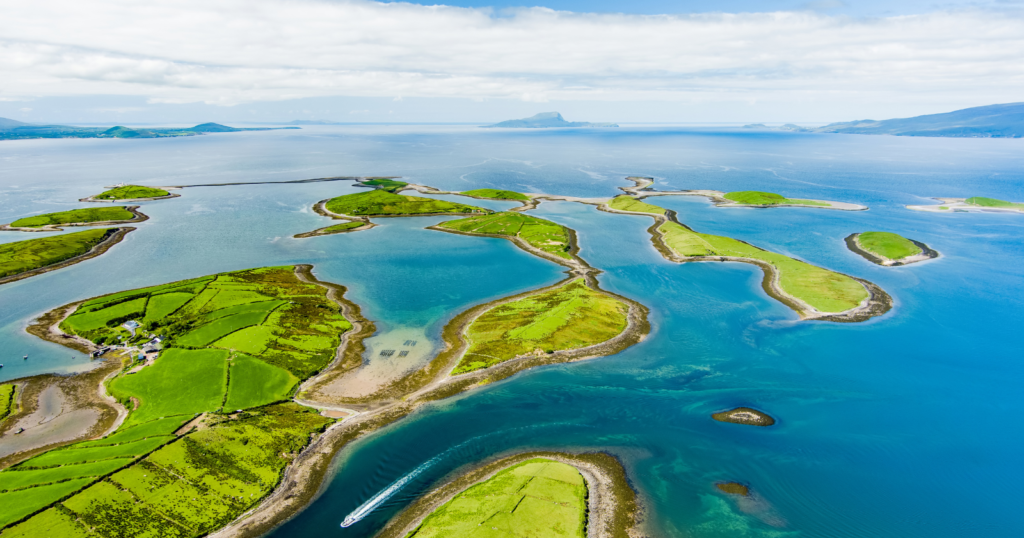
In Clew Bay, off the coast of County Mayo, hundreds of small green islands rise out of the Atlantic. Most are home to nothing but sheep and seabirds. One of them, a low grassy island called Dorinish, is still known locally by another name: Beatle Island.
In 1967, at the height of the Beatles’ fame, John Lennon bought it. He imagined a quiet retreat far from the screaming crowds. What followed was one of the stranger chapters in the band’s history, involving a gypsy caravan, a self-styled King of the Hippies and, eventually, an orphanage.
A Beatle buys an island
Dorinish is really two small islands, Dorinish More and Dorinish Beg, joined by a natural causeway of stones. Together they cover about 20 acres. Before the Great Famine of the 1840s, a handful of people lived there, but by the 20th century it had long been empty.
In 1967, Lennon saw the island advertised for sale by the Westport Harbour Board. He sent the Beatles’ assistant Alistair Taylor to buy it, reportedly paying about £1,700 and outbidding local farmers who wanted it for grazing. Lennon was proud of his Irish ancestry, and he obtained planning permission to build a house there.
A single night on the island
Lennon visited Dorinish only a handful of times. In 1968, he arrived with Yoko Ono, shortly after his marriage to Cynthia had broken down. The couple’s arrival attracted plenty of press attention.
They spent a night on the island in a brightly painted gypsy caravan that had been brought over by boat. Local stories have it that a neighbour’s dog took a dislike to Lennon’s long Afghan coat, mistaking it for some strange animal.
The King of the Hippies
With his life moving in new directions, Lennon set aside his plans for a cottage. Instead, he offered the island to Sid Rawle, a peace activist known in the press as the “King of the Hippies.” Rawle had recently tried and failed to set up a commune elsewhere in Ireland.
According to Rawle, Lennon told him to take the island and do his thing. In 1970, Rawle and a group of about 25 people moved to Dorinish. They lived in tents, grew vegetables and raised children, calling themselves the Diggers after a radical 17th-century English movement.
Heaven and hell
Life on the island was tough. Dorinish has no trees for shelter, and Atlantic storms batter it for much of the year. Some locals were also unhappy about the newcomers, and the commune faced hostility from parts of the community.
Rawle later described Dorinish as both heaven and hell. In 1972, a fire destroyed the commune’s main supply tent, and the group gave up and left. The island was empty once again.
Sold for an orphanage
Lennon never built his house, but he reportedly never let go of the idea. Not long before his death, he spoke of hoping to grow old with Yoko as a contented couple living off the coast of Ireland. His Irish lawyer later said Lennon had been looking into renewing his planning permission.
After Lennon was killed in New York in December 1980, Yoko Ono decided to sell. In 1984, the island was bought by local farmers for about £30,000. Ono reportedly donated the money to an Irish orphanage.
Beatle Island today
Dorinish has returned to the quiet life it had before Lennon. Sheep graze its grassy slopes, and the only visitors are occasional boaters and Beatles fans who make the trip across Clew Bay. In 2012, its owners put it up for sale for €300,000, far more than the farmers had paid.
The views from the island take in Croagh Patrick, Ireland’s holy mountain, rising above the bay. It’s easy to see why Lennon was drawn to it. For a man who could barely walk down a street without being mobbed, a windswept island at the edge of Europe must have seemed like the most peaceful place in the world.