
In 1969, Ringo Starr paid Peter Sellers £70,000 for Brookfield, his Surrey manor with a lake and private cinema, after Sellers turned down John Lennon’s offer of £150,000 to keep his word; a year later Ringo sold it to Stephen Stills
A 15th-century Surrey manor with a lake, a sauna and a private cinema passed from Peter Sellers to Ringo Starr and then on to Stephen Stills.
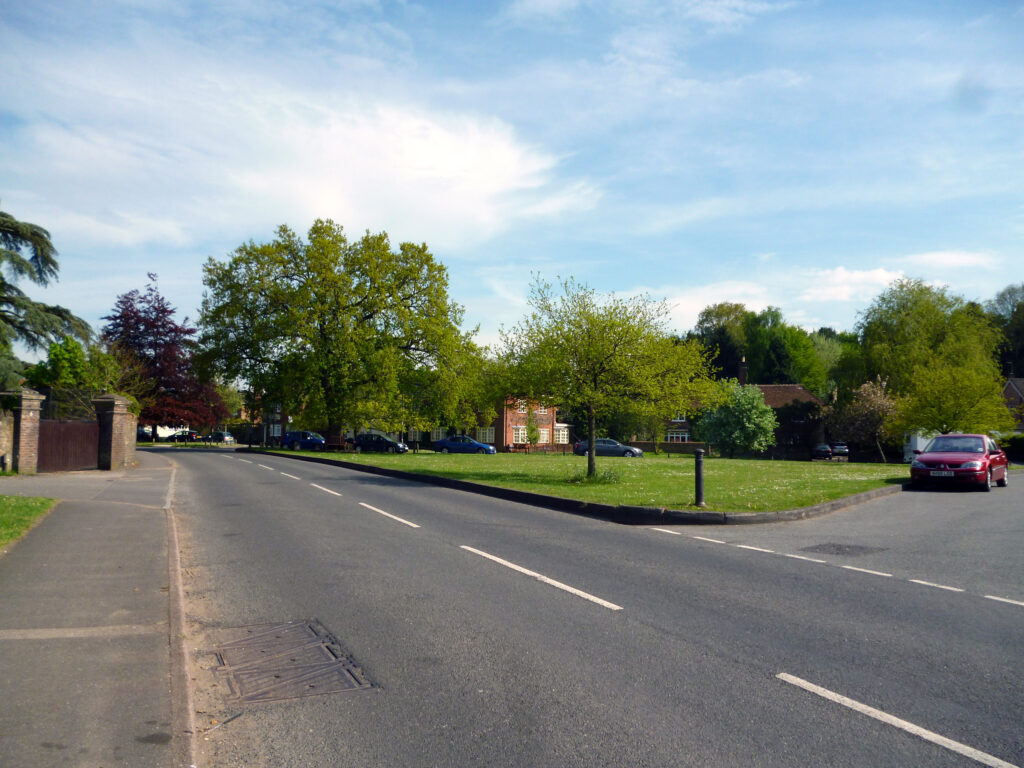
Brookfield was a 15th-century oak-beamed house at Elstead, near Guildford in Surrey, and for a few years at the end of the 1960s it passed between some of the best-known names in British film and music. Peter Sellers owned it, sold it to Ringo Starr for £70,000, and turned down a larger offer from John Lennon in order to do so. Within about a year the house belonged to Stephen Stills.
The account of the sale comes from Bill Harry, the founder of Mersey Beat, who set it inside the story of Sellers’s friendship with the Beatles. Harry wrote that Sellers agreed to sell Brookfield to Ringo for £70,000 even though he had recently spent £50,000 on renovating it, and that Lennon wanted the house and offered £150,000. Sellers decided to keep his word to Ringo.
No published contract has been set beside that account, and the dating is not uniform. A later history of the house in Vogue Italia puts the sale to Ringo in 1968. Harry’s sequence runs through the making of The Magic Christian and the party the two men gave on 4 May 1969, which places the transaction in 1969 (some accounts say 1968). The price is £70,000 in both tellings, as is Lennon’s unsuccessful £150,000.
A house with a lake, a sauna and a cinema
Brookfield was an unusual property even by the standards of the Surrey commuter belt. Harry described several acres of ground, its own lake, paddocks, walled gardens and barns, a gymnasium, changing rooms, a sauna and a private cinema. On his figures, the £50,000 Sellers spent on renovation went in shortly before he accepted £70,000 for the lot.
One detail from the negotiation has outlasted the financial ones. Henry Diltz, the photographer who later spent time at the house, said in the Vogue Italia account that the two men had met not long before on the set of The Magic Christian and had become inseparable friends. When Ringo bought the house, Diltz said, he found a drum kit with which Sellers had begun his career as a musician, and that deepened the bond.
The friendship was made on that film. Sellers appeared as Sir Guy Grand and Ringo played his adopted son, Youngman Grand, a part written specially for the film and not in the original book. The two spent the shoot playing practical jokes on the crew, knotting together the belts of their coats and taping matchboxes and empty cigarette packets to the back of a visiting friend of Ringo’s. When filming finished they hosted a joint party at Les Ambassadeurs in London on 4 May 1969, with John and Yoko and Paul and Linda among the guests, alongside Michael Caine, Roger Moore, Sean Connery, Richard Harris, Christopher Lee, Spike Milligan and Stanley Baker. Later that month Sellers joined Ringo and George Harrison and their wives on the QE2, heading for New York.
The offer Sellers refused
Lennon’s £150,000 was more than double what Sellers accepted, which is why the story has stuck. Lennon was looking for a country house of his own at the time, and in 1969 he bought John Lennon’s Tittenhurst Park, later owned by Ringo Starr, in Ascot. Brookfield and Tittenhurst were separate houses with separate histories, but the two purchases show how closely the Beatles’ property moves ran together in those months, and how often one of them ended up living in a house another had owned.
On Harry’s figures, what Sellers gave up was £80,000 against the higher bid, on top of the £50,000 he had just put into the fabric of the building. What he got was a clean sale to a friend.
Ringo’s year, then Stephen Stills
Ringo did not stay long. The Vogue Italia history of the house says that in the autumn of 1969, after a further £50,000 restoration of his own, he let Brookfield to Stephen Stills, who bought it outright in 1970 for £100,000. The two £50,000 figures belong to different owners and different years: the first is Harry’s, describing Sellers’s work before the sale, the second is the magazine’s, describing Ringo’s before the letting.
Stills reached Surrey after a long convalescence. Diltz said Stills rang him after breaking an arm driving his Ferrari and asked for somewhere to recover; the pair went to Hawaii, then to Stills’s mountain house in Colorado, then to England, where the musician had just taken the house at Elstead. They drove in at dusk through winding, foggy lanes and green hills. Louder, in its account of the making of Stills’s debut solo album, puts the purchase plainly: “He dug into his pocket and gave Ringo £100,000 in old money. Brookfield was his.”
With near neighbours including Ron Wood and Eric Clapton, Stills settled into the life of an English gent. By late February he had written more than 20 new songs, and in early March he set about recording the album, with the drummer from CSNY flown in to join a core band that included the bassist Calvin “Fuzzy” Samuels and the percussionist Conrad Isidore.
One figure stayed put through every change of ownership. The gardener, John, looked after the gardens, the ponds and the birch woods whatever the name on the deeds, Diltz said, and belonged to the house rather than to its tenants. He lived in the village and had free run of the grounds, as did the mechanic, the butcher and the greengrocer, and he was sometimes seen planting bulbs and crocuses in the rain with his pipe in his mouth.