
Emma Hamilton wrote to Nelson in the days before Trafalgar, but her letters reached the fleet after the battle and he never read them; they sit among 415 documents in a sealed-bid sale at Sotheby’s closing 18 November 2026.
Sotheby's says two letters Emma Hamilton wrote before Trafalgar reached the fleet too late. They sit in a 415-document sealed-bid sale closing 18 November.
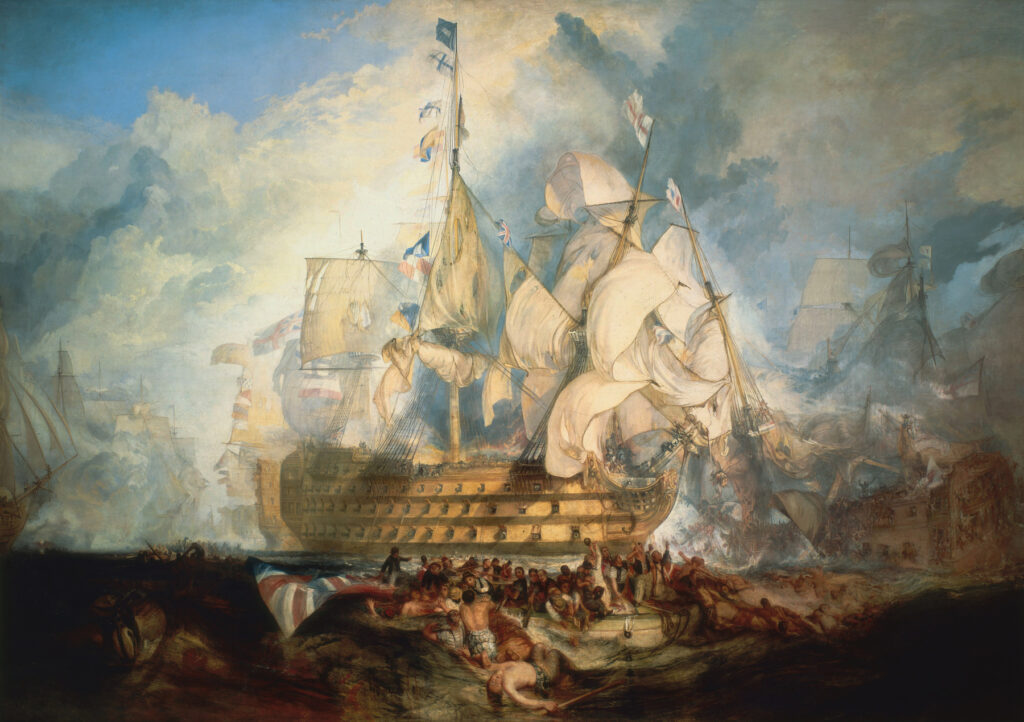
Two letters Emma Hamilton wrote to Horatio Nelson in the days before Trafalgar reached the fleet only after the battle had been fought, and Nelson never read them. That is the account given by Sotheby’s and reported by Fine Books Magazine in September and by Antique Collecting in October.
The pair sit inside a single lot of 415 letters, documents and manuscripts now on offer in London, estimated at £4m to £6m. The lot holds 73 letters by Emma in all; the two that missed Trafalgar are the only ones Sotheby’s says Nelson never read. Bidding in the sealed-bid sale opened on 21 October and closes at 2pm GMT on 18 November 2026.
The archive was assembled by Clive Richards, who died in 2021, and is catalogued by Sotheby’s as “Nelson, His Life and His Navy: The Clive Richards Collection of Letters and Manuscripts”. The auction house describes it as “the greatest collection of letters and documents relating to Vice-Admiral Horatio, Viscount Nelson in private hands today”.
Two letters that missed the battle
Sotheby’s says the two Trafalgar letters are the only letters from Emma Hamilton to Nelson still in private hands. Nelson was killed in the battle on 21 October 1805, and on the auction house’s account the letters reached the fleet only after the action. Neither of the cited reports prints their text.
Emma was the wife of Sir William Hamilton, British ambassador to Naples. Material relating to the Hamiltons runs to 135 documents within the lot. It includes 73 letters by Emma, among them the two that arrived too late, together with letters by Sir William from the Naples years and from the end of his life.
Nelson’s side of the correspondence is represented by 24 letters to Emma, among them a personal letter of 29 January 1800. Both halves of the exchange, on the counts published by the auction house, are therefore in the same lot.
A further 61 letters, dated 1801 to 1809, passed between Emma and the family of the Reverend William Nelson, Horatio’s elder brother. The tone of that run changes across the decade, moving from affection to disputes and to appeals for financial help after Nelson’s death. The lot also contains papers relating to Nelson’s wife, Frances, and to Horatia.
From Bastia to Trafalgar, in his own hand
The auction house gives the lot size as 415 letters, documents and manuscripts. Named groups within it include 168 autograph letters by Nelson, 135 documents relating to the Hamiltons and 61 letters between Emma and the William Nelson family, alongside the Frances and Horatia papers. Those figures are subsets rather than a full inventory: Fine Books Magazine also lists battle papers, library books and other family papers among the contents.
Fine Books Magazine lists the campaigns the Nelson letters cover: Bastia, Cape St Vincent, the Nile, Copenhagen and Trafalgar.
Sotheby’s, quoted by Antique Collecting, describes Nelson as “a very fine letterwriter” whose papers follow his career “from beginning to end”.
Part of what the handwriting records is physical damage. The collection includes letters written after Nelson lost the sight of one eye, and letters written after the amputation of his right arm, as he learnt to write with his left hand. One of them describes the result as “not the hand of a ready writer”.
That sequence gives the archive a shape a bound volume of set-piece despatches would not: one correspondent, in his own hand, before and after the injuries, and across the campaigns the auction house lists.
Forty years of collecting, and where the money goes
Clive Richards, born in 1937, built the collection over four decades. Sotheby’s, again via Antique Collecting, says no individual has gathered as many Nelson letters since the Victorian collector Alfred Morrison.
Both of those comparisons — the “greatest collection” claim and the Morrison benchmark — are the auction house’s own, made in support of a sale that is still open. What is independently checkable from the listing is the scale: 415 items, one lot, and a bidding window that opened on the anniversary of Trafalgar.
Sylvia Richards told Antique Collecting that her husband considered himself a custodian of the letters and wanted them preserved, studied and eventually sold to support his charity. Proceeds from the sale will continue his philanthropic work, according to that report.
Sotheby’s put the collection on exhibition at its London galleries from 21 October, the anniversary of the battle in which Nelson was killed, with bidding running in parallel. The sale is listed by the auction house’s books and manuscripts department, with a closing time of 2pm GMT.
Offering 415 items as a single lot, rather than dispersing them across a session of individual sales, is what keeps the Nelson letters, the Hamilton papers and the William Nelson family correspondence together, whoever buys them.
The sealed-bid format also changes how the sale can be followed. Offers are submitted privately rather than called in a room, so there is no incremental bidding to watch and no outcome to report until the deadline passes.
Where the archive goes next will determine how far researchers can reach it, and that will not be known until after bidding closes at 2pm GMT on 18 November 2026.