
Roughly 8,000 frog bones filled a single Roman ditch found on the A14 Cambridge to Huntingdon road scheme, and the damage on them points to birds of prey, most likely short-eared owls and hen harriers
Roughly 8,000 frog bones from one ditch on the A14 Cambridge to Huntingdon scheme were eaten by birds of prey, most likely short-eared owls and hen harriers.
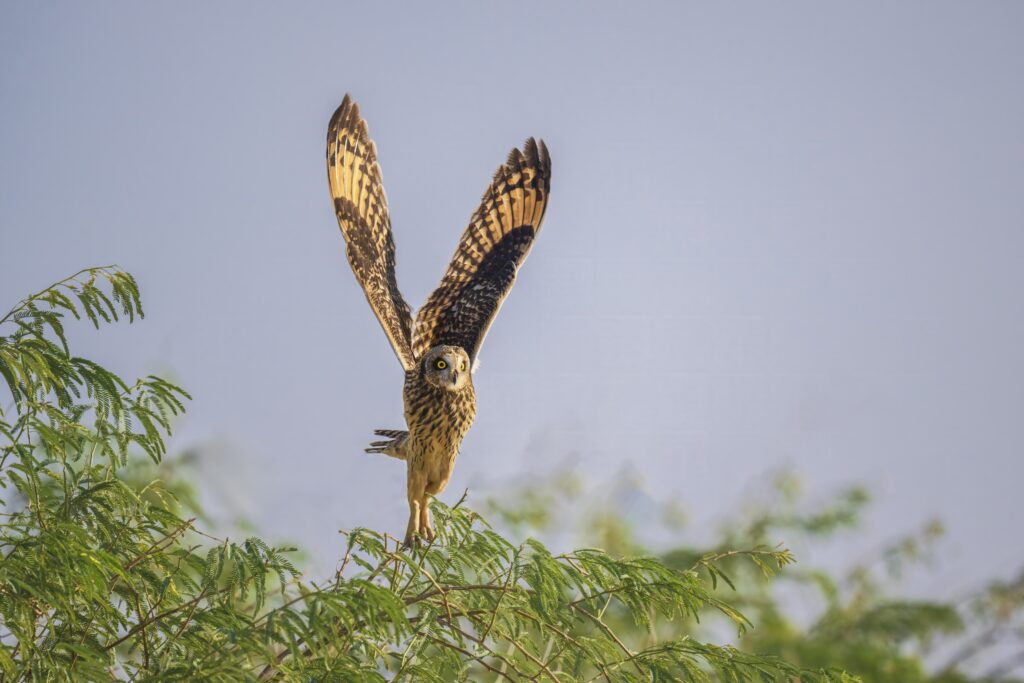
Roughly 8,000 frog bones filled a single Roman ditch on the A14 Cambridge to Huntingdon road scheme, and damage to the bones points to birds of prey, most likely short-eared owls and hen harriers, according to Museum of London Archaeology (MOLA) and Bournemouth University, which announced the finding on 10 November 2026.
The bones came from the National Highways A14 Cambridge to Huntingdon Improvement Scheme, where excavation ran from 2016 to 2018. MOLA reported the group of more than 8,000 bones in 2022 and described the feature at that stage as an Iron Age ditch. Radiocarbon dating by the University of Vienna has since placed the remains at about 1,700 years old, in the Roman period.
When the find was first published there were several theories about what had killed so many amphibians in such a small space, and no firm answer. Dr Paul Clarkson of Bournemouth University contacted MOLA’s senior zooarchaeologist, Dr Vicki Ewens, after seeing the discovery in the news, and led the analysis that followed. The results appear in a paper, “An Owl’s Eye View: Human–Animal Entanglement at the Roman Fen Edge”, which is free to read.
What the damage on the bones shows
Clarkson compared the damage on the frog bones with damage recorded in previous studies and found the animals had been eaten by birds of prey. MOLA said the most likely suspects are short-eared owls and hen harriers. No single species has been named with certainty.
“We don’t often get an owl’s eye view of what it was like in the past from archaeological sites,” Clarkson said. “The mystery of these frogs has been solved – a feast of frogs that were eaten and their bones left behind by a group of owls. These bones not only tell us about life for people living near the Roman Fens, but they also give insights into the natural world – what wild animals were getting up to in the past, and what life was like for them.”
A ditch that filled within a single year
Archaeological evidence from the site shows the ditch filled within a single year. That raised the question of how so many bones came to be deposited in one small feature over so short a period.
The Bournemouth team measured the frogs’ humeri, or arm bones, a method MOLA described as a pioneering new form of analysis. The sizes showed that most of the frogs died young, having been eaten in the winter of their first year of life.
The Fen waters were retreating in the valley during this period, which created good breeding conditions for frogs. That left plenty of young animals for the birds to take.
Woodland felled for grazing
Short-eared owls hunt over grassland, and the valley had been wooded in the Iron Age, which suggested the setting had changed by the time the bones were deposited. The team turned to snail, pollen and charcoal evidence from the site to test that. The analysis showed large areas of woodland were gradually felled in the late Iron Age for grazing livestock. By the Roman period, large patches of open ground left the frogs with fewer trees to protect them from the grassland hunters.
The same evidence carries information about how people were using the valley. If communities were visiting the area on a more seasonal basis to move livestock to new pasture, MOLA said, the fields would have been less crowded, making it easier for the birds to hunt.
“I had so many theories as to why such as large collection of frog bones were recovered from this small feature,” Ewens said. “It’s been great to collaborate with Paul to finally answer this question. This research shows how even the smallest animal recovered on a site can help us to understand not only past environmental conditions but human activity within a wider landscape.”
Road and pipeline schemes in England keep turning up archaeology. On the A2 at Gravesend, a digger broke 447 Roman coins out of the ground during road works. Archaeologists also excavated ahead of a new Southern Water pipe at Otterbourne before the route could be laid.
What separates the A14 material is its scale within a single small feature and the short window in which it accumulated: thousands of bones from one kind of animal, most of them from frogs in their first year, in a ditch that filled within a single year.
The full digital archive for the A14 project can be accessed through the Archaeological Data Service.