
In 1968, Rolling Stones bassist Bill Wyman bought a moated Suffolk manor from a man linked to the Kray twins, whose gravestone calls him “The Godfather”; nearly 60 years later, the centuries-old hall is still his home
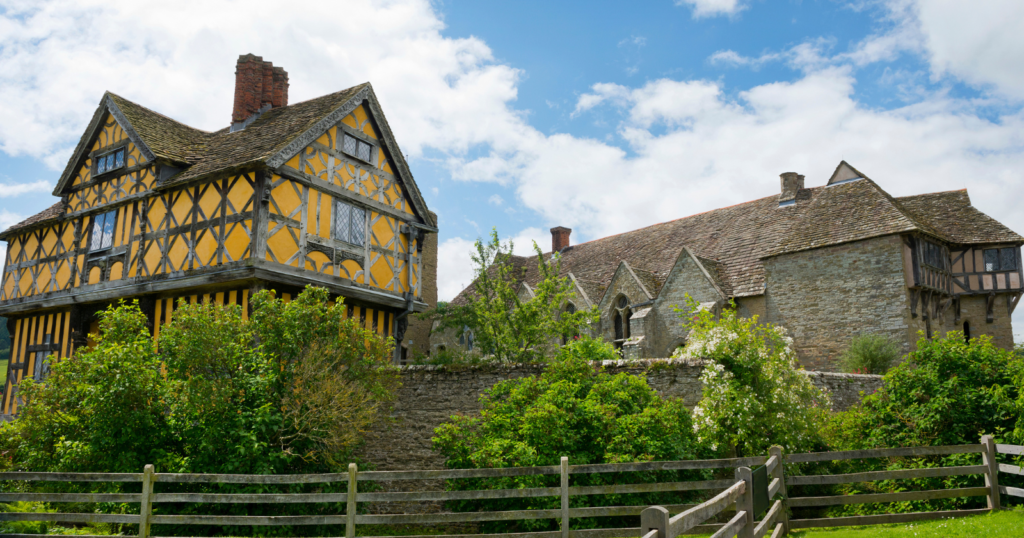
Down a quiet lane near the village of Gedding, about eight miles from Bury St Edmunds, a red-brick manor sits behind a wide moat. A bridge leads across the water to a tall gatehouse tower. It looks like something from a history book.
In 1968, it became the home of Bill Wyman, bass player in the Rolling Stones. Wyman had always wanted to live in a castle, and Gedding Hall was as close as he could get. What he didn’t know was that the man who sold it to him had connections to some of the most notorious criminals in Britain.
A house with deep roots
People have lived on the site of Gedding Hall for more than 800 years. In the late 12th century, a family named de Geddinge held the manor, and a hall stood here by the 13th century. The present house dates largely from the 15th century and has been rebuilt and extended over the centuries.
Its most striking features are the moat, which surrounds most of the property, and the brick gatehouse tower. Over the centuries, the hall passed through several families. At one point it even became a farmhouse, before later owners restored its grand appearance.
The rock star who wanted a castle
By 1968, the Rolling Stones were among the most famous bands in the world. Like several of his bandmates, Wyman was looking for a retreat away from London. When he found Gedding Hall, with its moat, bridge and tower, he later said it was the Tudor-style fantasy he had always wanted.
He bought the hall from a property dealer named Geoffrey Allen. At the time, it seemed an ordinary sale. Only years later did the more colourful side of the house’s recent history come to light.
“The Godfather”
Geoffrey Allen had a long career in crime. In 1977, nine years after selling Gedding Hall, he was found guilty of swindling insurance companies out of more than £300,000. The fraud involved fires at Briggate Mill in Norfolk and Shortgrove Hall near Saffron Walden. He was sentenced to seven years in prison.
Allen was also known to be connected with the Kray twins, Ronnie and Reggie, the gangsters who ruled much of London’s East End in the 1960s. When he died, he was buried in the village churchyard. His gravestone describes him as “The Godfather.”
A rumoured hideaway
Wyman, a keen historian, later researched his home’s past. He came across claims that the Kray twins went to Gedding Hall after the killing of Jack “the Hat” McVitie in 1967, one of the murders that led to their convictions.
There was even a rumour that police drained the lake around the hall searching for McVitie’s body, which has never been found. These stories remain rumours rather than established fact. But they have given the quiet Suffolk manor an unexpected link to one of the darkest chapters in London’s criminal history.
Treasure in the fields
Wyman has spent much of his time at Gedding Hall pursuing other passions. He became an enthusiastic amateur archaeologist and metal detectorist, searching the fields around his home and finding Roman, Saxon and medieval objects.
He even designed his own metal detector and wrote a book about British archaeology. He has also traced the history of everyone known to have lived on the property back to the 12th century, and says one former resident was beheaded.
Still at home after nearly 60 years
Wyman left the Rolling Stones in 1993 but has never left Gedding Hall. He turned 90 on 24 October 2026, and the hall has been his main country home for almost six decades. He has also kept a home in London, but Suffolk has remained his retreat.
Few rock stars have stayed in one house for so long. Gedding Hall has seen medieval lords, farmers, a convicted fraudster and, for nearly 60 years, one of the founding members of the Rolling Stones. Its moat has kept out a lot of the outside world, and its owner seems happy to keep it that way.