
In 1990, Sting and Trudie Styler paid a reported £7 million for Lake House, a Grade I-listed Wiltshire manor built for a wool merchant in 1578; he recorded Ten Summoner’s Tales there, and more than 35 years later it is still their country home
Sting and Trudie Styler have kept Lake House, a Grade I-listed Wiltshire manor of 1578, as their country home since a reported £7 million purchase.
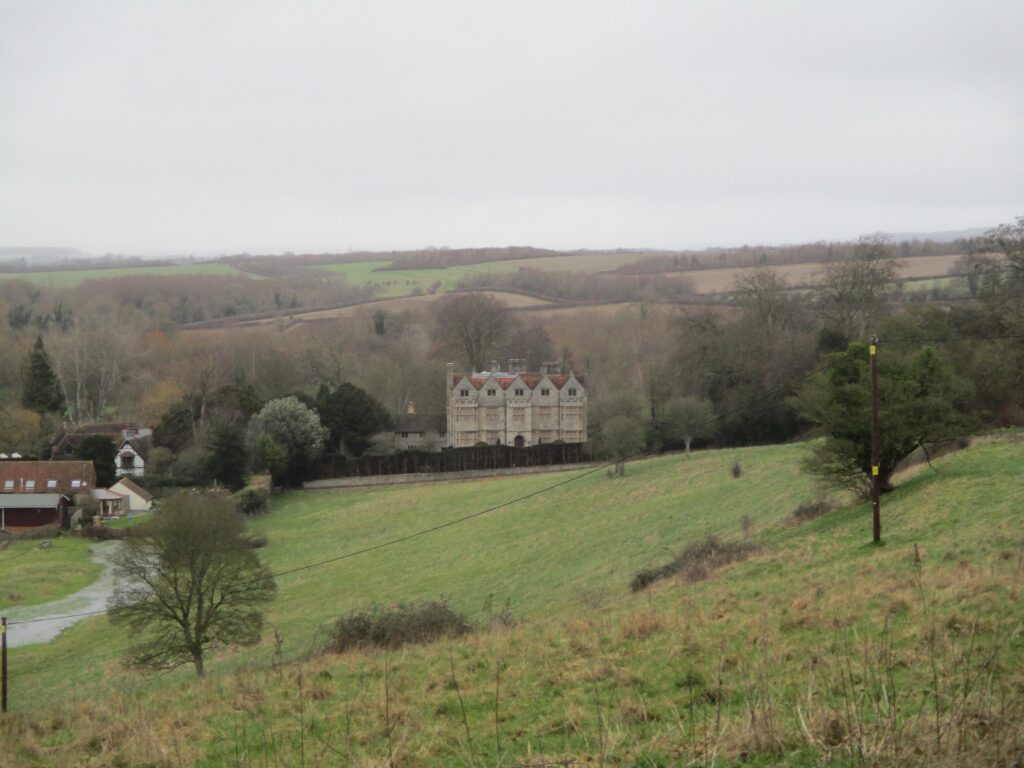
Lake House sits beside the River Avon in the parish of Wilsford cum Lake, near Salisbury, and has been the Wiltshire home of Sting and Trudie Styler for more than three decades. The couple paid a reported £7 million for the Grade I-listed manor, a figure given by the Salisbury Journal, Hello! and Wiltshire Live, all of which date the purchase to 1990.
The house, also called the Manor of Lake, was built in 1578 for George Duke. The Salisbury Journal and a 1996 Architectural Digest feature describe Duke as a wool merchant. The Historic England register entry for the surrounding park and garden calls him a wealthy clothier.
Nine generations of Dukes, then two fires
The Duke family held Lake House until 1897, after nine generations, when it was sold to Lovibond, named as J W Lovibond by Historic England and as Joseph Lovibond by the Salisbury Journal. By then the house had already been altered more than once. Architectural Digest said it was enlarged in the eighteenth century, when a broader staircase was needed to accommodate wide skirts.
Historic England’s register entry for the park and garden, number 1001237, says the house was severely damaged by fire in 1838 and that by the late nineteenth century it had been restored by the architect Detmar Blow (1867-1939), in consultation with Philip Webb and the Society for the Protection of Ancient Buildings.
A second fire followed in 1912; the Salisbury Journal says the house was gutted. Blow returned to restore and partly rebuild it, and shortly afterwards Colonel Bailey bought the property. The Bailey family were still the owners when Sting and Styler arrived. Blow’s work recurs along this stretch of the Avon valley: he also built Wilsford Manor, in the same parish, for Edward Tennant, the first Lord Glenconner, between 1904 and 1906.
The grounds carry their own designation. Historic England lists the park and garden at Grade II, first listed on 1 September 1987, over a site of about 26 hectares. The house itself is listed separately at Grade I.
Ten Summoner’s Tales, written and recorded in the house
Ten Summoner’s Tales came out of the house rather than a hired studio. Architectural Digest, in a piece by Elizabeth Lambert first published in January 1996 and republished online in August 2016, said all the songs for the album were written and recorded there, and that “Fields of Gold” was inspired by his love of the surrounding fields and the wildflower meadow beside the house. The property has its own recording studio, along with a wine cellar. Other British musicians have used country houses in the same way, including at Mick Jagger’s Stargroves, where visiting bands recorded in the Rolling Stones’ mobile studio.
Styler described the decision to buy in that same article. She told Sting there was “a three-hundred-and-fifty-year-old tree in the garden”. She said his reply came back quickly: “Buy it.”
Sting told the magazine what he wanted from the place. “Writing songs is a solitary business,” he said. “I like having people around, I like the house to be alive, and I’ll be sorry when the last builders go, but there’s always Sartre’s definition of hell. I can disappear in a house like this.”
What the couple own, and the house that is not theirs
Reports of the purchase usually describe Lake House as surrounded by 800 acres. The ownership is narrower than that suggests. Sting and Styler bought the house and gardens from the Bailey family, who kept the rights to the encircling farmland. Wiltshire Live put it plainly: Sting is lord of the manor and owns the house and the Lake House gardens outright, while the surrounding land is still owned and farmed by the Baileys. The registered park and garden, the area Historic England assessed, runs to about 26 hectares. The Salisbury Journal says the couple run an organic farm on the estate.
One date does not sit neatly with the rest. The Salisbury Journal, Hello! and Wiltshire Live all give 1990 as the year of purchase, and Hello!, in a piece updated on 5 October 2023, called Lake House the couple’s main home and said they have lived there ever since. The Historic England register text for the park and garden says instead that “Lake House was sold in 1991 and remains (2002) in private ownership”. The accounts conflict, and the press year of 1990 is the one in general circulation.
A second point of confusion is more recent. In June 2024 Country Life reported a Wiltshire manor on the market through Savills at a guide price of £13 million, set in some 54 acres. That house is Wilsford Manor, the Grade II*-listed Blow house built for the Tennants, which Country Life linked to Nancy Mitford, Siegfried Sassoon and the bright young things. It is not Lake House, and later accounts that merge the two are wrong. Lake House was not the house on the market.
What remains is an Elizabethan house, of the same period as Wiltshire’s Longleat, twice damaged by fire and twice repaired by the same architect, and lived in by the same couple since the start of the 1990s. Eric Clapton has likewise remained at a country house bought in the late 1960s. The Salisbury Journal, in a piece giving Sting’s age as 73, still describes it as his country house near Salisbury.