
In 1980, Jimmy Page paid £900,000 for Michael Caine’s old riverside mill house near Windsor; only months later, Led Zeppelin drummer John Bonham died there after a day of rehearsals, and the band broke up before the year was out
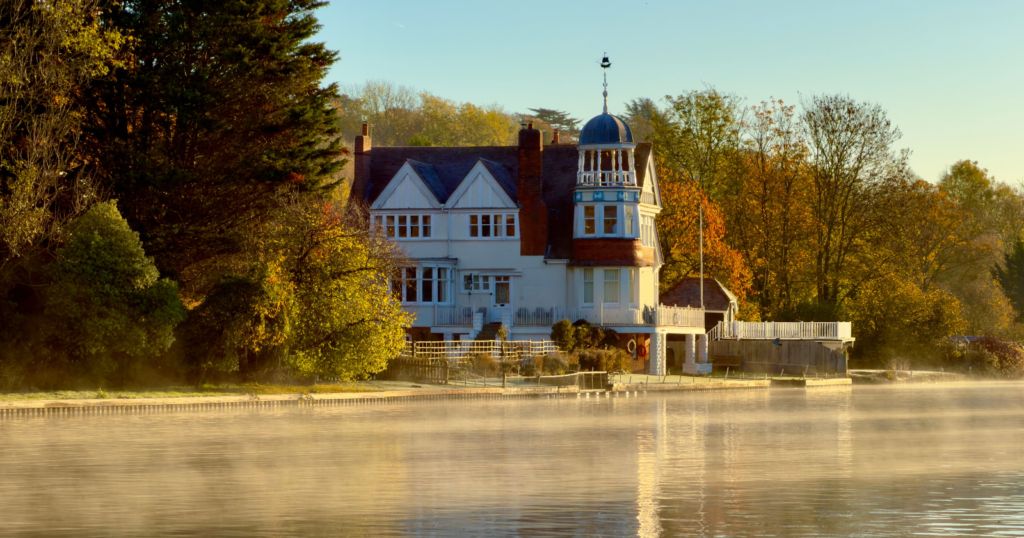
At the end of Mill Lane in Clewer, on the edge of Windsor, a white-painted house sits beside a quiet stretch of the Thames. Water still runs under the old mill buildings, and the gardens slope down to the river.
In 1980, it became the home of Jimmy Page, Led Zeppelin’s guitarist. Within the same year, it would become the place where the band’s story ended.
A mill house on the Thames
The Old Mill House stands at Clewer, about 25 miles west of London and a short walk from the centre of Windsor. The site has been used for milling since the Middle Ages, and the house still has a mill race running beneath it.
In the 1960s and 1970s, it belonged to the actor Michael Caine, who lived there during the years he made films such as The Italian Job and Get Carter. The riverside setting gave him privacy just a short drive from the film studios west of London.
Page buys the house
In 1980, Page bought the house from Caine. According to George Case’s book Led Zeppelin FAQ, he paid £900,000, a huge sum at the time and the equivalent of several million pounds today.
Page had a long love of unusual historic homes. By then, he already owned the Tower House in Holland Park, a Gothic Revival mansion designed by William Burges, and Plumpton Place, a moated manor in Sussex. Like many musicians of the era, he was drawn to the Thames Valley, where he had owned a boathouse at Pangbourne in the late 1960s.
Preparing for America
Led Zeppelin were planning their comeback. Their 1977 American tour had been cut short when Robert Plant’s young son died suddenly, and the band had played only a handful of concerts since, including two huge shows at Knebworth in 1979 and a short European tour in the summer of 1980.
A North American tour was booked to start in October 1980. On 24 September, the band met at Bray Studios, near Maidenhead, to rehearse. That evening, they went back to Page’s house in Clewer to stay the night.
A death at the Old Mill House
John Bonham had been drinking heavily that day. He was helped to bed in the early hours of the morning. On the afternoon of 25 September, bassist John Paul Jones and the band’s tour manager found him unresponsive. He was 32.
An inquest later recorded a verdict of accidental death. Bonham, known for his powerful drumming on songs such as “Whole Lotta Love” and “Kashmir”, had been with the band since it formed in 1968. He left a wife and two young children.
The end of Led Zeppelin
The tour was cancelled. For weeks, there was speculation over whether the band would carry on with a new drummer. On 4 December 1980, they issued a brief statement saying they could not continue as they were, following the loss of their friend.
Led Zeppelin had sold millions of records and filled stadiums across the world, but without Bonham, the surviving members decided the band was over. They reunited only rarely in the years that followed, most notably for a concert at London’s O2 Arena in 2007, with Bonham’s son Jason on drums.
The house today
Page kept the Old Mill House for many years after Bonham’s death, finally selling it in the early 2000s. The house has since changed hands, and it has been offered as a holiday rental, with its links to both Caine and Page noted in the listing.
For music fans, the quiet riverside house near Windsor remains part of rock history. It’s a reminder of how quickly things can change: in a single year, a new home by the Thames became the setting for the loss that ended one of the most famous bands in the world.