
In 2019, Jamie Oliver paid a reported £6 million for Spains Hall, an Elizabethan manor in Essex that one family had owned for about 250 years, the same year 22 of his UK restaurants closed with the loss of 1,000 jobs
Jamie Oliver bought Spains Hall in Finchingfield in 2019 for a reported £6 million, the same year 22 of his 25 UK restaurants closed with 1,000 jobs lost.
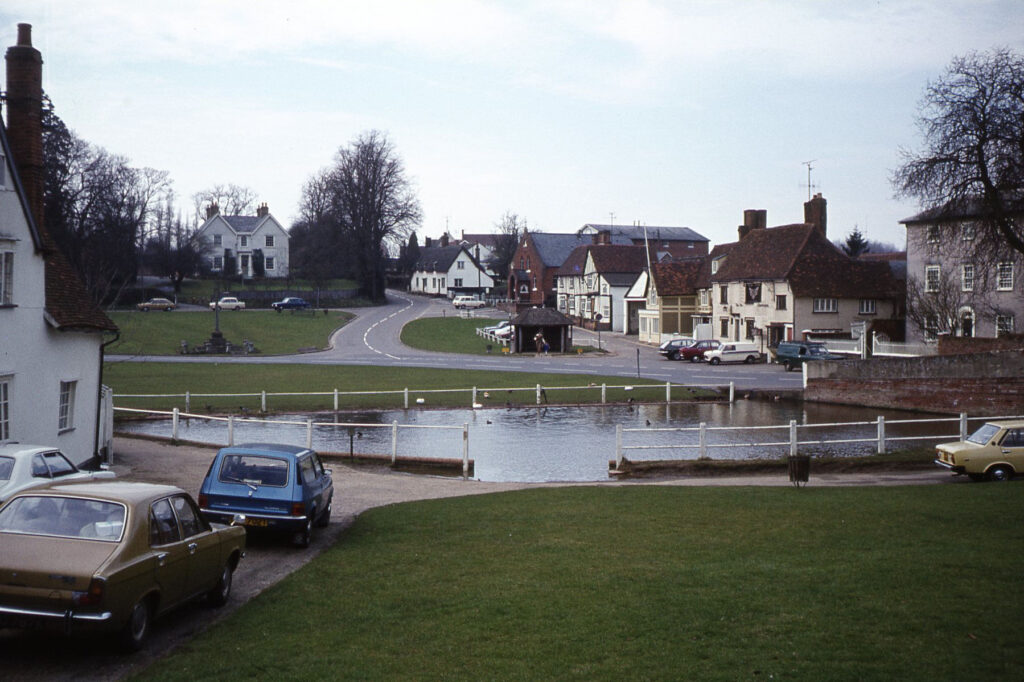
In 2019, Jamie Oliver bought Spains Hall at Finchingfield in north Essex, an Elizabethan great house standing in 70 acres of parkland. The figure attached to the sale in press reports was £6 million. The same year, his UK restaurant group went into administration and 22 of its 25 restaurants closed, with 1,000 jobs lost.
The Colchester Gazette reported that the chef “has completed the deal to buy Spains Hall in Finchingfield” and that the house “went on the market for £6 million earlier this year”. It also said: “Set in 70 acres of parkland it had been owned by the same family for 250 years.”
That £6 million is an asking figure and a reported one. The Irish Times, on 2 October 2021, described the estate as “purchased in 2019 for a reputed £6 million”. Metro, on 8 July 2019, said Oliver had “reportedly moved into a sprawling £6 million mansion” in Essex. None of those accounts cites a Land Registry figure for what was paid.
A house of about 1570, altered for four centuries
Spains Hall is listed at Grade I. The Historic England list entry, number 1138980, was first made on 2 May 1953 and describes a “Great house. Circa 1570, with C17, C18 and C19 additions, incorporating a fragment of an earlier house, c.1400-50. Red brick…”
The parkland carries its own designation. Register entry 1000240, Grade II* and first listed on 1 July 1987, records that “Spains Hall in its present form was built in c 1585 by William Kempe, incorporating portions of an older moated C15 house”. Kempe’s nephew Robert “further beautified it in 1637”. After a fire in 1768 the north-east wing was rebuilt by John Ruggles, and at the beginning of the 19th century John Adey Repton added a south-east wing. The hall sits just beyond the north-west edge of the village, about 16km north-west of Braintree.
The Savills listing, quoted by the Gazette, dates the work slightly differently, putting the main features in the 1580s, the Dutch gables in 1637 and a final wing in the same style in the 1890s. The agents called it a house that “has been continually altered and embellished over 400 years”, and pointed to the oldest surviving element: “A fragment of the house from medieval times survives in the roof above the dining room, one bay of a king-post hall roof, a rare feature and is tentatively dated to 1410.”
The estate includes more than the manor. In 2006 a Grade II listed coach house, stables and dovecote on the site were converted into a wedding and conference venue, and 19th century graffiti was uncovered by builders during that work. The Gazette also listed a six bedroom farmhouse with a swimming pool and tennis court as part of the property.
Ispania, Kempe, Dyer and Ruggles-Brise
The name comes from the first family to own the house. Spains Hall was named after Hervey de Ispania, and the estate passed to the Kempe family on the marriage of Margery de Ispania to Nicholas Kempe in the early 15th century. When the Kempe male line died out in 1726, the house went to Sir Thomas Dyer, brother-in-law of Mary Kempe.
It then moved to the Ruggles-Brise family, the most recent owners. The hall was the home of Sir Timothy and Lady Rosemary Ruggles-Brise, who served as High Sheriff of Essex. Metro, citing The Sun, said the Grade I property dated back to 1570, had housed only three families and had not been sold for 250 years when Oliver bought it. The Gazette put it as one family owning the house for 250 years.
Administration in May, a move to Essex
On 22 May 2019 the BBC reported that Oliver’s restaurant group had appointed KPMG as administrators, with 1,000 jobs lost. The group included the Jamie’s Italian chain, Barbecoa and Fifteen. “Twenty two of the 25 restaurants in Jamie Oliver’s restaurant group have now closed,” the report said. Two Jamie’s Italian restaurants and Jamie Oliver’s Diner at Gatwick Airport were to carry on trading in the short term, as were Fifteen Cornwall and the international Jamie’s Italian, Pizzeria and Deli outlets.
Oliver, who put in £4 million cash that year, said he was “devastated” and added: “I appreciate how difficult this is for everyone affected.” The Guardian reported on 21 May 2019 that he said he was “deeply saddened”.
The property move ran alongside all of this. Metro said in July 2019 that Oliver was said to have bought Spains Hall at the beginning of that year, and had reportedly moved in two months after the redundancies. He was born and grew up in Clavering, in the west of the county, and was expected to move into the hall with his wife Jools and their five children.
Speaking to the Irish Times in October 2021, by which time the family had spent successive lockdowns in the house, Oliver said: “In the last two years I’ve questioned everything. I’ve changed my life quite a bit. I am moving out of London, we’re going to live in Essex.”
Spains Hall is one of several historic country houses in the British Heritage archive that later changed hands. Lake House in Wiltshire, a Grade I Elizabethan manor built in 1578, was bought by Sting and Trudie Styler in 1990 for a reported £7 million. In Essex, Rod Stewart paid £4.65 million for Durrington House. Another recent countryside purchase was Ed Sheeran’s farmhouse near Framlingham.