
In 1991, Monty Don and his wife bought a Herefordshire house that was a ruin with no roof, electricity or running water and a 2-acre abandoned field out back, and 20 years later it became the garden millions watch on Gardeners’ World
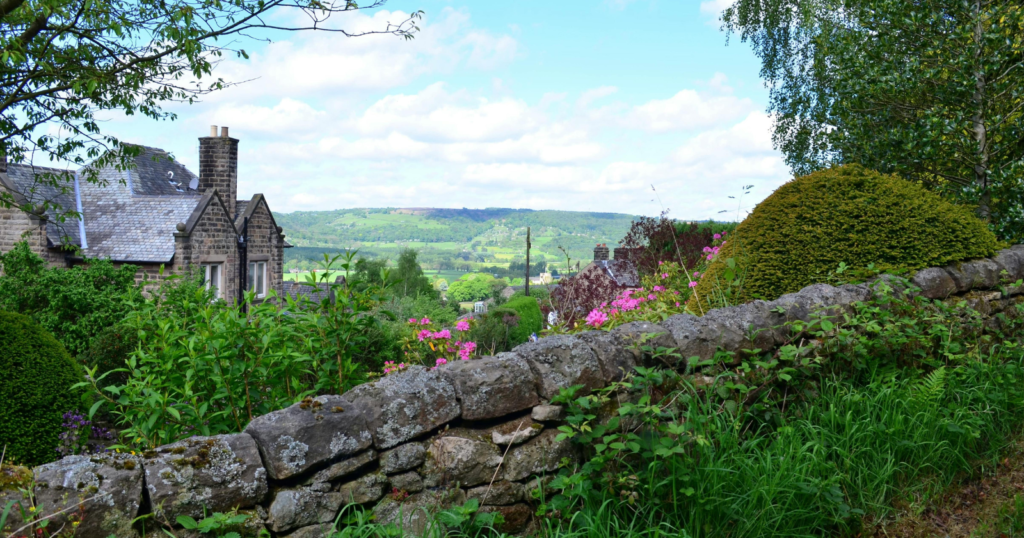
In the autumn of 1991, the field behind the old house at Ivington had exactly one thing in it worth keeping: a hazel tree.
Everything else was rough grass, nettles and brambles, plus a scrappy patch at the front buried in builder’s rubble. The house was in worse shape. “It was a ruin – no roof, electricity, running water or sanitation,” Monty Don later told The English Home magazine.
He and his wife, Sarah, bought it anyway. That ruin, a Tudor hall house near Leominster in Herefordshire, became Longmeadow, one of the most famous gardens in Britain.
From Knightsbridge to the dole
The couple were not looking for a project. They were looking for a way back.
Through the 1980s they had run Monty Don Jewellery, a costume jewellery business with a Knightsbridge address and a fashionable following that reportedly included Princess Diana. America was their biggest market, and the 1987 stock market crash cut it off. Steep rises in interest rates followed, and the business was finished.
Accounts differ on exactly how bad it got. It’s often described as bankruptcy, but Prospect notes that the Dons chose to repay their creditors rather than declare themselves bankrupt. Either way, they lost their house as well as the business. “We sold every stick of furniture we had at Leominster market,” Monty wrote.
From 1991 to 1993 he was out of work, and he spent the whole of 1992 on the dole.
October 1991
Longmeadow was paid for with money inherited after Monty’s mother died. He told the RHS podcast Roots in 2026 that they moved on a “shoestring”, and he has been frank about what state he was in. He described it as effectively a breakdown, and said making the garden was a large part of how he recovered.
The plan was modest. They would throw themselves into the house and garden until the millennium, then take stock and probably move on.
The house came first. Building work swallowed all of 1992, and the initial restoration took about ten years. Meanwhile there was a two-acre field to deal with.
Four hundred stakes and two thousand bean sticks
The field sits on a floodplain beside water meadows, and the wind came at it from three sides. So before planting anything, Monty built shelter.
In the autumn of 1992 he bought a hundred six-foot chestnut stakes and split each one into quarters, which gave him four hundred. He wove 2,000 bean sticks between them to make solid fences, then planted hedges in their lee. The details come from his own account of the garden.
Proper planting began in April 1993. Eight Irish yews went into what’s now the Cottage Garden in 1994. For its first twenty years that space was a vegetable plot near the kitchen, feeding the family.
Why is everything so straight?
Regular viewers will know Longmeadow as a garden of rooms, with clipped hedges, long axes and firm right angles. Monty has said the geometry was no accident. He wanted structure and order because, at the time, he was trying to put his own life back in order. He has admitted he’d probably add more curves if he started again now.
The past found its way in too. The Jewel Garden, with its dahlias and bananas, was planted as a nod to the jewellery business, a celebration of what had gone right rather than a lament for what went wrong.
Then the cameras arrived
Television came slowly, then all at once. In 1999 Monty and Sarah presented Fork to Fork together on Channel 4. In 2003 he took over from Alan Titchmarsh as lead presenter of Gardeners’ World, filming at first in a garden called Berryfields that wasn’t his own.
A minor stroke in 2008 took him off the programme. When he returned in March 2011, the BBC brought the show to Longmeadow. That revived the programme’s old habit of filming in the presenter’s own garden, and it came almost exactly twenty years after the Dons had bought their ruin.
From then on the garden kept changing on screen. A greenhouse collapsed, and in 2017 its site became the Paradise Garden, inspired by the Islamic gardens Monty had filmed for a BBC series. The orchard grew to more than fifty apple varieties. A golden retriever called Nigel became a minor celebrity before he died in 2020, and Ned took over the bench.
The floods kept coming as well. In November 2025 Monty posted pictures of the garden underwater and Ned splashing through the water after his ball.
After the final goodbye
In September 2026 Monty announced that the current series would be his last. The final episode went out on BBC Two on Friday 6 November. He closed it on the bench with Ned: “From myself, Ned, and Longmeadow it’s the final goodbye.”
The BBC had paid for two gardeners at Longmeadow, and that money stops with him. Monty has said he may have to let them go unless the garden can earn its keep, and that he couldn’t see that happening before mid-2027 at the earliest. The BBC has said it will announce details of the next series later. Monty isn’t vanishing either, as he’s booked for BBC Gardeners’ World Live in 2027.
The house is still home to Monty, Sarah and the dogs. The garden is still being worked. The Dons meant to move on by 2000, and 35 years later they’re still there.
The hazel tree is still there too. It stands in the Spring Garden, the one thing in that field that didn’t need fixing.