
Dress for success with Suit Supply.Suit Supply
The morning coat at Ascot, the immaculate lounge suit at a country house ceremony, the black tie dinner suit at a formal London reception: these are images that have traveled far beyond the shores of Britain and taken root in the collective imagination of people who have never set foot on British soil. When couples around the world reach for a sense of occasion, of ceremony, of something that feels properly and timelessly correct, they reach, more often than not, for a vocabulary of dress that originated in Britain.
This did not happen by accident. It happened because of a particular convergence of history, institution, and influence that made British formal dress the dominant language of male elegance for the better part of two centuries and has never entirely relinquished that position.
The foundations in the nineteenth century
The story of British formal dress as a global standard begins, like so many things, in the Victorian era. The industrial revolution had created a new professional class with both the means and the motivation to dress well, and the institutions of British life, the court, the military, the gentlemen's clubs, the great sporting occasions, provided a framework of occasions that demanded specific modes of dress.
Savile Row, which had been developing its distinctive approach to tailoring since the late eighteenth century, came into its own during this period. The street's craftsmen developed a philosophy of construction that prioritized fit above all else: the suit as a second skin, molded to the individual body through a process of measurement, cutting, and fitting that could take weeks and require multiple visits. The result was a standard of male dress that was immediately recognizable as something apart from what was being produced elsewhere.
The morning coat emerged as the garment of choice for formal daytime occasions during this period, and it remains so today. Its characteristic silhouette, the cutaway front, the tails at the back, the waistcoat and striped trousers, is as immediately legible as a formal signal in Tokyo or New York or Sydney as it is in London. That universality is entirely a product of British cultural influence.
The royal effect
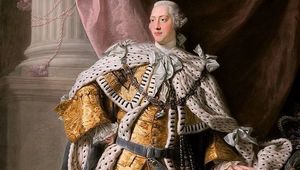
No force has done more to establish and maintain the global prestige of British formal dress than the British royal family. Royal weddings have functioned for generations as the most-watched and most widely reported demonstrations of British ceremonial dressing, and the images they produce travel instantly and permanently into the cultural record.
The wedding of Queen Victoria to Prince Albert in 1840 is often cited as the moment that established the white wedding dress as a standard, but it also demonstrated something important about the men in the ceremony: that British formal dress, worn with precision and confidence, communicated a seriousness of occasion that no other tradition quite matched.
Subsequent royal weddings reinforced this message with each generation. The sheer visibility of these occasions, and the authority lent by the institution of the monarchy meant that British formal dress was being demonstrated to global audiences at the moments of greatest cultural attention. The association between this mode of dressing and something genuinely important and ceremonially correct became deeply embedded.
The export of British style through the empire and influence
The reach of British formal dress beyond British shores owes much to the mechanisms of empire and the global spread of British institutions. Wherever British governance took hold, British customs of dress followed. The lounge suit became a symbol of professional standing across continents. The dinner suit was adopted as the standard of formal evening dress in cities from Bombay to Nairobi to Hong Kong.
More significant than direct colonial influence, perhaps, was the cultural prestige that attached to British dress in countries that were never part of the empire. American men of the late nineteenth and early twentieth centuries looked to Britain as the arbiter of male elegance in a way that shaped the entire trajectory of American formalwear. The Brooks Brothers influence, the Ivy League tradition, the American conception of what a well-dressed man looks like: all of it traces back, at some point, to British originals.
The particular genius of British formal dress is that it travels. It is grounded in specific traditions but flexible enough to be adapted to different climates, different cultures, and different occasions without losing its essential character. A well-cut suit in the British tradition looks right in ways that are difficult to articulate but immediately apparent.
What British wedding dress codes mean in practice
Part of the reason British formal dress has maintained its global authority is the precision of its vocabulary. British weddings operate with dress codes that mean specific things and that communicate those meanings reliably to anyone familiar with them.
The morning coat remains the most distinctively British formal option for daytime weddings. It is the dress of Royal Ascot, of garden parties at Buckingham Palace, of the grandest country house ceremonies. Worn with striped trousers, a waistcoat, and the correct accessories, it represents a standard of formal daytime dressing that has no equivalent in any other culture.
The lounge suit occupies the middle ground that most British weddings actually inhabit. A beautifully cut suit in a quality fabric, worn with care and attention to detail, is the backbone of British wedding style and the mode through which the tradition's influence has been most widely exported. When a groom in Milan or Melbourne or Manhattan reaches for a well-cut dark suit for his wedding day, he is operating within a tradition that originates here.
For formal evening ceremonies, the black tie dinner suit carries the same authority it has carried for over a century. The men's wedding attire options available today represent the full range of this tradition, from the most formal morning coat to the elegant evening suit, each with its own history and its own precise place in the British ceremonial calendar.
The enduring influence on contemporary wedding style
Contemporary wedding style around the world continues to draw on British formal traditions even as it evolves in new directions. The instinct to reach for a well-cut suit, to pay attention to fabric and fit, to approach the wedding day as an occasion that deserves the best of what a man's wardrobe can offer: these impulses are British in origin even when the people acting on them are not.
The great fashion houses of Europe and America that have contributed to the evolution of menswear over the past century have all, at various points, returned to British tailoring as a reference point and a standard. The silhouette, the construction philosophy, the understanding of fit as the foundation of elegance: these are British contributions to the global language of male dress that have never been superseded.
What makes this influence so durable is that it is rooted in something genuinely functional as well as aesthetic. A well-cut suit in the British tradition is not merely decorative. It is designed to make the person wearing it look their best, to accommodate movement without losing its shape, to convey the right message in the right setting. These practical virtues translate across cultures because they respond to needs that are universal.
Why it still matters
The global dominance of British formal dress is not simply a matter of historical momentum. It persists because the tradition continues to produce things of genuine quality and genuine elegance, and because the occasions it was designed to serve, the wedding, the formal dinner, the great ceremonial moment, remain as important as they have ever been.
When a groom stands at the altar anywhere in the world in a beautifully cut suit, he is participating in a tradition that reaches back through centuries of British craftsmanship, institutional ceremony, and cultural influence. He may not know the history. He does not need to. The suit itself carries it, in the precision of its cut, the quality of its fabric, and the way it makes him look like the best version of himself on the most important day of his life.
That is, in the end, what the British contribution to the language of formal dress has always been about. Not display for its own sake, but the quiet confidence of something done properly.


Comments