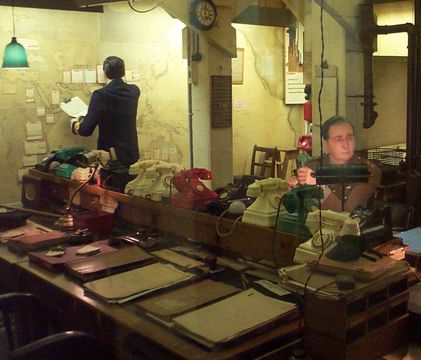
Churchill War Rooms. London.
More than eighty years after Britain declared war on Germany, the country remains full of tangible reminders of that era, from Churchill's Cabinet War Rooms beneath Whitehall to the codebreaking huts of Bletchley Park. This roundup gathers ten essential stops for anyone hoping to walk through Britain's World War II story firsthand.
Perhaps Churchill was right; this was their finest hour. World War II was fought as much in Britain itself as on foreign fields. Though the generation for whom the war was a living memory is passing, its impact on Great Britain and the evocative reminders of life and death through those years live on.
Stop by these tourist attractions if you’re in the neighborhood.
Cabinet War Rooms, London
This wartime bunker beneath Whitehall housed Churchill and his government during the Blitz. It became the effective command and control center while bombs fell on the city. In the maze of rooms, Churchill and the War Cabinet lived, worked, and planned the war around the clock.
Imperial War Museum, Duxford
The former airfield in East Anglia holds and maintains all the iconic aircraft that flew from hundreds of bases across eastern England. A highlight is the American Air Museum, housing the largest collection of U.S. warbirds outside of the States—and honoring the 30,000 U.S. airmen who gave their lives flying from UK bases.
Eden Camp, Malton
Up in the Yorkshire Wolds, Eden Camp was a POW camp for 2,000 Italian and German prisoners of war—largely intact to this day. Now, Eden Camp is a “modern history theme museum,” and a most fascinating and comprehensive presentation of World War II military operations and life on the Home Front.
American Military Cemetery, Madingley
Lovingly tended and unfailingly moving, just outside of Cambridge, row on row of white crosses mark the graves of U.S. servicemen who died serving out of the East Anglian airfields. The chapel and visitor center tell the powerful story of their war and their sacrifice.
Dover Castle, Dover
The second-largest castle in Britain has been guarding the Straits for centuries. Below the old castle, visit Hellfire Corner, the underground command post that organized the evacuation of Dunkirk, and the secret military hospital.

DANA HUNTLEY
Bletchley Park, Milton Keynes
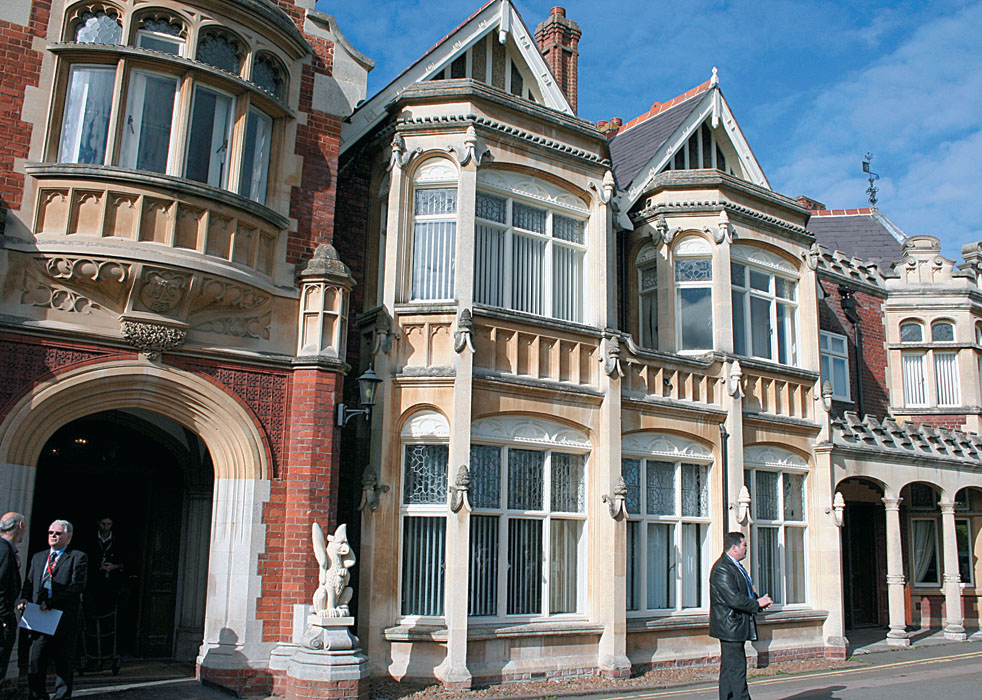
Top secret for decades, Bletchley Park was the National Codes Centre that contributed mightily to Allied success. The famous German “Enigma” code was cracked here, and arguably the first proper computers in the world were built. Today, Bletchley Park is a fascinating visit, telling the whole story.
D-Day Museum, Portsmouth
Operation Overlord set out from harbors all across the southern coast. The museum on the Southsea waterfront tells the story of the invasion of Normandy. One of its prizes is the Overlord Tapestry, recounting the invasion in an embroidered mural based on the famed Bayeaux Tapestry.
Air Forces Memorial, Runnymede
Few Americans ever visit this poignant memorial perched overlooking the water meadows of Runnymede and the River Thames. Some 27,000 airmen who perished in the Battle of Britain and have no known grave are remembered by name and unit in the quiet, white colonnades.
Chartwell, Edenbridge
For many people, Winston Churchill remains the personification of Britain’s World War II experience. Here at his country home in Kent, Churchill spent his “wilderness” years and retreated from London at war to plan, write and rejuvenate his own spirits.
Coventry Cathedral, Coventry
Coventry Cathedral, like the rest of the industrial city, was leveled by bombs during the war. The new cathedral, however, was raised out of the surviving shell of the old medieval church. It’s an evocative visit and a different experience of the war’s aftermath.
* Originally published in 2016.


Comments